
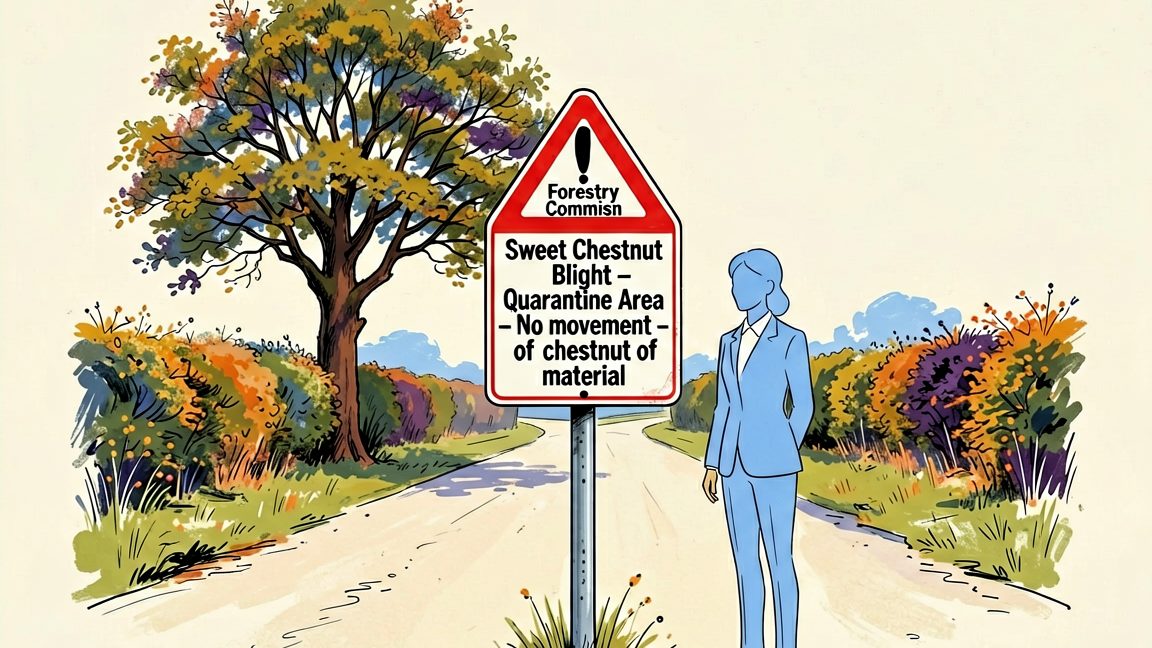
The UK Forestry Commission announced on 19 August 2026 that the Sweet Chestnut Blight demarcated zone would be expanded, with the new restrictions taking effect on Wednesday 26 August 2026. The extension adds West Devon District and the South East Cornwall constituency to the quarantine area, and it brings fresh trading controls on sweet chestnut trees and any material that could carry the pathogen.
Announcement and timeline
The extension was set out in a press release published on the government website on 19 August 2026. The release makes clear three key dates: the announcement on 19 August, the start of the new restrictions on 26 August, and the geographic scope of the expanded zone. The timeline, reproduced from the release, shows the sequence of events:
| Date | Event |
|---|---|
| 19 August 2026 | Forestry Commission press release announcing the extension |
| 26 August 2026 | Extension comes into force; trade restrictions apply to the new area |
| Source: Forestry Commission – Sweet Chestnut Blight demarcated area extension, gov.uk | |
The press release is the sole source confirming both the dates and the precise locations now covered.
What the new restrictions cover
According to the Forestry Commission, the trade restrictions apply to "sweet chestnut trees and other susceptible material" across the newly added area. The wording in the release does not list specific products, but it makes clear that any material capable of moving the pathogen – such as seedlings, cuttings, timber, or bark – will be subject to the same controls that already apply in the existing demarcated zone.
These controls have been in place since the original quarantine was declared, and they require growers, nurseries, and timber traders to obtain a phytosanitary certificate before moving material out of the zone. The extension simply widens the geographic reach of those obligations.
Why the extension was needed
The decision follows fresh surveillance that identified additional infected sites with sexual sporulation. The packet notes that a finding in October 2025 was the first instance of sexual sporulation since 2011. Sexual sporulation is significant because it produces airborne spores that can travel longer distances than asexual spores, raising the risk of spread beyond the immediate vicinity of an infected tree.
By extending the buffer zone around the newly identified sites, the Forestry Commission aims to contain that airborne risk. The extension is therefore a direct response to the latest scientific evidence, rather than a routine administrative adjustment.
Implications for the timber and horticulture sectors
For businesses that deal in sweet chestnut timber, the new restrictions mean an additional layer of paperwork for any movement of wood originating in West Devon or South East Cornwall. Nurseries that grow sweet chestnut saplings will need to ensure that all stock destined for sale outside the zone carries the required certification. Existing contracts that involve cross‑border trade of sweet chestnut material may need to be renegotiated to accommodate the new compliance timeline.
Exporters should also be aware that the UK’s trade partners will expect the same phytosanitary standards. While the extension does not change the UK’s overall export regime, it does increase the administrative burden for firms operating in the affected districts. Companies that already have robust traceability systems will find the transition smoother than those that rely on ad‑hoc record‑keeping.
From a broader market perspective, the quarantine could have a modest impact on the price of sweet chestnut timber sourced from the south‑west of England. If supply is constrained by the new controls, buyers may look to alternative sources, potentially driving up prices for wood from unaffected regions. However, the packet does not provide any price data, so the magnitude of any price movement remains speculative.
Background on the Forestry Commission
The Forestry Commission is a UK government agency headquartered in Bristol. It was founded on 1 January 1919 and is responsible for managing public forests, supporting private woodland owners, and protecting forest health. The packet notes that the Wikidata entry for the Commission may be out of date on details such as the current chief executive and staff numbers. As of the latest publicly available information, the agency’s leadership and headcount have not been independently verified for this article.
Because the agency’s role includes disease surveillance and the enforcement of trade restrictions, its decisions carry weight for both environmental policy and commercial activity. The extension of the Sweet Chestnut Blight zone is therefore a regulatory move that sits at the intersection of biosecurity and trade.
What remains unknown
The press release does not disclose the exact size of the newly added area in hectares, nor does it give a breakdown of how many additional trees are believed to be infected. It also does not state the anticipated duration of the quarantine – whether the new zone will be reviewed after a set period or remain in place indefinitely.
Stakeholders have asked the Forestry Commission for clarification on the following points, but the agency has not yet responded:
- Whether the trade restrictions will be lifted automatically once surveillance shows no further sexual sporulation.
- What support, if any, will be offered to growers who may need to destroy infected stock.
- The criteria that will trigger a future expansion or contraction of the demarcated zone.
Until those answers are published, businesses must operate under the assumption that the current restrictions will stay in force for the foreseeable future.
Looking ahead
The extension underscores the importance of ongoing surveillance for forest pathogens. The October 2025 detection of sexual sporulation after a 14‑year gap suggests that the disease can re‑emerge in a more aggressive form, prompting regulators to act swiftly. For the industry, the key takeaway is the need to maintain up‑to‑date records of tree provenance and to be prepared for rapid changes in phytosanitary policy.
In the weeks ahead, the Forestry Commission is expected to publish guidance on how to obtain the necessary certificates for the new area. Companies that act early to align their supply chains with those guidelines will avoid potential delays at border checks and minimise disruption to their operations.
Overall, the expansion of the Sweet Chestnut Blight demarcated zone represents a targeted regulatory response to a renewed biosecurity threat. While the immediate impact will be felt most strongly by growers and traders in West Devon and South East Cornwall, the move also sends a clear signal to the wider UK forestry sector: vigilance and compliance remain essential tools in protecting the nation’s woodland health.