Thank you for subscribing!
Oxford University evidence experts Professor Carl Heneghan and Dr Tom Jefferson have challenged the value of such monitoring
Experts have attacked Britain’s health watchdog for promoting AI that listens for people's coughs while they sleep to predict infection outbreaks.
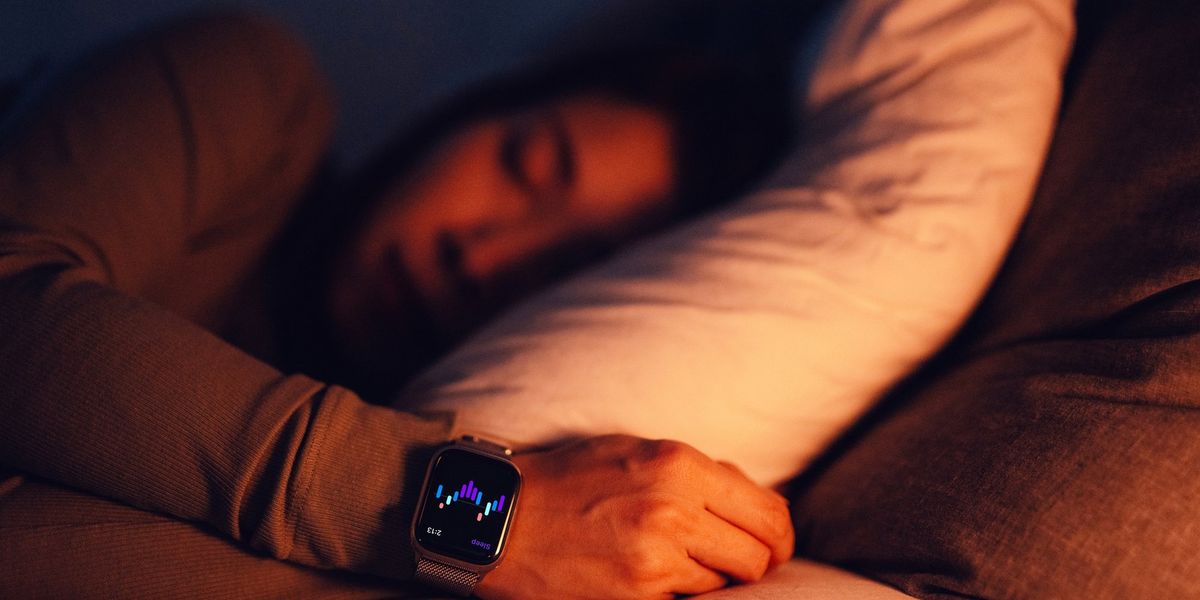
The Government public health watchdog, the UK Health Security Agency (UKHSA), this month hailed research suggesting sounds picked up by the commercial Sleep Cycle phone app could provide a "one-week early warning" of rising Covid and flu infections.
The UKHSA, which collaborated on the AI sleep research says nighttime coughs could offer a "near real-time view" of respiratory illness across the country and provide a "timely population-level signal of upcoming disease trends".
But Oxford University evidence experts Professor Carl Heneghan and Dr Tom Jefferson have challenged the value of such monitoring, pointing out numerous other conditions can make people cough at night including asthma, allergies and acid reflux, medication, sinus problems and a range of other infections can make people cough at night.
Writing in their Substack, Trust the Evidence, they said: "How many conditions cause coughing? Even we have trouble counting them all up."
They also said certain medicines can trigger persistent coughs, while heart failure can cause coughing or breathlessness when people lie down.
And they added that mould, dust mites, smoke and dry air can also leave people coughing at night.
The Oxford experts also questioned what health officials would actually gain from discovering that the nation had started coughing more than usual several days earlier.
"What is the gain in knowing that the night cough has gone up by, say, five per cent in the last week?" they asked.
The UKHSA entered a formal research project with Swedish technology company Sleep Cycle in January to find out whether data from the company's commercial app could become a tool in Britain's national disease surveillance.
A dedicated UKHSA research team analysed the company's anonymised information on the agency's systems and compared nighttime coughing with existing health surveillance data.
This month the health watchdog promoted the results through an official Government press release headlined: "AI sleep data could provide one-week early warning of flu and Covid-19."
The accompanying announcement declared that "sleep app cough data can detect respiratory illness and signal outbreaks early".
The app uses AI-powered sound analysis during sleep to identify coughing. The resulting information is then aggregated and turned into anonymised population-level data.
UKHSA believes people's nighttime coughs could provide intelligence about the health of the nation before traditional surveillance systems spot an increase in illness.
Professor Steven Riley, UKHSA's Chief Data Officer, said the findings could contribute to an "earlier, richer and more resilient understanding of population respiratory health".
He added that "passive nocturnal cough monitoring" could provide a "timely population-level signal of upcoming disease trends".
When the collaboration began in January, Professor Riley said UKHSA was "constantly exploring" how technology such as AI could complement existing surveillance.
He added: "If successful, these insights could help us strengthen early warning systems for respiratory infections in the UK."
But the research itself is more cautious than UKHSA's eye-catching "one-week early warning" headline as associations with specific viruses were not strong.
The researchers described the associations with Covid positivity and admissions as "weak to moderate", while the relationship with flu positivity was weaker.
The study's authors say nighttime coughing may therefore be most useful as a broad signal of respiratory illness rather than as an indicator of any particular virus.
They also acknowledge that people using the commercial Sleep Cycle app are not representative of the population of England and say further research is needed to establish whether the data can actually improve disease forecasting.
The project follows heavy criticism over UKHSA's handling of taxpayers' money.
A National Audit Office investigation in 2024 revealed more than £400 million had been spent on plans for a new health security campus at Harlow, Essex - despite "very little progress" being made.
The project was originally estimated to cost £530million in 2015. By 2023 the projected bill had ballooned to £3.2billion - an increase of more than 500 per cent.
The campus was originally due to be fully operational by 2021. The NAO said the earliest it could now be completed at Harlow was 2036.
Of the money already spent by October 2023, £91million went on design, £89million on revenue costs, £76million on project and programme support and management and £66million on construction.
More than £2million was also incurred suspending the project's main construction suppliers after funding was diverted elsewhere.
Nearly £300million already spent was later devalued amid uncertainty over whether the work would ever be completed.
Gareth Davies, head of the National Audit Office, said "very little progress" had been made "at significant cost" and warned the delays and escalating costs had undermined value for money.
UKHSA stresses that the Sleep Cycle project is research and that the technology would complement, rather than replace, established disease surveillance.
It is also clear that UKHSA is not receiving recordings from people's bedrooms. The agency claims the information it analysed was anonymised and privacy-protected.