Thank you for subscribing!
First-year university students face a risk of contraction around seven times higher than their age peers who do not attend university
Almost 250,000 doses of the meningitis B vaccine have been administered to young people across England this summer, as students preparing for university are being urged not to mistake serious symptoms for a hangover or “freshers’ flu”.
NHS England figures show that 246,089 MenB vaccine doses were given between July 20 and August 31, following the launch of a national catch-up programme designed to protect eligible young people against the disease.
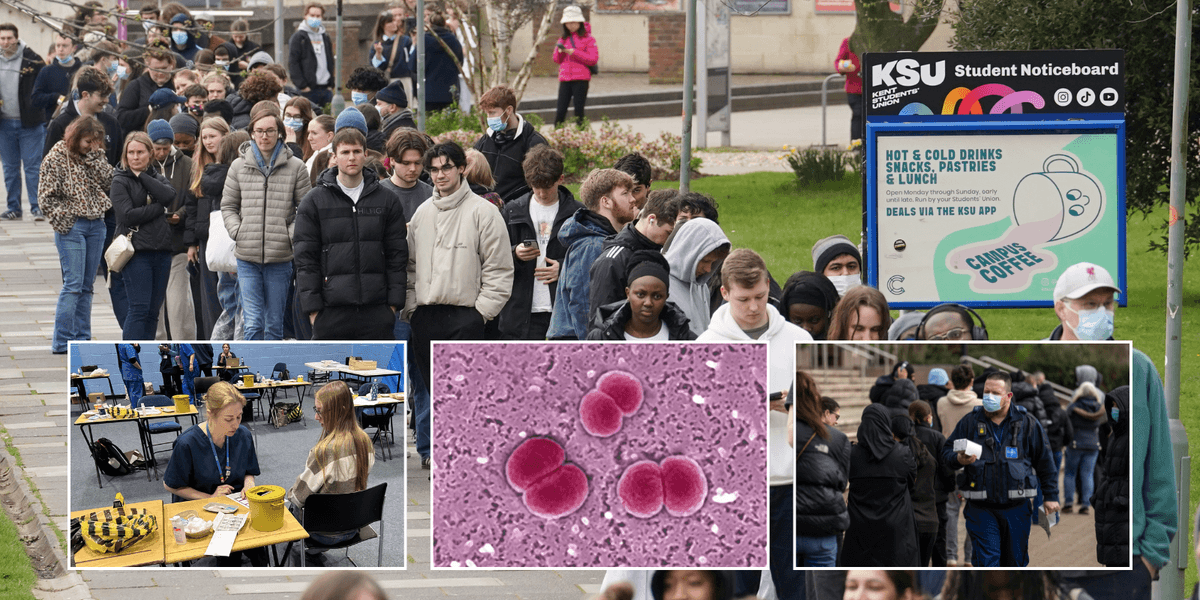
The campaign follows outbreaks reported earlier this year, including cases among university students in Kent that birthed a brief epidemic across parts of southern England.
Thousands of students arrive at universities and residential colleges for the new academic year this week, with first-year university students facing a risk of contraction estimated to be seven times higher than their age peers who do not attend university.
Health experts say the combination of late nights, alcohol, crowded accommodation and exposure to large numbers of new people can make the early symptoms of meningitis easy to overlook.
Headaches, vomiting, exhaustion and a general feeling of being unwell may initially be attributed to a hangover or a viral illness, however meningitis can deteriorate rapidly, and symptoms do not necessarily appear in a predictable order.
Sobia Qasim, a pharmacist at online pharmacy Curely, told GB News: "Freshers' week is probably one of the easiest environments in which to dismiss the early signs of meningitis.
"Students expect to feel tired. They might have been drinking the night before, they're suddenly mixing with lots of new people and freshers' flu is something almost everyone has heard of.
"So a headache, vomiting, feeling exhausted or generally feeling unwell can easily be put down to a hangover or a virus."
The expert warned students to focus less on trying to identify a single symptom, and more on recognising when someone is becoming significantly more unwell.
A severe or worsening headache, fever, stiff neck, sensitivity to light, unusual drowsiness or confusion "should prompt urgent attention", she said.
Seizures and a rash that does not fade when pressure is applied are also emergency warning signs, and students "should not wait for a rash before seeking medical assistance".
“If you suspect meningitis or sepsis, call 999 or go to A&E,” Ms Qasim added, warning that the illness can become serious “very quickly”.
New figures from the UK Health Security Agency (UKHSA) show that Meningitis B was responsible for 97 per cent of invasive disease cases in 15 to 24-year-olds in England during 2025 to 2026, placing young people at a heightened risk.
The data, published in the Invasive Meningococcal Disease (IMD) report for England, also shows that MenB was the leading cause of the disease across almost all age groups under 25, including infants and 1 to 4 year-olds.
Invasive Meningococcal Disease can be serious, with 26 deaths recorded among the 348 total IMD confirmed cases during the year.
Two doses are required for protection, with the second administered at least four weeks after the first.
Students who received their first dose during the summer may therefore now need to arrange their second vaccination.
Under the current programme, eligible young people can receive their first dose until 31 December this year, while second doses can be given until 31 March 2027.
Those eligible include young people born between September 1 2007 and August 31 2008, along with eligible first-time university and residential further-education students born on or after July 21 2001.
Vaccinations are available free through participating community pharmacies, with appointments bookable through the NHS National Booking Service or directly with participating pharmacies.
Ms Qasim said students should check their vaccination records before the academic year becomes busy, and make sure they know when their second dose is due.
"Students have a lot to organise when they move away from home for the first time, so it's understandable that a second vaccination appointment might not be top of the list. But this isn't something I'd leave sitting at the bottom of your admin", she said.
She also urged students to look out for friends and housemates who may be too unwell to recognise the seriousness of their own symptoms.
Back in March, an unprecedented Meningitis B outbreak in Kent was associated with 21 cases in students and other young people in the Canterbury area - followed by two further outbreaks, each involving three or more cases in both Dorset and in Berkshire.
The outbreaks tragically caused three deaths, and some of those who survived the infections are now facing life-long health consequences.