


Oil giant Shell has unveiled a new concept car with impressive technology that could charge an electric vehicle in just 10 minutes.
Shell's Triple 10 Challenge concept car has been launched to inspire a new design philosophy for the next generation of electric vehicles.
The concept car delivers a sub-10-minute charge time, charge economy of 10km/kWh and a 10-tonne CO2e carbon footprint over its life cycle.
It forms part of the brand's goal for mass-market electric mobility, as it wants EVs to "charge faster", "go further" and "drive cleaner".
The technology uses a simplified, single-circuit cooling architecture to manage the thermal load of the car's entire powertrain, even under extreme, ultra-rapid charging scenarios.
Testing showed that the Triple 10 Challenge vehicle can charge the battery from 10 per cent to 80 per cent in just nine minutes and 54 seconds.
Other electric vehicles are also able to charge a large portion of the battery using an ultra-rapid charger, which typically provides in excess of 300kW.
However, the Shell concept can charge in under 10 minutes using a more common 175kW charger, allowing the driver to add an average of 24km of range per minute.
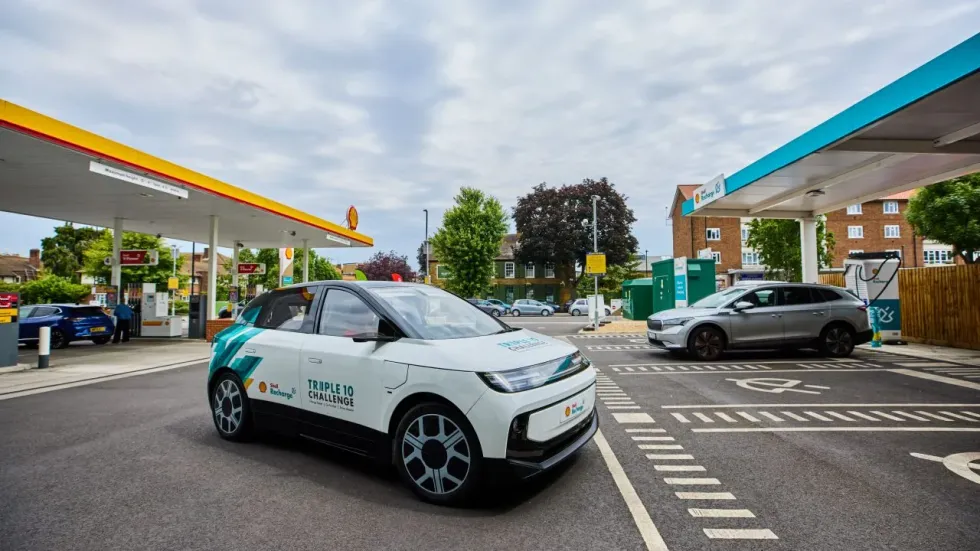
Shell has unveiled its new electric car technology that charges an EV in less than 10 minutes
|SHELL
When compared to a standard electric vehicle, the concept car can add almost 90 per cent more range per minute of charge.
Cara Tredget, VP Mobility and Lubricants Technology for Shell, said: "With the Triple 10 Challenge concept car, we have unlocked the potential for faster charging, lighter systems and improved lifecycle efficiency by using our advanced thermal fluids.
"Together with our co-engineering partners, we are proud to develop alternative options for sustainable EV development, leveraging technologies that are available today and are scalable to support customers into the future."
Experts involved in the process of producing the vehicle aimed to achieve 10 km/kWh in driving economy with a smaller, more efficient battery system.
LATEST DEVELOPMENTS
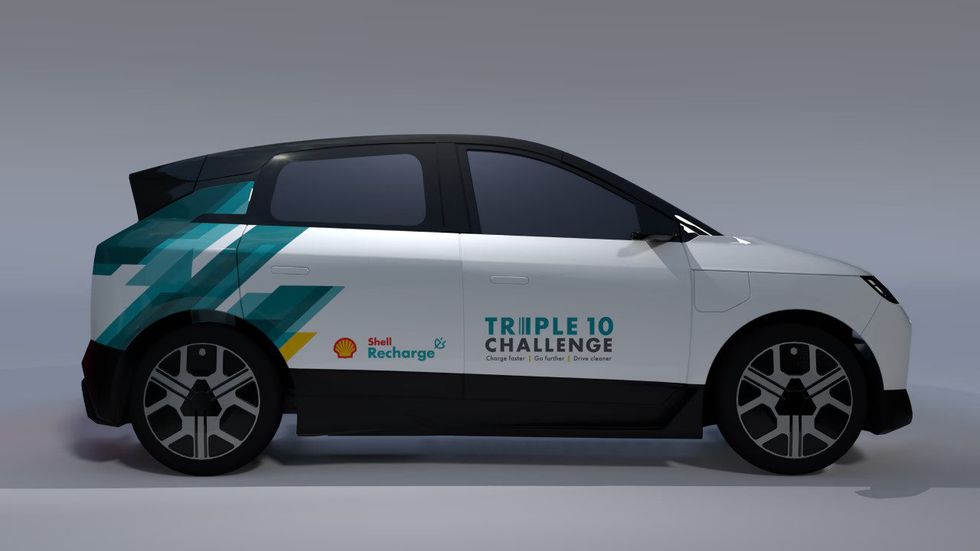
The Shell Triple 10 concept car can charge from 10 per cent to 80 per cent in nine minutes and 54 seconds
|SHELL
This provided a 30 per cent improvement in overall energy efficiency compared to many electric vehicles currently on the market.
It achieved this by making use of Shell's advanced thermal fluids that provide optimal thermal management and can cool the battery and powertrain components.
Shell stated that the team was able to unlock faster charging, lighter systems and improved lifecycle efficiency by "redefining heat management".
This was done using technologies that already exist and can be scaled up, with Shell looking to lead in the space as it grows the business.

Shell said the Triple 10 concept car could help define the future of electric mobility
|SHELL
The lightweight design and optimised battery capacity have been combined with low-carbon and recyclable materials to have an estimated lifecycle carbon footprint of 10 tonnes CO2e.
Materials and 100 per cent renewable electricity for vehicle charging provide around a 50 per cent reduction in lifecycle emissions compared to typical EVs.
Shell confirmed that it would integrate its full EV capabilities under the Shell Recharge umbrella and retire the Shell EV-Plus brand.
Recharge will now include charging, fluids, and battery solutions to offer a stronger offer for B2B and B2C customers.