


Europe could see almost 40 million electric vehicles on the road by the end of the decade, as a new report highlights how the EU could save 190 million barrels of oil annually.
Fresh analysis suggests that Europe can avoid importing 190 million barrels of oil every year by 2030 if the electric vehicle transition keeps pace.
This could generate annual savings of around €12billion (£10.3billion), alongside a massive expansion in the number of electric cars on roads across the continent.
E-Mobility Europe and Ember estimate that these savings could be possible from the deployment of 35 million electric cars, three million commercial vehicles and 200,000 electric trucks.
These vehicles are expected to be registered, provided the legislation on CO2 standards remains unchanged, although the EU has taken action recently to amend its petrol and diesel car ban plans.
Last December, the bloc confirmed that it would remove the 2035 deadline to ban the sale of new internal combustion engine vehicles in favour of a phased approach.
This will see carmakers needing to comply with a 90 per cent tailpipe emissions reduction target, while the remaining 10 per cent emissions will come from e-fuels and the use of low-carbon steel made in Europe.
Clear oil savings have already been seen thanks to the spread of electric vehicles, with EVs registered in the EU displacing 57 million barrels of oil last year.

Almost 40 million battery electric vehicles could be on EU roads by the end of the decade
|GETTY
This meant that the EU avoided spending €4billion (£3.4billion) on oil imports, while one million newly registered EVs in 2026 led to consumption being cut by four million barrels of oil.
E-Mobility has stressed that Europe needs to press ahead with the shift to electric vehicles to lessen the continent's reliance on imported oil, which can be subject to massive price swings.
In recent months, the volatile price of oil has caused havoc for billions of people across the planet amid the conflict in the Middle East between the United States, Israel and Iran.
Costs soared to as high as $120 (£90) at some points after Iran closed the Strait of Hormuz, cutting off the crucial chokepoint for around 20 per cent of global exports.
LATEST DEVELOPMENTS
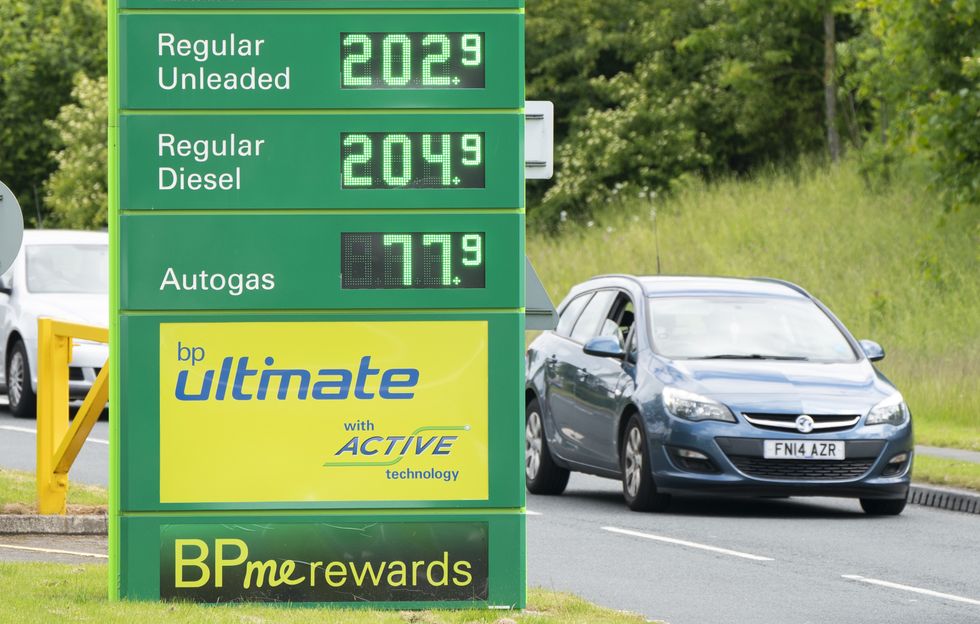 Nationwide petrol and diesel prices recently reached the highest prices since the summer of 2022 | PA
Fuel costs across the world soared to near-record prices, with governments forced to implement limits on price changes and fuel sales.
Chris Heron, Secretary General of E-Mobility Europe, said that Europe must make a decision on the future of its energy security.
He said: "Do we continue to relinquish our strategic autonomy to other regions, or will we act with laser focus to capture the full benefits of electric security?
"As a continent, we need to decide who we want to be, get back in the EV driving seat, and deliver long-term resilience."
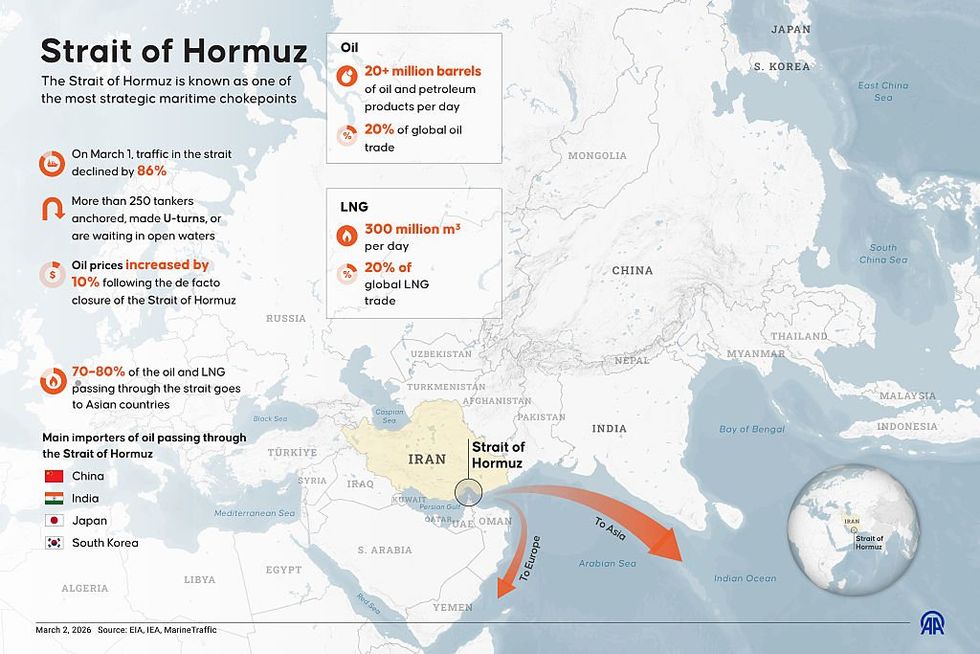 The Strait of Hormuz is one of the most important shipping routes in the world, especially for oil exports | GETTY
The report, entitled "From Oil Dependence to Electric Security", warned that stagnation would leave Europe more exposed to imported fuel and geopolitical volatility.
It noted that the European Union is expected to publish its EU Electrification Action Plan this month, which "should be a milestone" for delivering an EV-focused strategy.
The EU said the Plan would speed up the "effective and system-friendly electrification" of key sectors, including transport and industry.