


Nissan is aiming to revolutionise electric vehicle charging by advancing new technologies that could slash energy bills for motorists.
The Japanese automaker is leading a £10million UK Government-backed research project to boost efficient energy technologies to create affordable and sustainable electric mobility.
Engineers at the Nissan Technical Centre Europe in Cranbrook, Kent, aim to "fundamentally change how electric vehicles are charged, powered and experienced".
Project SUITE (Smart Use of Integrated Technology for EVs) has a target to address rising costs of home and public charging, improve EV efficiency and affordability.
One of the key measures included in the research project is to integrate solar panels on vehicles to top up vehicles with additional range while on the road.
Nissan unveiled a solar-powered Ariya electric car earlier this year, with photovoltaic panels added to the bonnet, roof and tailgate of the vehicle.
Real-world testing found that the Ariya can add up to 14.3 miles of additional range on a bright, sunny day, although this will vary on the location.
It suggested that an extra 6.3 miles could be obtained in London, with drivers adding 10.9 miles in Barcelona, 11.7 miles extra in New Delhi and 13.2 miles per day in Dubai.

Nissan is working to improve electric car charging and slash costs for motorists
|NISSAN/GETTY
Other new technologies include an Intelligent Charging Management System (ICMS), which can manage a customer's electrical consumption, lower energy bills and feed renewable energy back to the grid when not in use.
A bidirectional Automated Charging Device (ACD) for Vehicle‑to‑Grid (V2G) could also have a huge impact on home charging.
Testing in real-world conditions will help to improve access to V2G charging to deliver "hands-free accessibility of EV charging".
Companies have focused more heavily on V2G technology in recent years as the electric car can act as a source of power during outages, as seen recently in Spain and Portugal.
LATEST DEVELOPMENTS
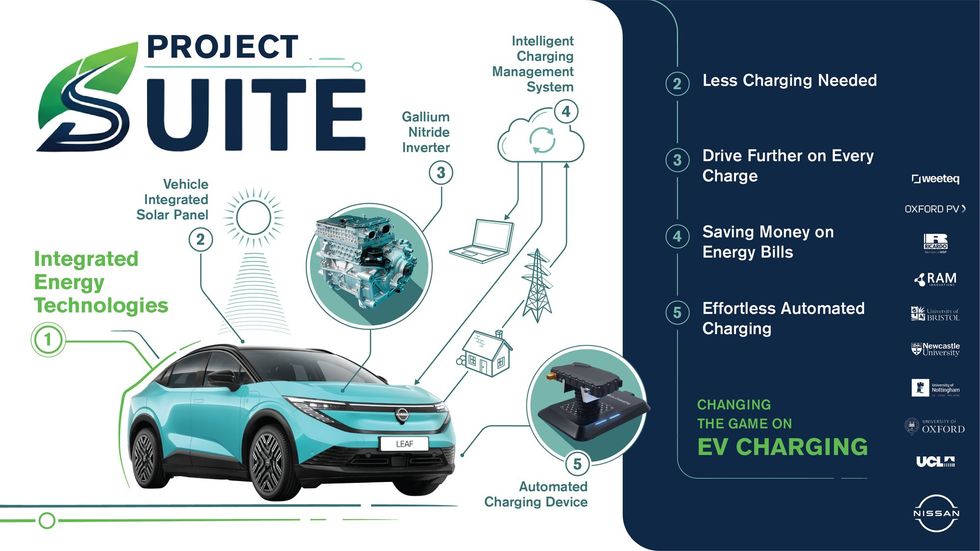
Nissan is leading a £10million UK Government-backed research programme
|NISSAN
David Moss, SVP of research and development for Nissan Africa, Middle East, India, Europe and Oceania, said the project highlighted the strength of UK innovation.
The three-year Project SUITE initiative is being backed by the Government's £4billion DRIVE35 programme to boost electric cars.
He described the project as a "significant step towards the next generation of integrated energy technologies for electric vehicles".
Mr Moss added: "From enhanced V2G capability to high-performance inverters and solar-assisted charging, these developments reinforce the UK's role in building a smarter, more resilient energy ecosystem.
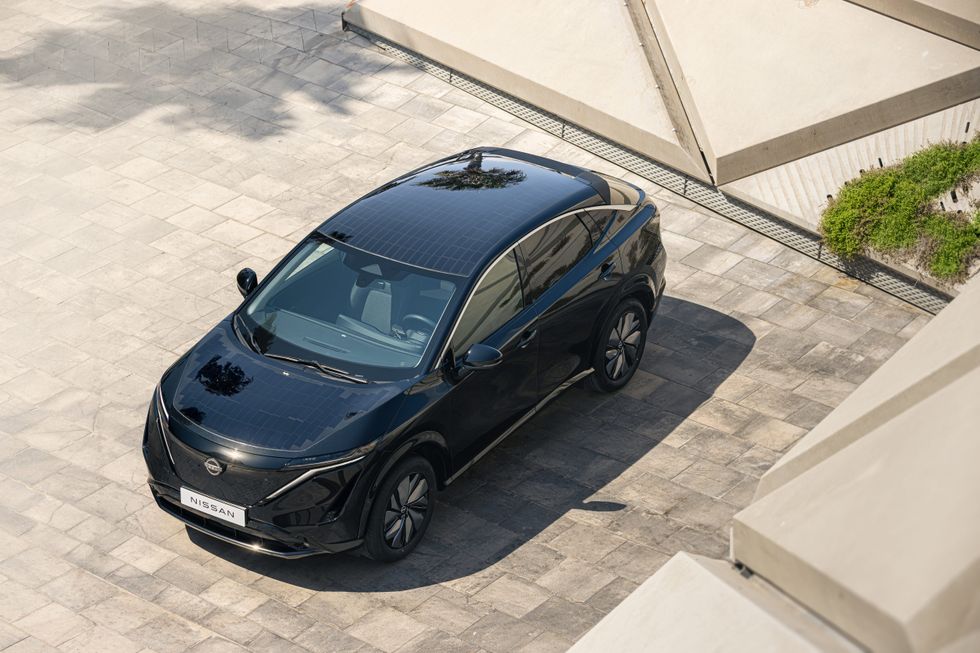 Nissan debuted a solar-powered Ariya concept car earlier this year | NISSAN
"Together, we are laying the groundwork for future electrified products and reaffirming our commitment to making electric mobility more accessible, convenient and sustainable for all."
Testing for the project is already underway using the electric Nissan Leaf, which has been in production at the brand's Sunderland facility since late last year.
Ian Constance, CEO of the Advanced Propulsion Centre UK (APC), said the partnership would create greater competition in the sector.
"This multi-million-pound support package is more than an investment in technology; it is an investment in the people, skills, and companies that will define the future of clean transport," he stated.