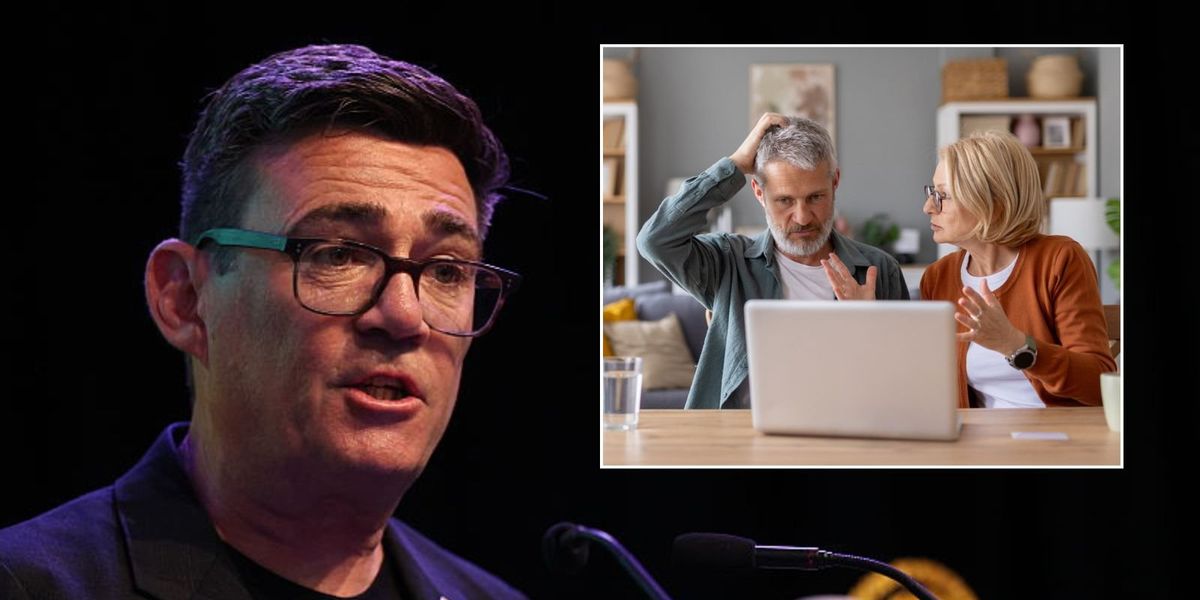
Capital Economics says the new Prime Minister could shift the tax burden away from businesses and towards wealth, capital, and income
Prime Minister Andy Burnham could impose tax increases worth as much as £25billion in the forthcoming Budget, according to a stark warning from Capital Economics published today.
The economics consultancy cautioned that households should prepare for what it described as a 'war on wealth' when Chancellor John Healey delivers his first Budget on October 28.
Entrepreneurs and pensioners are expected to bear the brunt of the measures, with the government likely to focus its revenue-raising efforts on assets rather than earnings.
The Prime Minister has previously stated that Britain "over-taxed labour and under-taxed" wealth, a remark that signals the direction of travel for fiscal policy.
Ruth Gregory, a former Office for Budget Responsibility economist now at Capital Economics, said: "This tax-raising Budget could be almost as big as the last."
Among the specific measures being considered, substantial rises to capital gains tax rank as one of the most probable options, given Mr Burnham's stated views on the taxation of wealth.
A raid on pensions is also thought to be on the table, alongside a potential £1.5billion levy targeting banks and higher inheritance tax rates. Outright wealth taxes have not been excluded either.
Perhaps most significantly, Capital Economics suggested the government could sidestep Labour's manifesto commitment not to increase income tax, National Insurance or VAT by introducing an entirely new levy earmarked for defence or social care.
Such an approach would echo Rishi Sunak's earlier attempt to fund health and social care through a dedicated charge. According to the consultancy, a levy that effectively added a penny to income tax could generate as much as £10billion in additional revenue.
The potential £25billion tax grab would rival the £26billion package imposed by former chancellor Rachel Reeves last autumn, making it one of the largest fiscal tightenings in recent memory.
Ms Gregory warned that such a haul would drive Britain's tax burden to an unprecedented 39 per cent of GDP, placing it well above the G7 average of 36 per cent.
The spending pressures behind these increases are considerable. Since succeeding Sir Keir Starmer, Mr Burnham has committed to launching the biggest council house construction programme since the post-war era, reforming social care and boosting defence expenditure.
Ms Gregory estimated these ambitions could run into tens of billions of pounds.
"With Labour MPs unlikely to stomach big spending cuts and the markets unlikely to tolerate big increases in borrowing, higher taxes perhaps worth up to 0.8pc of GDP may do the heavy lifting in funding Prime Minister Burnham's policy ambitions," she said.
Bond traders and City heavyweights are growing increasingly anxious that a government intent on squeezing the wealthy risks pushing investment abroad and driving up borrowing costs. These fears have been compounded by Mr Burnham's inability to assemble a robust team of economic advisers.
The Prime Minister and his allies have approached several high-profile figures, including Lord O'Neill of Gatley and Andy Haldane, the former Bank of England official, yet neither has accepted a formal position within the administration.
Lord O'Neill, a former Goldman Sachs chief economist who previously served in the Treasury under David Cameron, is understood to have turned down a senior ministerial role during the latest reshuffle.
He has publicly criticised wealth taxes and advocated reforming welfare spending and the pension triple lock, though government insiders denied any disagreement with the administration on wealth taxation.
Andrew Wishart, of Berenberg Bank, said: "If they [Burnham and Healey] are wanting to go big, then I think it would be difficult for people like Jim O'Neill to sign up to advise the program."
A Treasury spokesman defended the government's approach, stating: "The Chancellor is fully focused on his priorities which will boost business, help with the cost of living and support people in every postcode."
The spokesman added: "As has always been the case, decisions on tax are a matter for the Chancellor to set out at fiscal events, rather than routinely commenting on rumour, speculation or proposals."
Mr Burnham and Mr Healey have committed to operating within the fiscal framework established by Ms Reeves, while indicating they intend to exploit every available opportunity to borrow for investment purposes.
Ms Gregory did, however, acknowledge there were natural limits to how far the government could push. She noted that tax rises on the scale of the £42billion increase announced in 2024 remained possible if spending plans expanded further, but added: "We doubt he will want to raise taxes too far when households' real incomes are falling."