Thank you for subscribing!
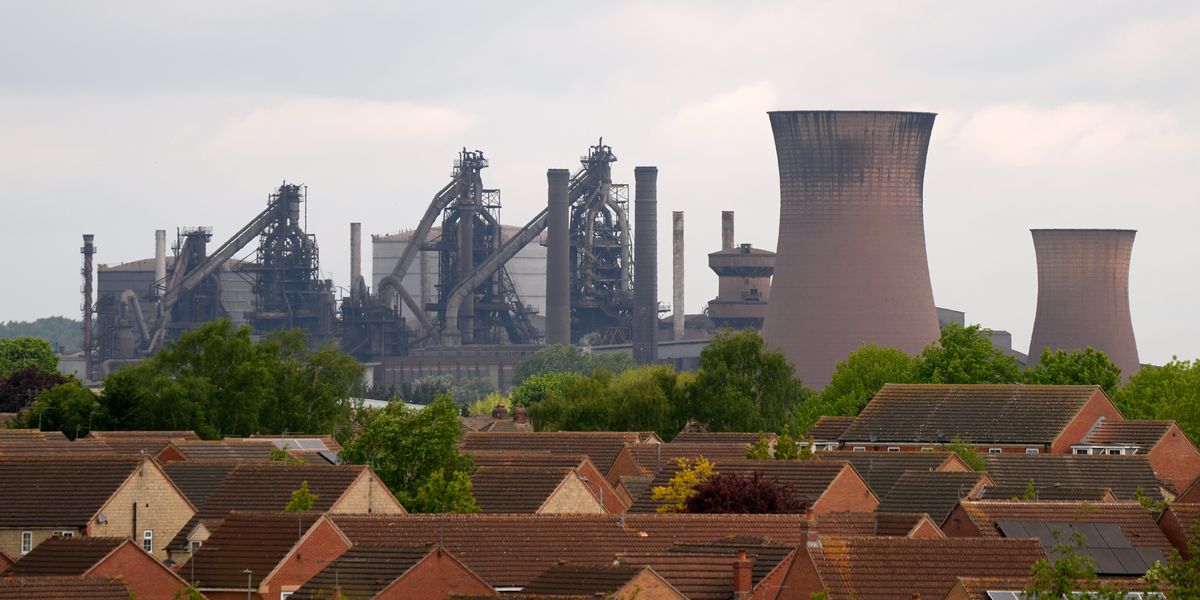
Emergency legislation was used to take control of the plant in April last year after Chinese owners, Jingye, threatened to turn the furnaces off
Labour must come up with a plan for British Steel’s future “beyond simply propping up the company with public money”, MPs have warned.
The Scunthorpe plant had already cost more than £600million of public funds before it was nationalised in July, the Public Accounts Committee (PAC) said.
It is still costing £1.3million a day to run “without a clear end date in sight”, leaving taxpayers “exposed to significant and growing costs and uncertainty”, its report found.
The committee said that it had asked for a viable plan for the plant’s future but that Government was unable to provide one.
The steelworks, which house Britain’s last remaining blast furnaces, were brought into public ownership following years of uncertainty.
Speaking after the nationalisation, Peter Kyle, then-Business Secretary, said the alternative was “that we let this business go bust”, leaving the country dependent on imports for primary steel.
The move was welcomed by industry, but the PAC warned that it “did not resolve the underlying problem – that British Steel remains structurally unprofitable”.
“The reality is that British Steel is unable to wash its own face, and Government is now in charge of making sure it gets onto a sustainable financial footing for the future”, said Clive Betts, deputy chair of the PAC.
Government spending on the company was estimated to have hit £642million by June.
It continues to be funded by the Government, overseen by the Department for Business, Innovation, Science and Trade (BIST).
But the department had been unable to provide “even indicative estimates” of how much the company will ultimately cost, the PAC said.
The Government had also not provided a business model or decarbonisation pathway that put British Steel on a sustainable footing, the PAC report claimed.
Mr Betts called for a “just, managed transition to a successful low-carbon future for the company”.
He said: “Government moved swiftly to save British Steel – all well and good, and our Committee, of course, welcomes this action as a means of safeguarding a critical part of our national infrastructure and security.
“But this was just the beginning. Having brought British Steel onto the taxpayers’ books, it is now up to government to explain its plan for its future.
“Unfortunately, beyond simply propping up the company with public money, the government was not able to outline such a plan to our inquiry.
“The reality is that British Steel is unable to wash its own face, and government is now in charge of making sure it gets onto a sustainable financial footing for the future.”
He said: “The recent move from the government to acquire Speciality Steel emphasises the point that government can’t spend all its money supporting British Steel, when clearly there will be a need to support other parts of the industry.
“We have seen admirable short-term support from the government in steel on a number of fronts, but in the long-term, our report must serve as a challenge to the administration as we ask once again: what’s the plan?”
Gareth Stace, director general of trade association, UK Steel, said work was ongoing to secure the plant’s future.
The newly appointed chair of British Steel, Alan Lovell, only took up his post this week, he said, and the change of Prime Minister in summer had also slowed progress down. UK Steel “fully supported” the work BIST was doing, he said.
Mr Stace said: “The Government was absolutely right to step in and secure British Steel, safeguarding strategically important steelmaking capability, thousands of jobs and vital supply chains.
“BIST is doing a huge amount of work to secure the company’s long-term future, and the appointment of a new Chair last week is a major step towards delivering that plan. Inevitably, progress has taken a little longer than originally envisaged following the change of Prime Minister and the time needed to put the right leadership in place.
“UK Steel fully supports that work and is playing its part. It is also important to be clear that the Government’s £2.5billion commitment to the steel industry remains in place.
“We want to work with Government to ensure that investment supports British Steel and the wider sector to modernise, grow and supply more of the steel Britain needs.”
The Government said that the nationalisation of British Steel was in the “national interest”.
A spokesman said: “We welcome the PAC's report and will review the recommendations.
“Securing the long-term future of the UK steel sector is in our national interest.
“While this will require both public and private investment, we’ve taken the first step towards securing steelmaking by securing British Steel’s future through public ownership and appointing a new Board and Chair this month.
“Taxpayer value for money remains a central consideration in our assessment of the future of the site, and we are also backing the communities that rely on it through our Steel Strategy to build a sustainable, competitive and decarbonised steel sector for the years ahead.”