The global economy could be hit with another shock when it comes to oil prices
Oil prices have surged once again as the global economy braces for another potential geopolitical crisis in the Middle East.
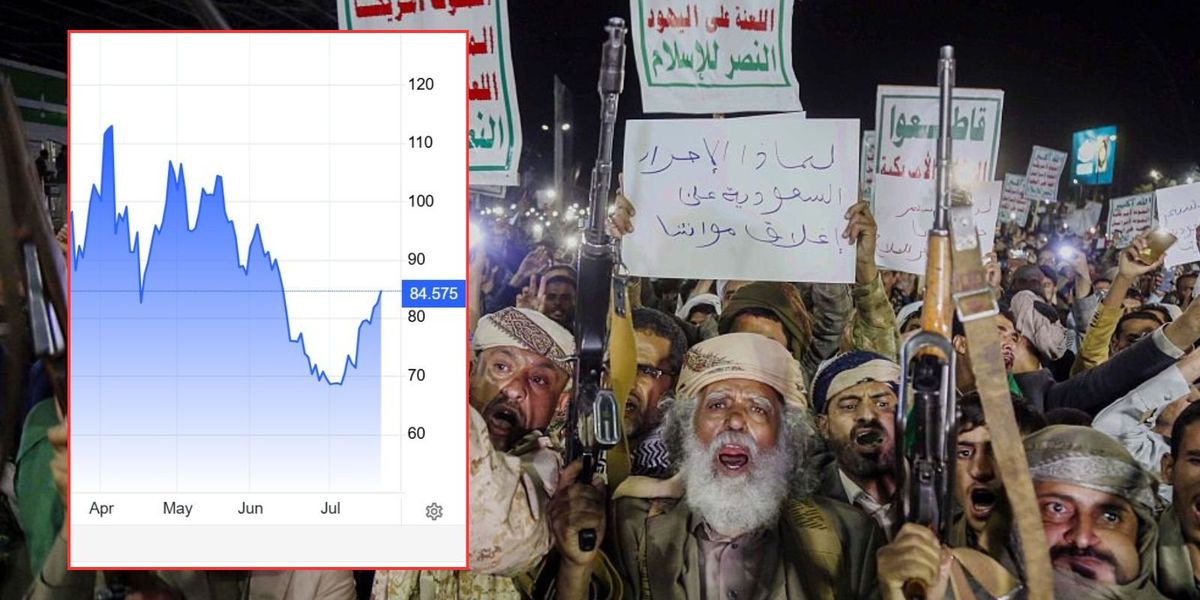
The cost of crude oil climbed by 2.6 per cent to around $84.7 per barrel following Yemen's Houthi militia's threats against shipping companies.
The group has warned that tankers calling at Saudi Arabian ports face attack as the militia moves to enforce a naval blockade declared on Monday.
This threat exacerbates an already volatile situation, with Iran simultaneously restricting maritime passage through the Strait of Hormuz on the opposite side of the Arabian Peninsula.
Together, these dual chokepoints could severely disrupt Saudi oil exports, which had until now remained largely untouched by months of regional conflict.
The escalation marks a significant deepening of the Middle East crisis, with the Tehran-aligned Houthis leveraging their territorial control over northern Yemen and the strategically vital southern entrance to the Red Sea to exert pressure on Riyadh.
Evidence that the warning is being heeded emerged swiftly on Tuesday, as two oil tankers laden with Saudi crude bound for China and India reversed course to avoid Houthi-controlled waters near the mouth of the Red Sea, instead rerouting towards the Suez Canal.
The Houthis themselves claimed that six vessels in total had altered their paths. The militia emailed shipping firms on Monday instructing them to avoid loading or discharging cargo at Saudi ports, cautioning that doing so risked being targeted "in any location".
The message stated: "We strongly recommend that your company exercise due diligence and the utmost care in all its dealings."
Though the Houthis have stopped short of formally closing the Bab el-Mandeb strait, the threat has cast serious doubt over the safety of a waterway carrying seven per cent of global maritime trade.
President Donald Trump responded to the Houthi escalation on Tuesday by declaring that the United States would "just have to take care of business" should the militia follow through on its threats.
Speaking at a White House meeting with Lebanese president Joseph Aoun, he referenced previous American military action against the group.
He added: "You know, we've done that with the Houthis before, and we haven't heard from them in a while since we did what we did originally."
Meanwhile, Secretary of State Marco Rubio signalled that Washington had not closed the door on diplomacy with Tehran, though he insisted any negotiations must "be real."
The remarks came as the broader US-Iran confrontation entered its tenth consecutive day of mutual strikes, with no immediate sign of de-escalation.
Behind the scenes, however, diplomatic efforts to rescue the collapsed interim agreement between Washington and Tehran were continuing.
Iran's interior minister, Eskandar Momeni, travelled to Pakistan as sources indicated both sides might be searching for an off-ramp from the latest strikes.