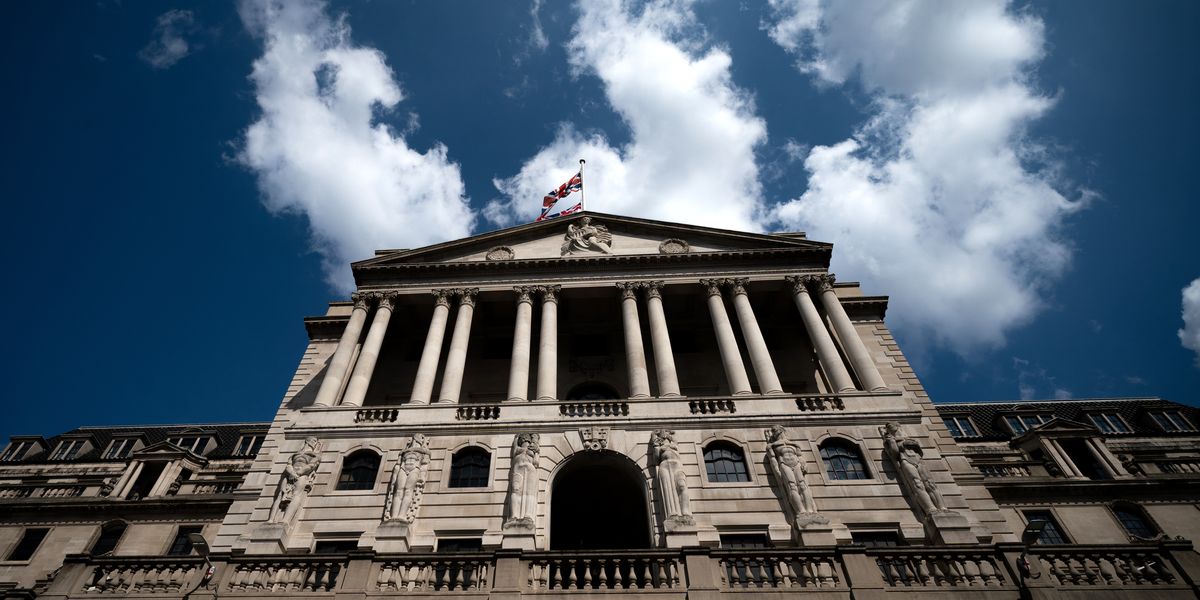
New forecasts suggest that the latest GDP figures will show the UK economy stagnating
Chancellor Rachel Reeves is expected to be dealt another fiscal blow as the British economy appears set to experience another month of stagnation.
The Office for National Statistics (ONS) will release gross domestic product (GDP) data for May on Thursday, with forecasters anticipating either flat growth or a further 0.1 per cent contraction.
April saw output shrink by 0.1 per cent, representing the first decline since August 2025 and a marked slowdown from the 0.3 per cent expansion recorded in March.
The US-Israel conflict with Iran has created significant headwinds for the UK economy, with Chancellor Rachel Reeves acknowledging it was "not a war we wanted or joined, but one that will have an impact at home".
The services sector, which dominates the UK economy, drove April's downturn and is expected to have remained sluggish throughout May, according to analysts.
Construction and manufacturing provided some offset with positive growth during the previous month.
Pantheon Macroeconomics anticipates a mixed performance across different parts of the economy, noting that energy supply subsectors have been lifted by elevated oil prices.
Deutsche Bank's chief UK economist Sanjay Raja expects continued weakness in information services, professional and financial services, and real estate.
Mr Raja noted it was "not all bad news", observing that "anecdotally, retailers pointed to a combination of promotions and warmer weather boosting demand for items such as outdoor furniture and fans".
Looking to June, certain sectors may receive a welcome lift from England's progress in the FIFA World Cup.
Pubs and bars across the country have enjoyed busier trading periods and extended opening hours as fans gather to watch matches, potentially providing a modest boost to economic activity this month.
Last month, financial analysts shared their thoughts on the economic impact of Brexit 10 years on from the referendum which saw Britons vote to leave the European Union (EU).
Hetal Mehta, the chief economist at St. James’s Place, said: "10 years on from the Brexit referendum, the UK economy has not suffered the cliff-edge shock many feared.
"But nor has Brexit been cost-free. Its impact has been slower-burning, less visible in any single year, but meaningful when viewed through the lens of investment, productivity, trade and labour supply.
"The difficulty is that Brexit has been followed by a series of major shocks - Covid, the energy crisis, war in Ukraine and a global inflation surge - which makes it hard to isolate its exact effect. But there are areas where the signal is clearer.
"The UK’s share of European imports has fallen since 2016, business investment has lagged the US, and inward direct investment has weakened. None of these trends can be attributed to Brexit alone, but Brexit has almost certainly amplified them."