
Thank you for subscribing!
The campaign is calling for around £10billion of levies to be moved off electricity bills and funded through the Exchequer instead
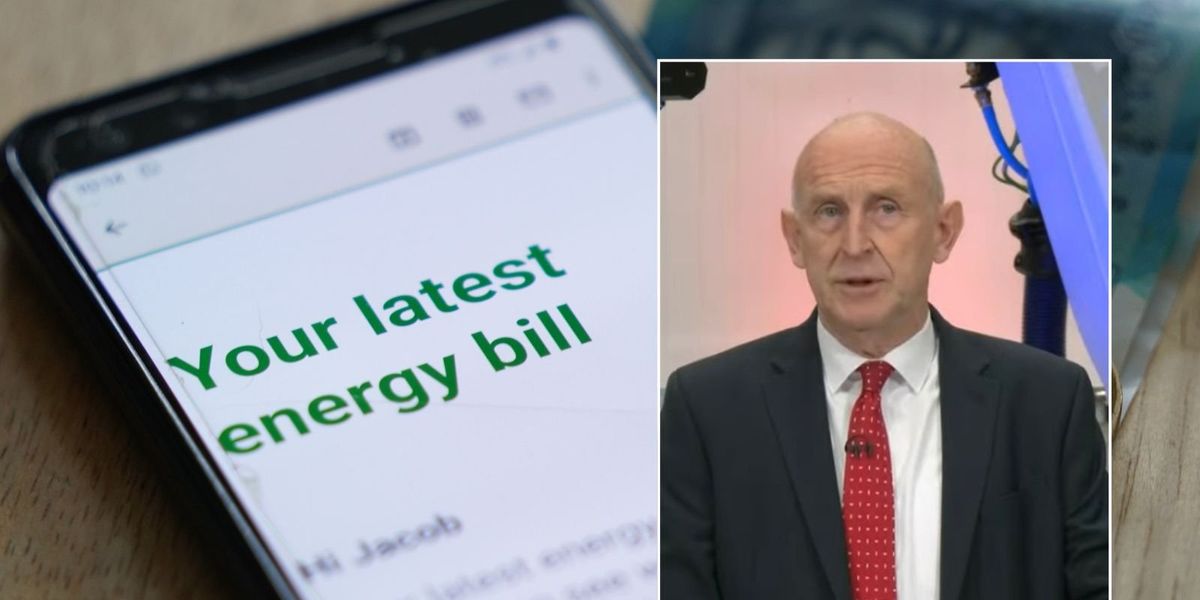
Households could see hundreds of pounds knocked off their energy bills under a major push to change how electricity costs are funded.
A coalition of 123 organisations is urging the Government to remove levies from electricity bills, arguing the move could save the average household up to £250 a year.
Businesses, charities, consumer groups and trade bodies have signed a letter calling on Chancellor John Healey to take action in the Autumn Budget on October 28.
The campaign, coordinated by climate think tank E3G and industry body Energy UK, has attracted support from Which?, Age UK, Nationwide and the Co-op, alongside major trade bodies including the CBI, Make UK, UKHospitality and the British Retail Consortium.
The groups argue that action is urgently needed as Britain continues to face some of the highest energy costs in the developed world, with prices now 70 per cent higher than in 2021.
Household energy debt has climbed to almost £7billion, while more than 40 per cent of British businesses have responded to higher costs by cutting investment.
Recent conflict in the Middle East has added further pressure by driving wholesale gas prices sharply higher, at one point reaching a three-year peak.
However, campaigners argue ministers can directly tackle part of the problem by changing how Government policy costs are paid for.
Levies currently added to electricity bills help fund schemes including renewable energy projects, nuclear power development and the Warm Home Discount.
The coalition wants these costs moved from household and business bills to general taxation, meaning they would instead be funded through the Exchequer.
The coalition estimates that moving the levies could reduce business electricity prices by as much as 20 per cent.
For households, when combined with the energy bill discount announced in the 2025 Budget, the changes could deliver average savings of up to £250 a year.
Supporters also argue that lowering electricity bills could have wider benefits for the economy.
They estimate the change could reduce inflation by 0.3 percentage points, potentially saving the Government billions of pounds through lower borrowing costs and reduced inflation-linked spending.
Separate analysis by PwC found that bringing UK electricity prices down to the G7 median could generate an additional £250billion in economic output over the next decade.
Ed Matthew, Director of UK Programme at E3G, said: "The UK is actively sabotaging its own efforts to bring down energy costs by taxing electricity.
"Any credible plan to tackle the cost-of-living and enable reindustrialisation needs to include removing these taxes from bills to the Exchequer. The scale of support for this letter shows that this demand has united the country. The Government must now act."
Dhara Vyas, Chief Executive of Energy UK, said: "High electricity prices hurt all of us. By taking levies off the bill, the Government can show it is serious about tackling fuel poverty and the cost-of-living crisis, growing the economy, and bringing down inflation."
Ms Vyas added that cheaper electricity would have "an outsized impact across the economy, encouraging the switch to electric heating, transport and industry and allowing households and businesses across the UK to feel the benefit of the successful rollout of clean power."
The levies the campaign wants removed include the Renewables Obligation, Feed-in Tariffs, the Warm Home Discount and the Nuclear Energy Levy.
Moving these charges from household and business electricity bills to the Exchequer would shift around £10billion a year in costs away from bills.
Campaigners argue the change would also encourage more households and businesses to switch to electricity for heating, transport and industrial processes, while reducing Britain's exposure to volatile gas prices.
The Government has already taken steps to bring down household electricity costs, but the coalition argues they do not go far enough.
The Prime Minister announced a VAT cut on domestic electricity shortly after taking office, although the measure is due to expire in April 2027. A larger discount announced in last year's Budget is also temporary and is scheduled to run only until 2029.
Even with both measures, taxes still account for around a tenth of the average household electricity bill.
Businesses have received less support, according to the campaign. Existing electricity price discounts are limited mainly to certain industrial and manufacturing firms, covering around 10 per cent of non-domestic electricity use and fewer than one per cent of businesses.


