Thank you for subscribing!
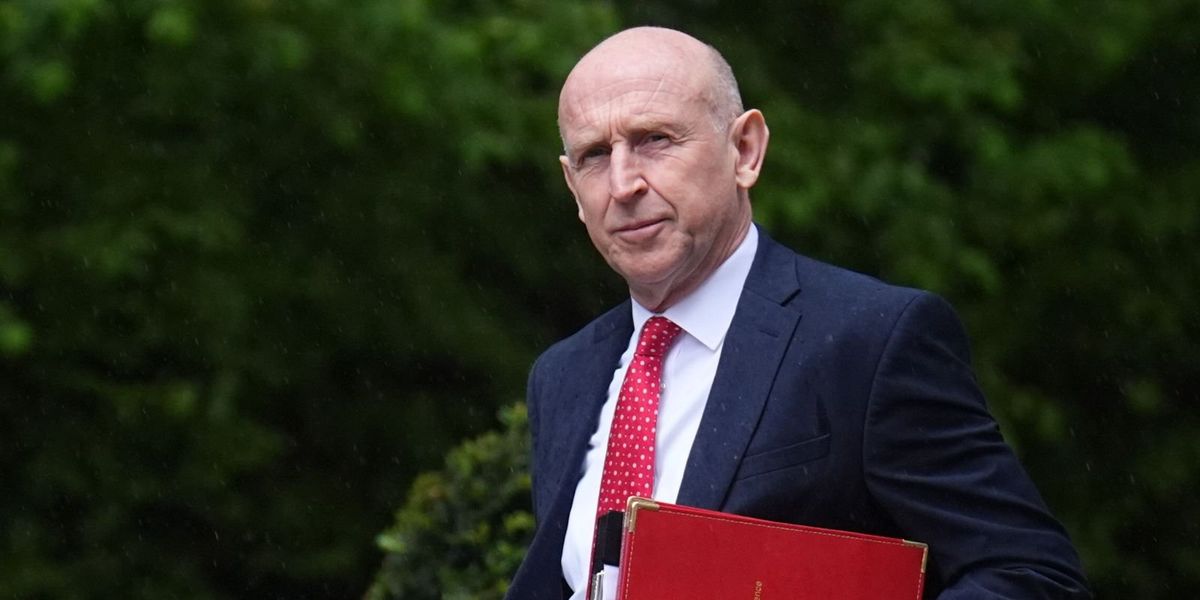
John Healey is looking to avoid increasing taxes on the public
Chancellor John Healey is preparing to target some of Britain's most profitable industries as he searches for billions to shore up the public finances.
The move would spare ordinary taxpayers from bearing the burden of his first major fiscal statement.
Mr Healey is actively weighing windfall taxes on both banks and oil companies ahead of his Autumn Budget on 28 October, according to The Telegraph.
Treasury officials and Prime Minister Andy Burnham are said to be involved in the discussions, which centre on closing a £4.7billion shortfall without resorting to direct tax rises on individuals.
The former Defence Secretary, who succeeded Rachel Reeves at Number 11, reportedly wants the Budget to come across as a restrained affair.
He is said to be keen that any unavoidable tax increases fall well below the scale of those introduced by Ms Reeves.
The conflict between the United States and Iran has driven corporate earnings sharply higher in recent months.
Treasury officials tracking the economic consequences of the war have observed that BP's profits more than doubled between April and June, buoyed by surging oil prices.
Banks have also enjoyed a bumper period. Britain's four largest lenders saw profits climb by an average of 21 per cent in the first half of 2026 compared with the year before, significantly outpacing the wider economy.
One government official described taxing the banking sector's elevated earnings as "low-hanging fruit" that Mr Burnham and his Chancellor would struggle to overlook, according to Bloomberg.
The strong performance across both sectors has fuelled internal discussions about whether companies benefiting from geopolitical turmoil should contribute more to the public purse. Some officials have pushed for increased levies on fossil fuel firms in particular.
One proposal being examined involves introducing a time-limited windfall tax on banking profits. This would follow the template of the energy profits levy imposed on oil and gas producers after Russia's invasion of Ukraine.
Mr Healey could also choose to extend that existing levy on the oil and gas sector past its current expiry date of March 2030. Raising the rate of the charge is another possibility under discussion.
The energy profits levy has generated £9.1bn for the Exchequer since it was first introduced in May 2022.
Sources close to Mr Healey told The Telegraph that the Budget would prioritise fiscal stability alongside providing breathing space for households and businesses.
Several significant policy decisions, including welfare reform, are expected to be delayed until next year.
Regaining fiscal headroom would also free up funds for defence and other spending priorities.
The financial industry has already sounded the alarm. UK Finance, the sector's trade body, wrote to Mr Healey warning that further levies on banks would be "damaging" and risk driving investment away from the City of London.
British lenders currently face one of the heaviest tax burdens globally, paying close to 47 per cent, according to the association.
It stressed that banking contributes more than £1 in every £25 of national economic output and that the tax environment plays a "meaningful role" in where firms choose to deploy capital and jobs.
Jamie Dimon, JP Morgan's chief executive, has cautioned Mr Healey that higher taxes could push staff overseas. Sir Howard Davies, the former NatWest chairman, has issued a similar warning to Mr Burnham.
Robin Allan, who chairs the Association of British Independent Exploration Companies, told The Telegraph that extending or raising the oil and gas levy "would be acts of economic madness".
Mr Allan added that such a move "would further damage the fragile economy of our domestic oil and gas industry" and said his organisation planned to write to the Treasury and seek ministerial meetings on the matter.
Behind the scenes, tensions between Whitehall departments have surfaced over spending decisions. A source close to the talks described "an inter-Whitehall war going on between those who have to make the sums add up and the rhetoric".
Mr Burnham's early ambition to force Thames Water into administration was quietly dropped after Treasury officials intervened, arguing the debt-laden utility was too risky an investment of public money.
Mr Healey has also yet to commit publicly to raising defence spending to three per cent of GDP by 2030, up from roughly 2.6 per cent. Reaching that target would require at least an additional £10billion.
A Treasury spokesman said: "The Chancellor is fully focused on his priorities, which will boost business, help with the cost of living and support people in every postcode."