Thank you for subscribing!
The Bank of England is widely expected to hold the base rate at its current level, but lenders are already making changes to mortgages
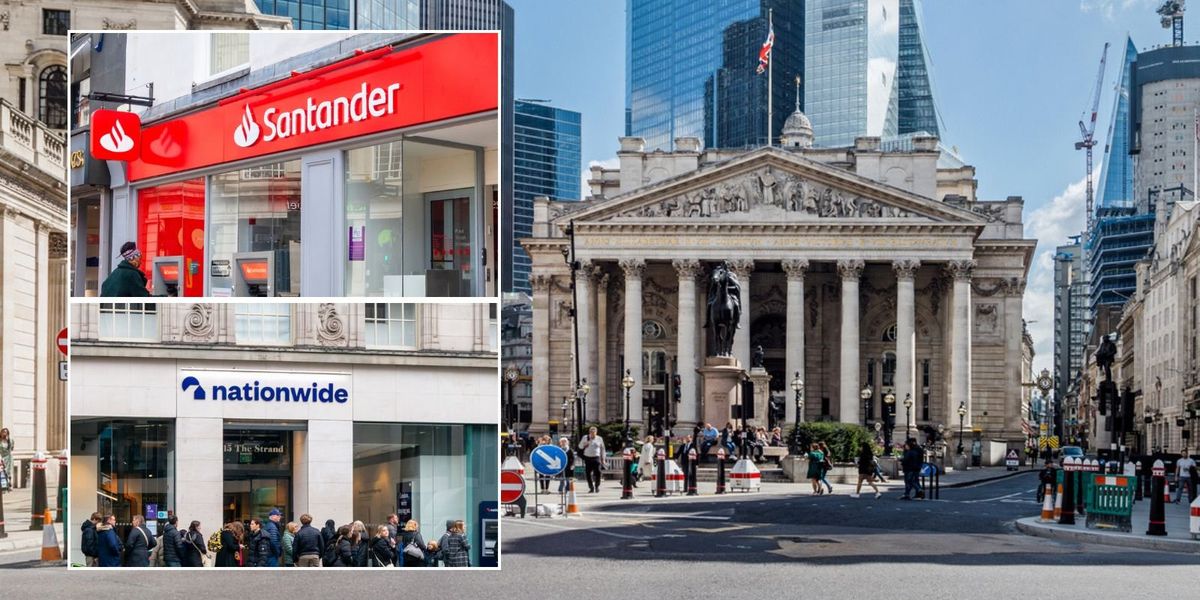
Eight of Britain's biggest mortgage lenders, NatWest, Santander, HSBC, Lloyds, Barclays, Nationwide, Halifax and TSB, have all pushed up their rates this week, leaving homeowners bracing for steeper monthly payments.
Santander's increases were among the sharpest, adding 0.45 percentage points to selected products, while NatWest raised some deals by as much as 0.43 percentage points.
Barclays moved its leading two-year fixed rate from 4.55 per cent to 4.75 per cent. HSBC lifted rates by 0.37 percentage points, and Halifax, the country's largest lender, added up to 0.3 percentage points on certain deals.
Nationwide similarly raised selected products by 0.3 percentage points. TSB is implementing a 0.25 percentage point rise across all its fixed-rate offerings tomorrow, following a 0.1 percentage point uplift on Tuesday.
The increases have been driven by swap rates, the interbank lending rates used to price fixed-rate mortgages, which have surged above 4.7 per cent.
Swap rates typically climb when markets anticipate the Bank of England will raise its base rate to combat inflation.
Fresh data released today showed the consumer prices index (CPI) rose to 3.1 per cent in the year to August, up from 2.9 per cent the previous month.
A global bond sell-off earlier this month, triggered by inflation concerns linked to renewed hostilities between Iran and the United States, has compounded the pressure.
Yields on ten-year gilts reached 5.21 per cent at the start of September, their highest level since 2008, while 30-year bond yields hit 5.89 per cent, a peak not seen since 1998.
Rising gilt yields typically feed through into higher swap rates.
Rachel Springall, personal finance expert at Moneyfact, said: "Swap rates have climbed above 4.7 per cent, prompting lenders such as NatWest, Santander, HSBC and TSB to increase selected fixed rates for the second time this month.
"It is highly likely that other lenders will follow suit to adjust rates, and with some deals withdrawn from the market, any new deals could well be priced higher.
According to Moneyfacts, the average two-year fixed rate for residential mortgages now stands at 5.77 per cent, its highest point since May 11.
Furthermore, the average five-year fix has climbed to 5.83 per cent, a level not recorded since November 2023.
The Bank of England is due to announce its next base rate decision later this afternoon, with markets widely expecting it to hold at 3.75 per cent.
However, further increases are anticipated later in the year with market analysts pricing in at least four rate hikes over the next 12 months.