Thank you for subscribing!
Robert Jenrick is set to announce the change tomorrow as part of a package to back small businesses
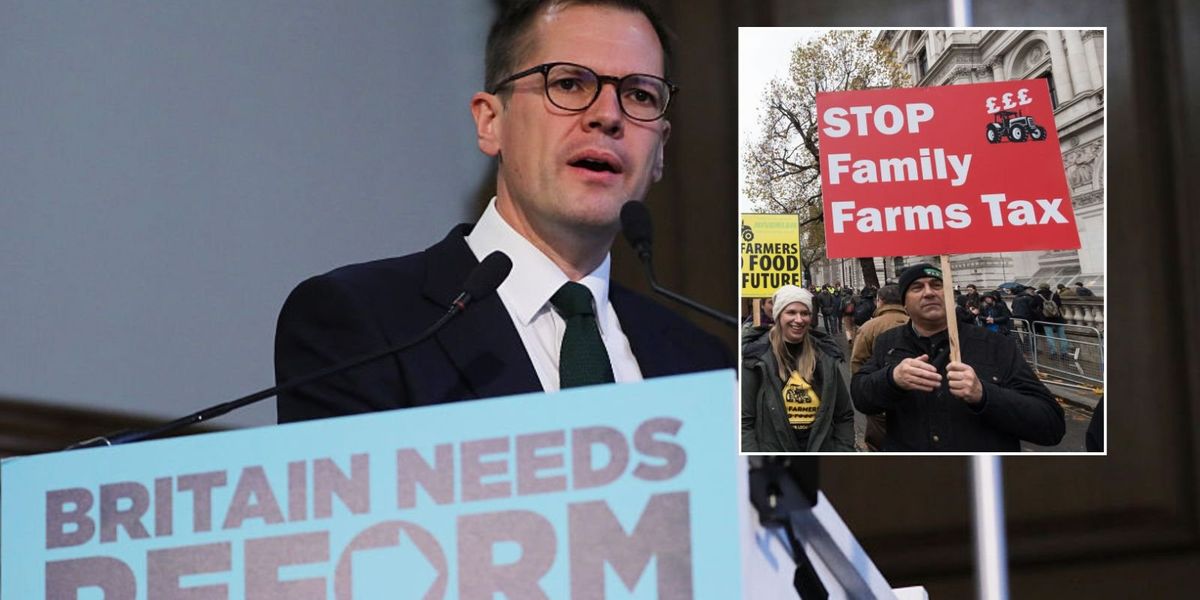
Reform UK has pledged to reverse Labour's inheritance tax changes for family farms and businesses as part of a wider package aimed at supporting Britain's small firms.
The party says it would reverse the reforms to Agricultural Property Relief (APR) and Business Property Relief (BPR) in full, despite the Government already watering down the plans following a major backlash from farmers and business owners.
Shadow Chancellor Robert Jenrick is set to unveil the policy as part of what Reform UK describes as its most ambitious small business support package in a decade.
Under the inheritance tax changes which took effect on April 6, 2026, the first £2.5million of combined qualifying agricultural and business assets in an individual's estate will receive 100 per cent inheritance tax relief.
Qualifying assets above the £2.5million threshold will receive 50 per cent relief, giving them an effective inheritance tax rate of up to 20 per cent rather than the standard 40 per cent.
The £2.5million allowance can also be transferred between spouses and civil partners if it is unused.
This means a couple could potentially pass on up to £5million of qualifying agricultural or business assets with 100 per cent relief, on top of other inheritance tax allowances.
The Government initially announced a much lower £1million allowance at the Autumn Budget in 2024, with 50 per cent relief applying to qualifying agricultural and business assets above that level.
However, following sustained criticism from farmers and businesses, ministers announced in December 2025 that the allowance would be increased from £1million to £2.5million.
The concession significantly reduced the number of farming estates expected to face higher inheritance tax bills.
Government estimates suggest up to 185 estates claiming Agricultural Property Relief, including those also claiming Business Property Relief, will pay more inheritance tax in 2026-27. That is down from an earlier estimate of 375 estates.
Around 85 per cent of estates claiming Agricultural Property Relief are now expected to pay no additional inheritance tax as a result of the reforms.
Across farms and businesses more broadly, up to 1,100 estates are expected to pay more inheritance tax in 2026-27 under the revised rules.
Reform UK argues the concessions do not go far enough and has pledged to reverse the Agricultural and Business Property Relief reforms entirely.
The inheritance tax pledge forms part of a broader package aimed at reducing the costs faced by Britain's six million small businesses.
The flagship policies include reversing Rachel Reeves’s job tax for British workers, scrapping income tax on overtime and overhauling burdensome EU data regulation.
They also plan to increase the VAT registration threshold from £90,000 to £150,000. The party claims the change would immediately benefit around 320,000 businesses at an annual cost to the Treasury of £2.4billion.
Data protection rules would also be overhauled, with GDPR replaced by a lighter regulatory framework based on New Zealand's privacy laws.
Economists have found that GDPR reduced investment in technology firms by 25 per cent relative to American rivals.
The party would also undo Labour's National Insurance rise for employers, funded through a levy on migrant workers. Workers earning below £75,000 would pay no income tax on overtime beyond a 40-hour week under a proposed "Hard Work Bonus."
Reforms to the Seed Enterprise Investment Scheme would allow parents and grandparents to invest up to £250,000 in a relative's small business, receiving a 50 per cent income tax rebate and capital gains tax exemption after three years
Nigel Farage framed the proposals as a direct challenge to both main parties. "Small businesses are the beating heart of our economy, yet they have been suffocated by years of punishing taxes, suffocating EU red tape and a big-state obsession that rewards dependency over hard work," the Reform UK leader said.
"While the establishment parties drive small firms to the brink of closure, Reform UK is offering a bold, common-sense rescue plan."
Mr Jenrick struck a similarly bullish tone: "Under a Reform government, the UK will be the best place in the world to start and grow a small business."