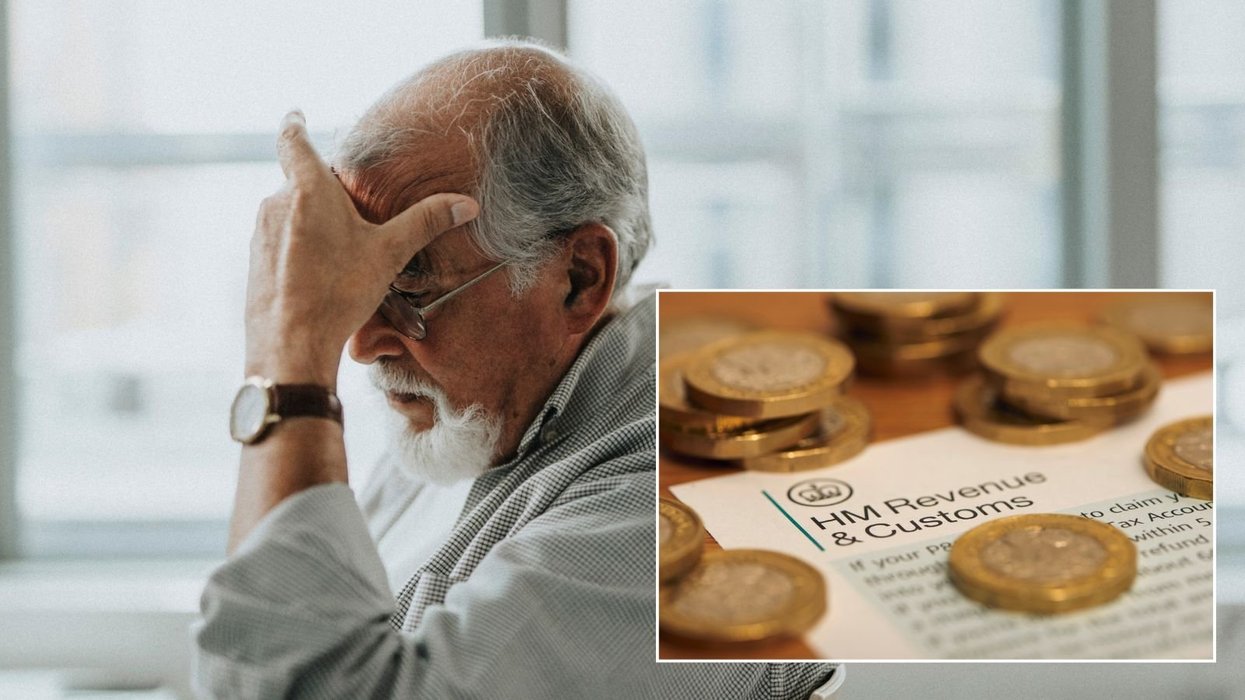
Campaigners are seeking a judicial review after military pensions were treated as unearned income for Universal Credit calculations
Hundreds of former military personnel say they have been left facing financial hardship.
It comes after the Department for Work and Pensions (DWP) treated Armed Forces pensions as “unearned income” when calculating Universal Credit payments.
Under current rules, occupational military pensions are deducted pound for pound from Universal Credit awards, with some veterans also being asked to repay alleged overpayments.
Campaigners are now preparing a legal challenge, arguing that military pensions should instead be classed as earned income.
Universal Credit is reduced by £1 for every £1 of unearned income a claimant receives.
The DWP says Armed Forces pensions fall into that category and are therefore fully taken into account when assessing entitlement.
Peter Sharples, head of the Veterans Institute, said he has been contacted by “hundreds” of former service personnel in recent months who say they have been affected.
Mr Sharples took early access to his military pension in March 2024, three years earlier than planned, because of what he described as “crippling” health problems.
He said he informed the DWP and was told it would not affect his benefits — only to later be told he had been overpaid and must repay £8,800.
He said his monthly Universal Credit payments were reduced by £463, the same amount as his military pension, and that his tax‑free terminal gratuity was treated as capital.
A judge upheld the DWP’s decision earlier this year, prompting Mr Sharples to seek a judicial review against Work and Pensions Secretary Pat McFadden.
He argues the policy amounts to a “stealth clawback of service reward” and breaches the Armed Forces Covenant.
“My case is similar to many thousands of veterans out there,” he told The Telegraph.
“Some have been chased for £20,000 or £30,000. It’s clearly targeted.”
He added: “Classing the military pensions as earned income would change the lives of thousands of veterans up and down the country.”
MPs have raised the issue in Parliament, highlighting cases where veterans have seen their Universal Credit wiped out by pension deductions.
Among those affected is Tony Norris, a 64‑year‑old former member of the Queen’s Own Hussars from East Yorkshire.
After spinal surgery, he became the full‑time carer for his autistic son.
When his wife died from terminal lung cancer in 2024, he transferred the household’s Universal Credit claim into his own name — and the DWP reduced his monthly payment by £521, equivalent to his military pension.
“I was potentially out on the streets with my autistic son,” he said.
“Why are military personnel being persecuted? Why are we having our pensions, which we rightfully earned, taken away from us?”
He added: “The only time we could rightfully lose the military pension is if we go to prison.
We do have plenty of people who have not contributed to our country in any way, shape or form, who are getting treated better than our military veterans.”
Military charity Help for Heroes has urged the Government to review the policy.
George Lankester, senior policy and public affairs manager, said: “Those who have served our country should be supported in post‑service life — we hope that the Government takes another look at this.”
He said the Armed Forces Covenant makes clear that veterans should not be disadvantaged because of their service.
Official figures show 68,000 former members of the Armed Forces are claiming Universal Credit across Britain.
A DWP spokesman said: “Armed Forces pensions are treated as unearned income and are taken fully into account, in line with the approach for other occupational pensions.”