Thank you for subscribing!
The replacement list, due to be taught for the first time from September, has a combined age of merely 59 years, with nothing predating 2018
An A-level English exam board has been accused of "dumbing down" texts for students over older, "unfamiliar language".
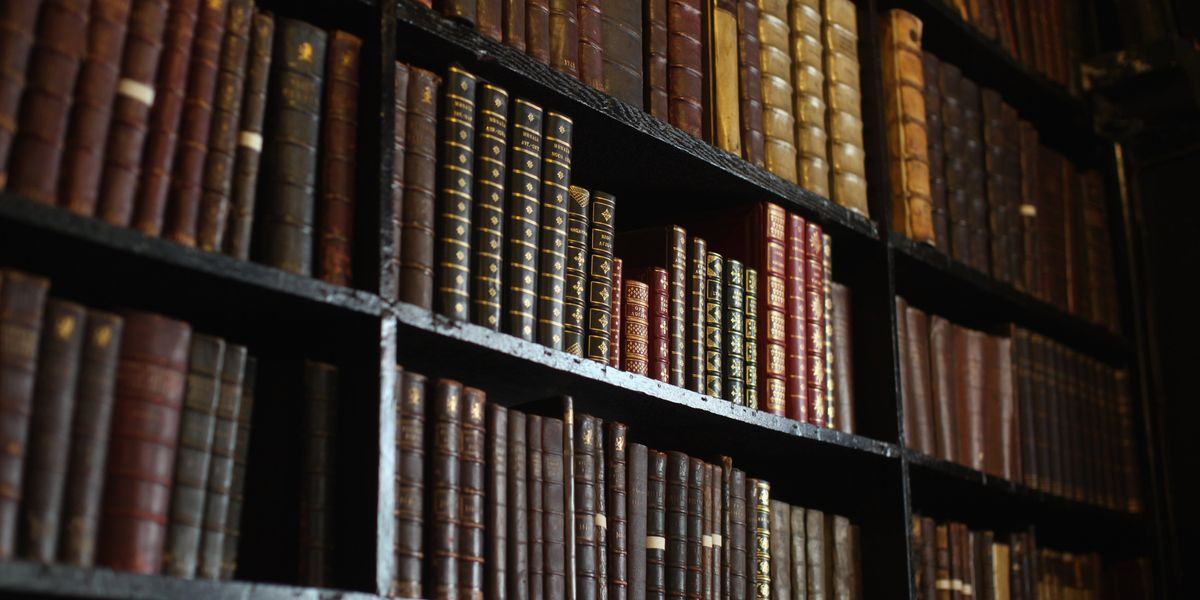
Cambridge OCR faced criticism after scrapping works from its non-fiction reading list spanning nearly two centuries in favour of titles published exclusively within the past eight years.
The exam board, one of five operating across England, Wales and Northern Ireland, has overhauled the set text options for its EMC English language and literature qualification.
Under the previous list, students could study non-fiction from the 19th, 20th, and 21st centuries, with the selected works totalling 512 years.
Since 2016, the non-fiction options had featured George Orwell's Down and Out in Paris and London (1933), Solomon Northup's Twelve Years a Slave (1853) and Truman Capote's In Cold Blood (1966), alongside more contemporary titles.
Their replacements include Richard Flanagan's Question 7 (2024), Ana Kinsella's lockdown portrait of London Look Here (2022), and Common People (2019), an anthology edited by Kit de Waal featuring 33 working-class writers.
Tara Westover's 2018 memoir Educated is now the oldest work available.
The board had already drawn criticism for swapping Orwell's memoir for Anna Funder's Wifedom (2023), which portrays the author as "sadistic and misogynistic".
The Orwell Society has challenged the book's accuracy, and Orwell's son, Richard Blair, told The Observer that it misrepresented both his mother and his parents' marriage.
Michael Gove told The Telegraph: "I fear it's just another example of the retreat from ambition within education at the moment.
"It's perfectly possible to examine and to write intelligently about 21st-century texts, but the whole drift of our times is away from educating people about the best that has been written and towards works that are more accessible."
Dr Alka Sehgal Cuthbert, a curriculum expert and director of the Don't Divide Us campaign group, described the revised specification as "a travesty of an education in literature and a tragedy for our culture", arguing it severed a new multi-ethnic generation from its rightful humanist inheritance.
Frank Furedi, emeritus professor of sociology at the University of Kent, warned the move risked reinforcing "a presentist focus on relevance rather than the literary integrity of the text".
Literary critic Henry Oliver called the pursuit of accessibility "self-defeating", arguing: "These young people know all that. They know how modern English works... the point is to be able to pull them out of that and show them other things."
Cambridge OCR has defended the changes by pointing out that pupils still engage with classic authors elsewhere in the course, including Shakespeare, William Blake, Oscar Wilde and Charlotte Brontë.
The non-fiction component, which accounts for 20 per cent of the overall A-level, also requires candidates to produce an original piece of non-fiction writing. Some 1,297 students sat the EMC paper this summer.
Chris McGovern, chairman of the Campaign for Real Education, was unsparing in his assessment, saying the overhaul "represents a closing down of choice that is quite contrary the British tradition of liberal, open-minded, inclusive education".
An OCR Cambridge spokesman told The Telegraph: "It is incorrect to say students taking our A-level in English language and literature will not encounter classic texts, challenging ideas, or older language.
"Students must study writing and speech from 1600 to the present day, including works by Shakespeare, William Blake, Oscar Wilde, and Charlotte Brontë among others.
"All exam boards must include the study of post-2000 texts in this subject as part of the regulatory conditions introduced in 2015. Students must compare one text on this list with any text of their choice, from any era.
"This qualification combines the study of literature with rigorous linguistic analysis, and should not be confused with our single-subject A-level in English literature. which includes an even greater choice of classic and contemporary texts, including by Orwell, Austen and Hemingway."
GB News has reached out to OCR Cambridge for further comment.