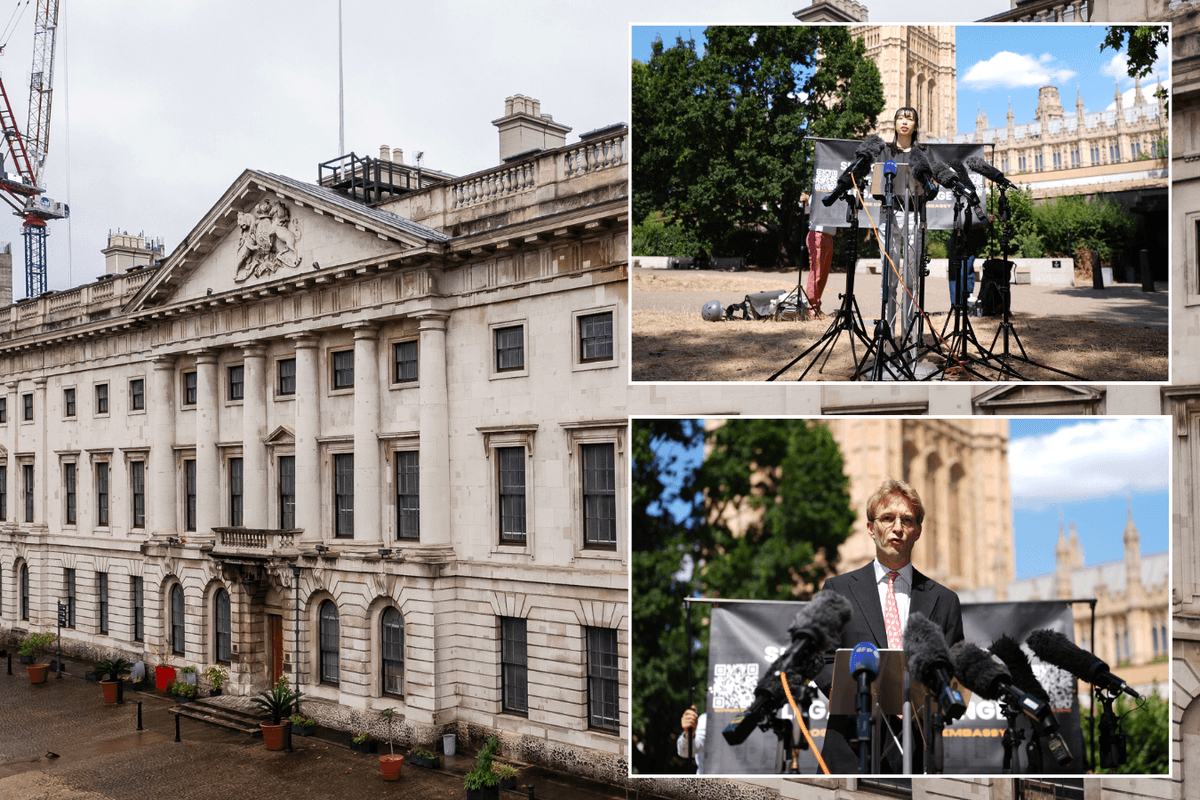
'We must heed the warnings of British-Iranian families who are on the front line of the threat,' Lord Walney told GB News
British-Iranians have urged Andy Burnham to overhaul Britain's visa system over fears the Islamic Republic is using immigration routes to wage “psychological warfare” on the United Kingdom.
Speaking to GB News, they warned fellow countrymen arriving in Britain on student and work permits are creating a reign of self-censorship and fear in their communities.
Sources said Labour must enact tighter restrictions on visa applications from Iran, bringing standards in line with other countries such as the United States, to help combat a “culture of fear” that has arisen.
In one of the last acts of Sir Keir Starmer’s administration, Iran’s Islamic Revolutionary Guard Corps (IRGC) was designated as a hostile state-backed organisation following a series of alleged Iran-linked plots and attacks on British soil.
The designation makes it a criminal offence to support or assist the group — and gives police and prosecutors new powers to pursue these inquiries.
In recent months, it has emerged Tehran has been exploiting both legal and illegal migration routes to potentially bring its agents to the UK.
These tactics range from allegedly using Iran-linked charities and media organisations to sponsor skilled worker visas to potentially sneaking agents onto small boats crossing the English Channel.
However, ordinary British Iranians have told the People’s Channel the scope of the regime’s activities in the UK was much wider and the day-to-day reality is far more subtle.
Journalist Mani Basharzad estimated “around 80 per cent” of Iran’s influence on Britain is indirect and within the law, even following the IRGC designation.
Britain's News Channel has learnt one objective of these activities is to “preempt opposition” from the Iranian diaspora by waging a subtle form of “psychological warfare”.
They said this made speaking out against the Ayatollah feel unsafe for fear radical migrants could, even inadvertently, pass the information back to the hostile power.
One member of the diaspora, who requested to remain anonymous, told GB News: “You don't need an IRGC minder in the room when everyone already knows who's watching. That's key to their success.
“The regime doesn't have to silence us here; it just has to make sure we're never quite sure who's listening. We have to censor ourselves and call it caution.”
They feared any comment or criticism, no matter how slight, could make its way back to their homeland and help build a profile or even be used against family members in the Middle East.
“You don't need to recruit anyone when simply existing near the wrong conversation, or being associated with someone, is enough to put your relatives back home at risk," they commented.
In this way, the Islamic Republic can leverage immigration to Britain as a free and legal means of policing criticism among the Iranian diaspora.
“The regime creates a culture that, even in a free country, you can't say what you really feel because of their influence,” Mr Basharzad claimed.
“Without them spending a penny, Iran has so many propagandists basically making their lives easier for them.”
Roger Macmillan, former head of security for Iran International, said this was part of a very deliberate strategy from the Islamic Republic.
He remarked: “If people feel threatened, they are less likely to form clear groupings. They're less likely to form clear opposition.
“At the end of the day, it's to keep people apart, to keep people separate, to keep the distrust flowing, to stop the appearance of there being a unified opposition.”
“It’s not about catching people in dissent necessarily. It's preempting dissent from ever happening by making sure the diaspora effectively polices itself.”
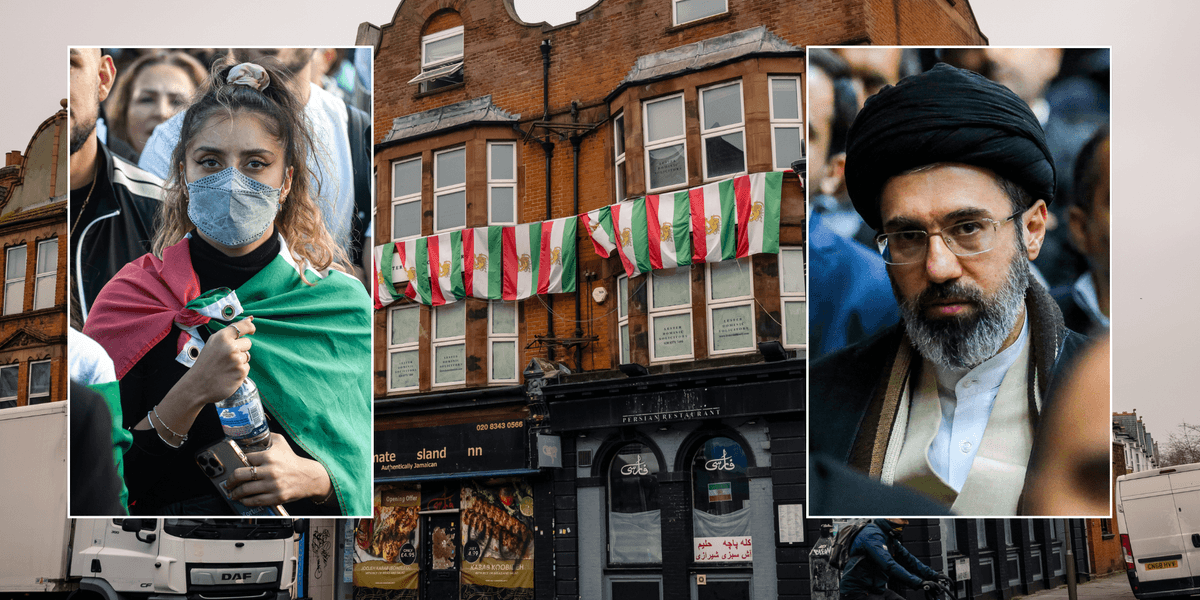
This "culture of fear" for British Iranians is heightened by pro-regime demonstrations, such as Westminster's Al Quds Day rally in March. The Home Office blocked attendees from marching but could not ultimately stop the muscular display of support for the country's authoritarian leadership in the borough.
Mr Macmillan explained this demonstrated the difficulty in legislating against the concerns of the Iranian diaspora, as they may clash with fundamental Western values of free speech and association.
Another case study of this practice in action was on university campuses, where Mr Macmillan said there was a “long-standing” trend of individuals supportive of the Mullahs entering the UK under student visas.
He exposed a common realisation among “genuine Iranian students” that some of their peers come from families with deep state ties.
Mr Basharzad also added Iran’s stringent national university exam, known as Konkour, naturally selects supporters to study abroad.
He revealed: “One million people compete in Konkour, and then maybe 10,000 go to the best university. So, it's quite a competitive system.
“The people who are close to government, they have all these techniques and all these cheating ways to pass the exam and go to study overseas."
Mr Basharzad said this allowed Iran to channel sympathetic students to the UK to act as an informal outpost of the Islamic Republic.
Mr Macmillan explained “you do not need hundreds of people to come in on that particular route” to have an effect on silencing debate, adding: “Tens will do”.
One British-Iranian couple, who have family at British universities, said their greatest fear was not Tehran’s agents arriving by “small boat but people coming with plane tickets”.
As of the 2021 census, there are 114,400 Iranian-born Britons in the UK, with the wider diaspora estimated to be around 250,000 people.
Last year, 1,560 Iranians came to the UK on student visas while 1,300 arrived on work visas. Amid tensions with the Islamic Republic, these numbers have fallen significantly since 2023 but remain a major concern for the British-Iranian community.
Despite a further expected drop due to the Iran war, members of the diaspora have told the People's Channel the UK must look ahead and greatly deepen visa scrutiny to screen for extended links to the regime, which looks set to survive the conflict in an “emboldened” state.
“I think family connections should absolutely be a part of the vetting,” Mr Basharzad asserted.
“Current UK checks are all about the individual — do they have a criminal record or not, have they been a member of the IRGC or not, do they have enough money to study here or not. It’s all about the personal level.”
He argued such an approach does not sufficiently address the close family ties and patronage to the regime prevalent in elements of Iranian society.
To that end, British Iranians and their supporters have insisted Downing Street's next steps on responding to the threat from Tehran must be informed by their community.
“Engagement with the Iranian diaspora is so important to understand the threat,” Mr Macmilan insisted.
“They’re your best intelligence eyes and ears to understand the environment of Iran and untangle concepts that Westerners may not be familiar with.”
Lord Walney, the British government’s former independent adviser on political violence and disruption, concurred and called for ministers to heed these warnings.
“The Iranian regime’s operations to cause harm on British soil are organised and multifaceted and demand a much more thorough and coordinated response from the British state,” he told Britain's News Channel.
“The Ayatollah’s state-sponsored terrorism and intimidation impacts us all; we must heed the warnings of British-Iranian families who are on the front line of the threat.”
Shadow Home Secretary Chris Philp joined the calls, arguing: “When the regime's alleged UK propaganda arm has been sponsoring people to come to Britain on skilled visas while under investigation by the Charity Commission over links to the ayatollahs, it is clear that the Home Office are dropping the ball.
“We need much stricter vetting of anyone coming to the UK from Iran. The government is rightly prescribing the IRGC, and we will support robust measures they bring forward to tighten up the visa system.
“Those who support the Iranian regime, or whose close family members do, should not be allowed into the UK. The regime has murdered over 30,000 of its own citizens this year, is trying to get a nuclear weapon and has sponsored terrorism around the world. We don’t want these kinds of people in the UK.”
If the Iranian diaspora’s suggestions were adopted, such measures would bring UK visa rules on Iranian nationals closer to the far stricter US system, which included extensive checks and bans on entering to work and study in certain fields.
Since January 2026, Washington has suspended visa applications for Iranian nationals almost entirely.
Following the start of the Iran war in Feburary, the UK implemented extensive individual security screening and background checks. Britain’s Visa Application Centre (VAC) in Tehran also closed, holding up applications.
However, the VFS, the world's largest visa outsourcing service, announced the UK VAC had reopened in the Iranian capital on June 21 and restarted processing applications.
A Home Office spokesman responded: “We take the threat posed by Iran incredibly seriously, and our first priority is protecting British interests and lives. The police and security services work tirelessly to investigate and stop such threats.
"Any attempt by a foreign state to intimidate, harass or harm individuals in the UK is unacceptable and will not be tolerated."
The Lion and Sun Student Union, a pro-democracy UK-wide organisation for Iranian students and young professionals, was approached for comment.