Thank you for subscribing!
Strict French rules on how long the embroidery can be viewed have been blamed for the disappointment
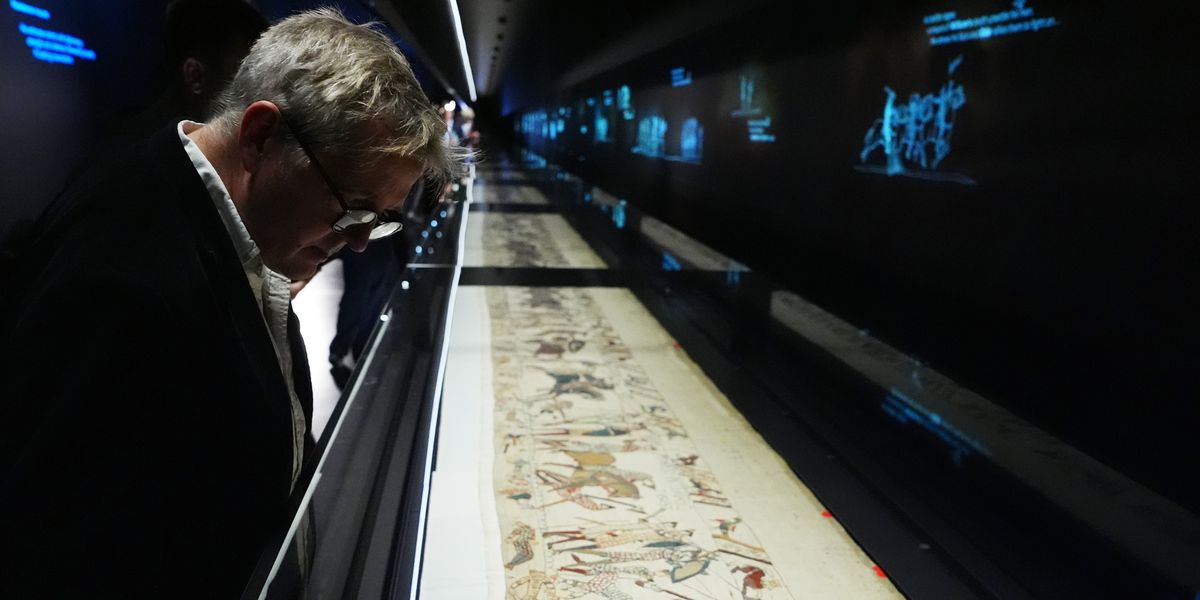
British Museum visitors have been turned away after tourists spent too long gawping at the Bayeux Tapestry.
Several hundred staff, volunteers and "community groups" were granted access to the historic embroidery before paying members of the public.
But a number of visitors were turned away because of the length of time people took to view the 68-metre artwork and because of strict rules from its French owners.
The event has highlighted the need for ticket-holders of the sold-out exhibition to stick to their 40-minute time slots.
Professor Michael Lewis, the British Museum's lead curator, told The Telegraph the museum would be trusting viewers to stick to the rules rather than "pulling them along".
But one early viewer said the magnificence of the embroidery, which depicts events leading up to the Battle of Hastings and the Norman Conquest of England in 1066, was likely to continue to cause delays.
They said: "It is compelling viewing and people became so entranced that there wasn't the space or time for some of those who had the free tickets at the weekend to get in."
A spokesman for the British Museum admitted the weekend was a "testing period" and, at times, the "demand exceeded capacity".
"The vast majority of those who attended were able to see the tapestry, and anyone who could not be accommodated was offered an alternative date," the museum added.
Unlike its display in its permanent home of Bayeux, France, where the artwork is in a horseshoe shape, the tapestry has been presented in the British Museum in a straight line.
A museum source said: "We thought people would self-regulate and move along and complete the tapestry’s length in their 40-minute time slot, although some will maybe go straight to their favourite scene.
"But they dictate the pace they move along. The 40 minutes we have assigned is a lot longer than people get in Bayeux."
LATEST ON THE BAYEUX TAPESTRY:
A British Museum spokesman said: "Ahead of opening to the public, the museum tested a range of visitor scenarios and gallery capacity levels with colleagues, volunteers and community groups.
"This was particularly important given the strict conservation requirements around the tapestry, including limits on light exposure, which meant the first week operated with significantly fewer viewing hours than a normal public week."
France, as a condition of lending the work, has stipulated a maximum number of Lux hours - the amount of light the surface can receive before it is covered.
The degradable material of the artwork can be washed out by the lights.
A museum source said: "At the weekend demand exceeded capacity and towards the end we had to turn people away.
"The visit times were staggered, as they will be from Thursday, but we don't usually have the level of restrictions on lighting, and we were very conscious of strictly abiding by them."
Prof Lewis added that those who gawped at the artwork for too long would not be forcibly moved along.
"We're not wanting to be heavy about this, but we want people to understand that this is a communal experience in a way and that people have to be fair to their fellow museum visitors," he added.