Thank you for subscribing!
Suffolk Council's leader, Michael Hadwen, said the county has been 'overlooked'
A row surrounding the Bayeux Tapestry has broken out over a so-called "absolutely unfair" deal with France.
Suffolk's council leader has branded the ticketing arrangements surrounding the blockbuster British Museum show "absolutely unfair".
A dispute has intensified over the county being shut out of preferential access despite its own Anglo-Saxon treasures forming a key part of the loan deal with France.
Michael Hadwen, who leads the council for Reform UK, said the county had been "forgotten and ignored" in negotiations that saw the millennium-old tapestry travel from Normandy to London.
Under the historic Anglo-Franco agreement, prized artefacts from the Sutton Hoo ship burial — unearthed near Woodbridge in east Suffolk in 1939 — are being sent to France for exhibition.
Hastings and Battle residents were offered priority booking for the now sold-out tapestry show, no comparable arrangement was extended to people living near the site of one of Britain's most celebrated archaeological discoveries.
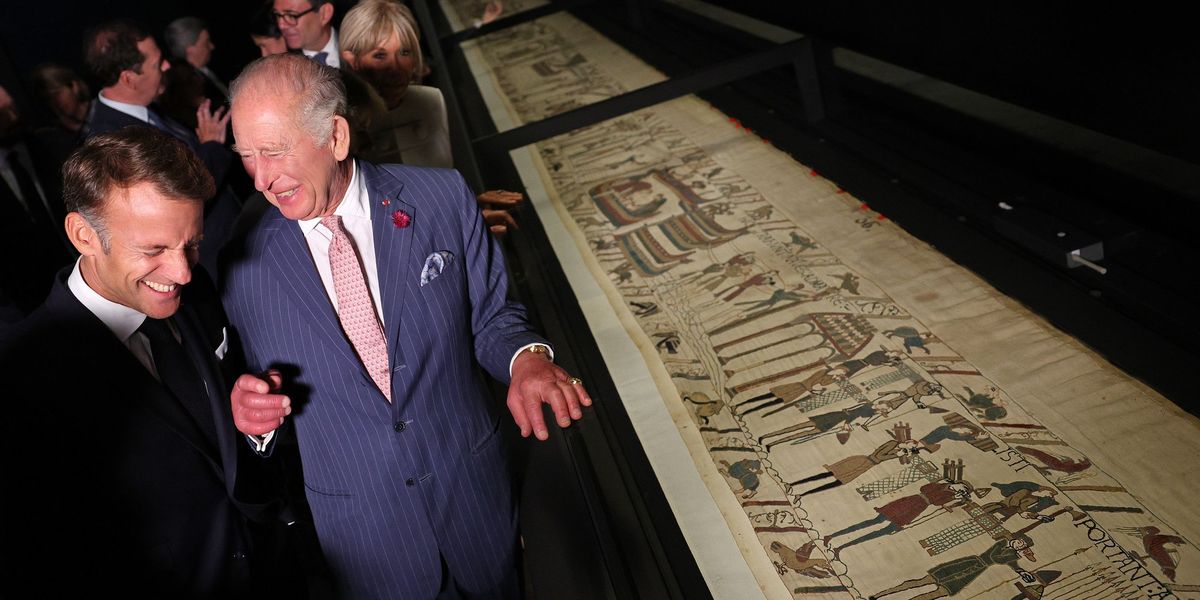
The tapestry, a 70-metre-long artwork depicting the Norman conquest, is currently at the centre of a sold-out exhibition at the British Museum following its historic journey from Bayeux.
The deal that brought it to London also included the transfer of less widely publicised Anglo-Saxon objects from Sutton Hoo.
As well as the Lewis Chessmen - 12th century walrus ivory and whale tooth masterpieces found on the Isle of Lewis in 1831 - to be displayed at venues in Normandy.
Those living in Hastings and the area covered by Rother council, which includes Battle, the inland village where the decisive combat of 1066 took place, were granted preferential booking to visit the embroidery.
They could use their postcode to reserve priority slots for up to 10 people, while local schools were given free access.
The formal loan agreement further requires steps to be taken to "facilitate access by specific groups of French visitors to the exhibition at the British Museum".
Mr Hadwen told The Telegraph that Suffolk had once again been sidelined.
"It's sadly another occasion when Suffolk is overlooked and never consulted on what would be good for our residents," he said.
He appreciated French audiences would get the chance to appreciate the county's heritage, but stressed local people deserved to benefit too.
"We are very protective of Sutton Hoo and it's a great source of pride that the helmet came from our county," he added.
The iconic helmet, with its elaborate metalwork and striking facemask, is believed to have belonged to a seventh-century ruler of the Kingdom of the East Angles.
Its discovery on the eve of the Second World War — later dramatised in the Ralph Fiennes film "The Dig" — cemented its status as one of the defining artefacts of Anglo-Saxon England.
Mr Hadwen proposed Suffolk residents could receive priority access to the Sutton Hoo objects when they go on show at the Château de Caen and the Musées de Rouen next spring.
Alternatively they could be offered preferential tickets for the tapestry itself.
He said: "I hope this oversight is sorted and that we are brought into the conversation."
Canterbury City Council has demanded its residents also receive priority treatment, arguing the tapestry was almost certainly stitched there.
King Charles himself lent weight to Canterbury's case when, speaking at a reception with President Macron, he suggested the famous artwork might more accurately be dubbed the "Canterbury Embroidery".
Further north, residents of the Outer Hebrides appear similarly excluded from any preferential arrangements despite the Lewis Chessmen being shipped to France as part of the same deal.
It is understood locals in the remote Scottish islands have received no share of the benefits flowing from the Bayeux agreement.
The British Museum defended its approach, stating: "Given the tapestry's depiction of Hastings and connection to the area we have prioritised early engagement there.
"We're afraid that priority access cannot be offered to every local authority."