Thank you for subscribing!
The Save Our Aviary campaign has enlisted a former government zoo inspector to challenge the local authority's planned March closure
Campaigners battling to preserve a historic aviary in Southport have launched a forceful counterattack against the local authority's decision to shut down the facility next year.
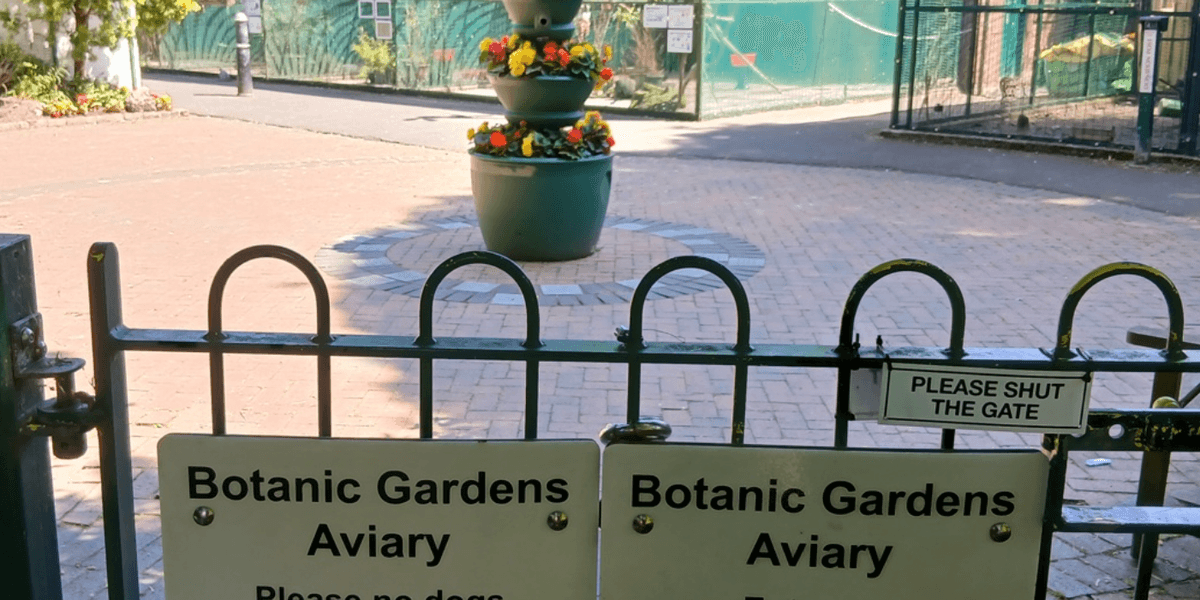
The Save Our Aviary campaign has enlisted a former government zoo inspector to challenge Sefton Council's planned March closure of the Churchtown Botanic Gardens aviary, which has housed birds for 87 years.
Peter Scott, who previously worked as a DEFRA zoo inspector, has warned relocating the birds "will not be improved by being moved".
The campaigners have dismissed the council's reasoning as "generic" whilst gathering significant public backing, with 15,000 signatures now collected on a petition opposing the shutdown.
The growing confrontation comes after the council announced in July its intention to close the facility, citing animal welfare concerns and maintenance expenses.
The local authority has justified its decision by arguing the aviary fails to meet contemporary welfare expectations and that upkeep expenses have become unsustainable.
Marion Atkinson, Sefton Council's leader, revealed the authority had attempted to transfer the site away from its management a decade earlier, although those plans ultimately collapsed.
The council has received backing from PETA, the largest animal rights organisation globally, which came forward last week to endorse the shutdown.
The authority has committed to finding new homes for the creatures with appropriately equipped facilities, ruling out euthanasia as an option.
Dr Carys Bennett, senior corporate projects manager at PETA, praised the decision to relocate the animals to venues with better resources to accommodate their requirements.
"Birds are not ornaments to be displayed," she stated. "The aviary's parrots, for example, are highly social animals who, in nature, live in flocks, fly long distances, forage for food, and make their own choices."
The Save Our Aviary group has issued a strongly worded statement attacking both the council's stance and the expert testimonies supporting it.
According to the campaigners, the authority has published a position statement claiming support from animal welfare specialists worldwide in what they describe as a "desperate attempt to counter the growing local, regional and national support" against the closure.
The campaign has accused the council of presenting "generic views about captivity" rather than evidence-based assessments.
"Without assessing the Aviary itself, this is opinion, not evidence," their statement declared.
The group has further alleged "Sefton are now backfilling justification after the fact, not presenting evidence that informed the original decision".
They maintain "a public asset can't be closed on ideological grounds", arguing the council has failed to properly evaluate the facility before determining its fate.
Mr Scott, who holds honorary membership of the British Veterinary Zoological Society, has provided a comprehensive assessment defending the aviary's standards of care.
He described the birds as receiving proper nutrition and being housed in conditions that allow them to take flight over short distances whilst permitting escape from visitors when desired.
The inspector rejected what he characterised as simplistic thinking regarding bird freedom.
"Rather than the naive view that birds must be free and flying, a more nuanced approach should be taken," he argued. "Free and flying enables birds to encounter aggression, predation, injury, starvation."
Mr Scott highlighted the complex welfare needs of birds that have formed attachments to human contact, noting such creatures may exhibit stress behaviours including feather plucking without regular interaction.
He acknowledged the council's concerns about wild capture whilst observing the birds currently present were already residing in the facility and probably bred in captivity.
The facility deserves recognition for rescuing animals whilst offering free community access and enriching the birds' lives through space and human engagement, Mr Scott contended.
The resource should be "protected and lauded, not sacrificed to political whim or even worse unreasoning dogma," he stated.
The aviary closure controversy unfolds against a backdrop of broader decline affecting the gardens.
The museum building has remained shuttered for 15 years, whilst a bridge near the Verulam Roads car park deteriorated to the point of requiring removal.
Victorian bridges spanning the Serpentine Lake await urgent repairs.
The cafe stands empty and watercraft that once operated on the lake have disappeared, along with a road train that previously served visitors.
Despite these challenges, the Botanic Gardens Community Association contributes 8,000 volunteer hours annually to maintain the grounds, under the leadership of David and Ann Cobham, both 83.
Community fundraising efforts have generated £50,000 through the Make A Change For Botanic campaign spearheaded by David Rawsthorne.
Heavy rainfall regularly floods the park, overwhelming drainage systems and affecting routes to Churchtown Primary School.