The Purbeck stretch is the final known regular nesting location for puffins on the southern English mainland
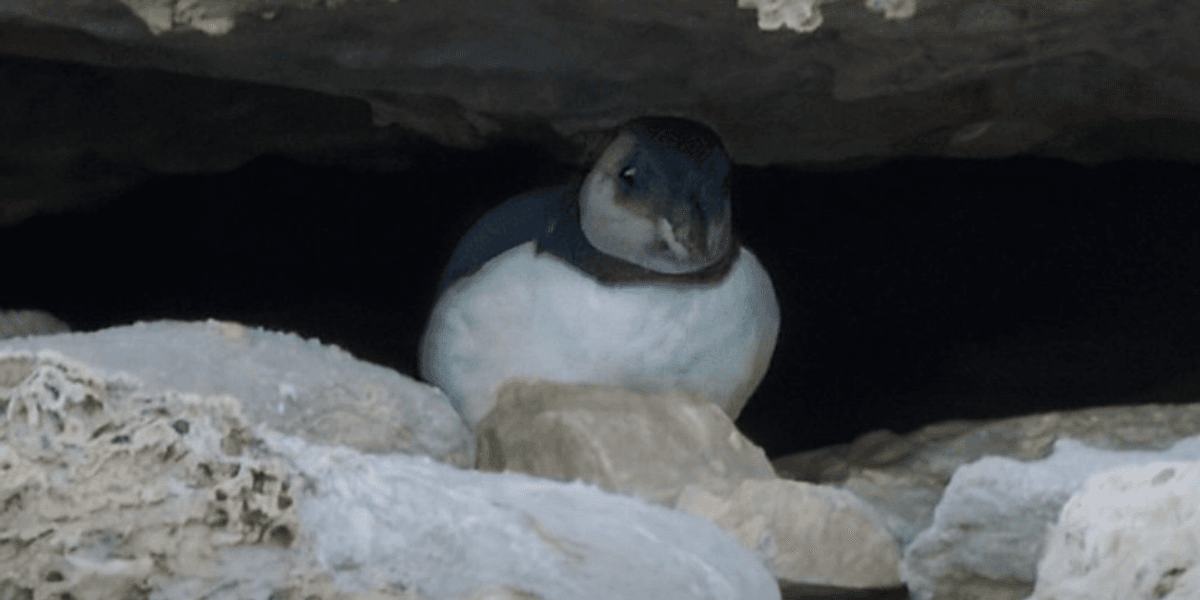
A baby puffin has been seen on Dorset's coastline for the first time in three decades, offering a glimmer of hope for southern England's last remaining mainland puffin colony.
The puffling emerged from its nesting crevice on the Purbeck coast near Swanage, where years of patient cliff-watching by dedicated volunteers finally yielded the breakthrough moment.
"Seeing the puffling was a great thrill," said marine ornithologist Richard Caldow.
"Every chick matters. One puffling alone won't save this colon,y but one is a whole lot better news than none."
The Purbeck stretch is the final known regular nesting location for puffins on the southern English mainland and growing fears had mounted that the colony was on an irreversible path towards extinction.
During the 1950s, roughly 80 puffins nested along this stretch of cliff, but numbers eventually dwindled to just three breeding pairs, with no confirmed fledgling sightings for the past 30 years.
A team of 13 volunteers spent 15 weeks keeping watch over the nesting ledges - a gruelling commitment given the difficult and precarious access to the observation point.
The effort was coordinated by Mr Caldow, who brings nearly four decades of experience in coastal bird research and conservation, with support from members of the Purbeck Natural History Forum.
In April, six adult puffins were recorded at the colony site.
Within weeks, the watchers noticed birds ferrying fish into at least two distinct nesting spots, suggesting multiple pairs were attempting to rear young.
Fish deliveries to most nesting locations ceased after June 12, indicating that not all chicks had survived.
However, one spot continued to receive food and it was there that the puffling was ultimately seen.
Mr Caldow said: "We knew its parents had been feeding it since about May 29 until July 5, so by then it was 38 days old."
On July 7, they hired a boat and anchored in position from 4pm to 8pm.
After a three-hour wait, "just after 7pm it popped out behind its parent. Great to see."
The chick may well have fledged that same evening and is now somewhere out at sea entirely alone, as puffin parents cease all care once their young depart.
The earliest it could return would be 2028, with breeding unlikely before 2030.
"It tells us that Purbeck puffins can still lay fertile eggs, hatch them and, at least in some years, find enough food to rear a chick and escape the attention of predators," Mr Caldow said.
The National Trust has spent years trying to unravel why the Purbeck colony has consistently failed to produce chicks, with possible explanations ranging from predator rats and peregrine falcon attacks, to the impacts of climate change.
To gather evidence, rope-access specialists have fitted solar-powered motion-sensor cameras deep within the cliff fissures where the puffins nest, approximately two metres from the entrance.
These devices will be retrieved once the seabird breeding season ends, leaving volunteers to sift through thousands of captured images.
"Understanding what is happening inside the nesting crevice is the missing piece of the puzzle," said Ben Cooke, the National Trust's rivers and coast project officer for Purbeck.
"If we can identify the reasons why chicks and eggs are being lost, we can begin to explore what conservation measures might help.
"Puffins are such an iconic bird, we want to do everything in our power to help them survive in Purbeck."