Thank you for subscribing!
Chief constable Jason Hogg said the additional workload could demand forces to redirect officers away from live crimes being reported
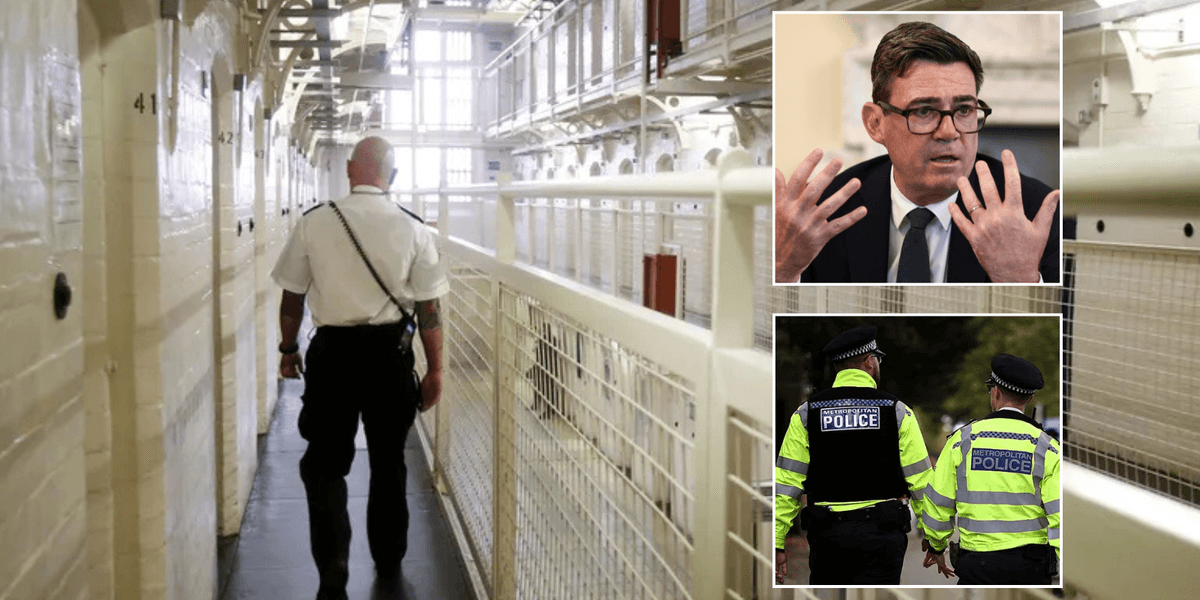
Police forces across England and Wales would need additional funds of almost £500 million to deal with offenders released from prison early under Labour's prison scheme, senior police chiefs have warned.
The National Police Chiefs’ Council (NPCC) estimates that the 43 forces could need an extra £480 million worth of police time to respond to licence breaches and further offences committed by prisoners freed as part of the Government’s efforts to ease overcrowding.
Jason Hogg, chief constable of Thames Valley Police, said the additional workload could demand forces to redirect officers away from live crimes being reported.
“We’ve got difficult decisions in the coming months about having to move resources from responding to and investigating crimes that are committed today to, if you like, monitor and deal with breaches of those who are released from custody early,” he told The Telegraph.
Some 2,500 criminals, including violent offenders, domestic abusers and stalkers, are expected to be released onto British streets before Christmas under the controversial plans.
The official Whitehall timetable revealed the Ministry of Justice was planning to fast-track the early releases later this year.
Under the timetable, 1,350 prisoners are set to be freed in two days in October as Labour seeks to prevent jails from running out of space.
This will then be followed by a further 650 prisoners in November and 550 in December, all of who will be freed after serving as little as a third of their sentences if they were supposed to serve 40 per cent.
Prisoners are then expected to be released early in waves over a period of 10 months.
The programme comes on top of the droves of prisoners already released each month at the end of their sentences.
Although probation services supervise offenders in the community, police are responsible for investigating new offences and enforcing licence conditions.
Breaches can include failing to attend appointments, living somewhere other than an approved address or entering an area from which an offender has been barred.
Mr Hogg warned that licence breaches could create a greater burden for police than new crimes.
Some offenders could breach their conditions almost immediately after leaving prison, he said.
The Thames Valley chief constable also pointed to estimates that about one in three adults released from custody commit another offence within a year.
For prisoners who have served two months or less, the figure is close to half.
“We haven’t been given any additional funding for that,” Mr Hogg said.
Previous early-release measures have contributed to rising numbers of prisoners being recalled to custody.
In the three months to March 31, recalls exceeded releases for the first time, according to official figures.
Police chiefs have urged ministers not to weaken the rules governing recalls, despite continuing pressure on prison capacity.
Mr Hogg said offenders who broke their licence conditions should face swift consequences and return to custody as soon as possible.
He said there needed to be a clear deterrent for prisoners released early, including immediate action against those who breached curfews or removed electronic tags.
However, he acknowledged that the policy would depend on prisons having enough capacity to take recalled offenders.
Mr Hogg said police were already experiencing “red hot” demand, with 999 calls at their highest level.
He also echoed concerns raised by Sir Mark Rowley, Metropolitan Police commissioner, about violent suspects being released on bail because of shortages in prison space.
Mr Hogg said lengthy court delays were also weakening confidence in the justice system, with some domestic abuse cases taking more than a year to reach court.
He said the system needed to deliver “swift and firm consequences” for people who broke the law, warning that delays were undermining its deterrent effect.
Andy Burnham pledged that he "would not hesitate" to make changes to the scheme while speaking in Parliament earlier this week - stating how his government had already reviewed plans by exempting rape, grooming and serious child sex offences.