Thank you for subscribing!
The figures follow a year-long inquiry into the educational outcomes of white working-class children
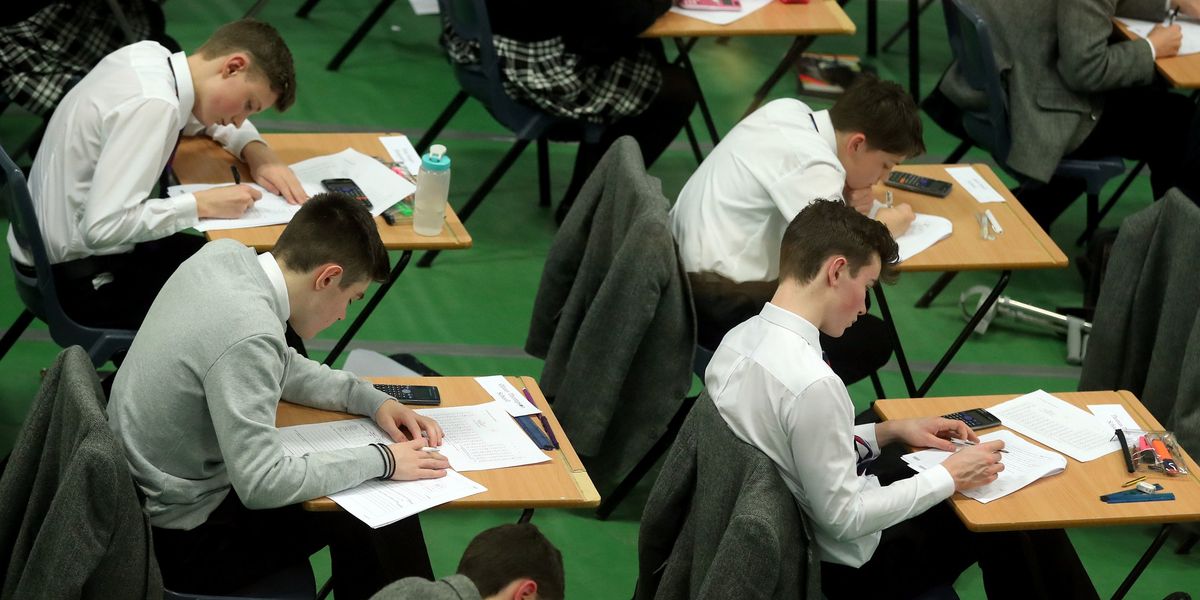
White pupils were the most likely ethnic group to leave secondary school without sitting any GCSE or equivalent examinations last year, according to Department for Education data.
Figures for the 2024-25 academic year show 14,282 white pupils at state schools did not enter for a single qualification - 3.3 per cent of the 432,260 who reached the end of Year 11.
The figure is the highest recorded since the GCSE grading system changed in 2018-19, and marks the first time the rate for white pupils has exceeded that of every other ethnic group.
By comparison, 2.4 per cent of black pupils and two per cent of Asian pupils failed to enter any exams last year, while the rate for mixed-ethnicity pupils and those from other ethnic groups was also lower.
The proportion of white pupils missing all exams has risen sharply since the start of the Covid-19 pandemic, having increased by 1.2 percent from 2018-19.
This is compared to increases of 0.3 points among Asian pupils, 0.2 points among black pupils and 0.9 points among both mixed and other ethnic groups.
White British pupils from disadvantaged backgrounds appear to be particularly affected, with almost one in 10 white working-class boys - 9.8 per cent, or more than 5,000 pupils - did not enter any exams in 2024-25.
The figures come as more than a million pupils prepare to receive their GCSE results this summer, and follow a year-long inquiry into the educational outcomes of white working-class children.
Sir Hamid Patel, co-chairman of the Independent Inquiry into White Working-Class Educational Outcomes, said the figures should serve as a “wake-up call”.
He said that almost one in 10 disadvantaged white British boys reaching the end of secondary school without entering a GCSE or equivalent qualification should concern policymakers, adding that these young people continued to experience some of the poorest educational outcomes in England.
The inquiry, backed by former education secretary Bridget Phillipson, identified severe absence, academic performance, pupils’ sense of belonging and relationships between families and schools as particular areas of concern.
Sir Hamid said sustained action was needed throughout a child’s education, including early literacy support and clearer routes into further education, training and employment.
Meanwhile, Carl Cullinane of the Sutton Trust said rising absence since the pandemic was contributing to the decline in exam participation among white working-class pupils.
However, he noted that absence was higher among white working-class girls, whose attainment compared with their peers was also worsening.
The Conservatives criticised the Government’s education reforms, including Shadow Education Secretary Laura Trott, who said more needed to be done to prevent white working-class boys from falling behind.
Other critics point to the implementation of equity measures in schools nationwide - offering more support and resources to pupils from minority ethnic groups, branded as a "well intentioned yet counterproductive approach" that has instead turned the tables on white pupils.
The Department for Education said it was already taking action, including expanding academic and technical pathways, raising school standards, supporting struggling secondary-school readers and increasing access to extracurricular activities.
The department also highlighted measures supporting families in the early years, including funded childcare, free breakfast clubs and family hubs.