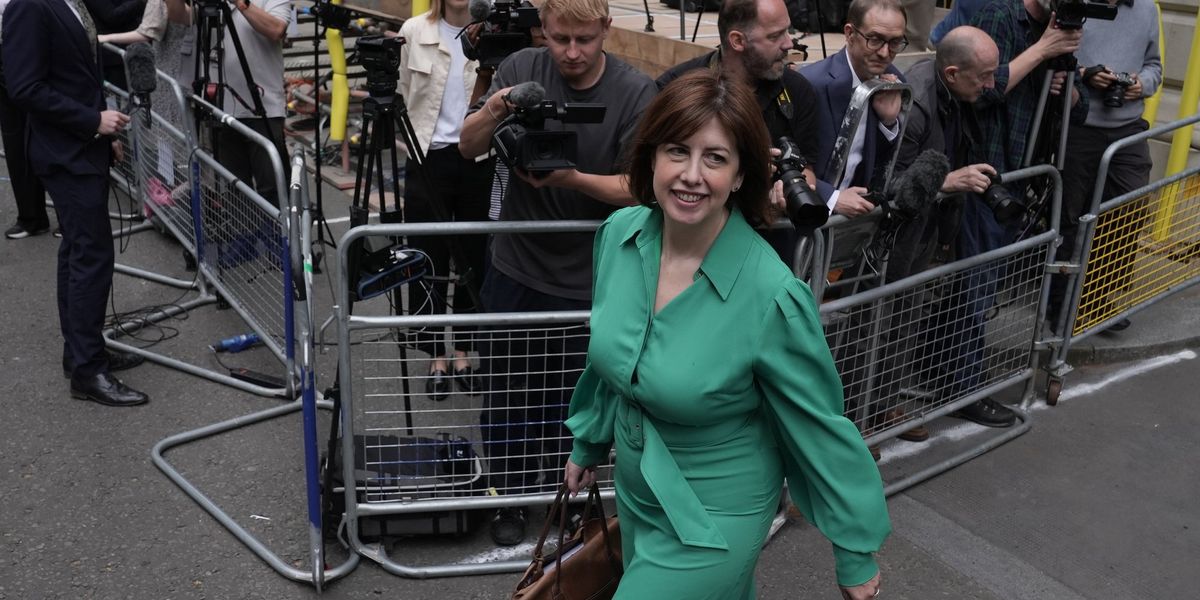
Lucy Powell said a data-driven approach sees 'the pendulum swing too far the other way'
Spelling tests are "draconian" and teachers should focus on "creativity", new Education Secretary Lucy Powell, has said.
Comments made by the newly appointed Education Secretary have been unearthed this week opposing "draconian" spelling tests for primary school pupils, reigniting debate over assessment standards in schools.
Ms Powell made the remark during a 2019 interview with education magazine Tes, speaking on longstanding concerns about what she described as an increasingly "data-driven" education system prioritising testing at the expense of creativity and teacher autonomy.
At the time, the Manchester Central MP argued that compulsory spelling, punctuation and grammar assessments for primary school children had become overly prescriptive, warning they risked creating "identikit kids", rather than encouraging individual development.
She said in the interview: "With testing and the data-driven approach, the pendulum starts to swing too far the other way."
While acknowledging improvements in educational standards over recent decades, Ms Powell had said policies shifted too far towards rigid assessment.
She criticised spelling tests introduced in English state primary schools in 2013, describing them as "ridiculous", and questioned whether pupils should be penalised in examinations for making minor spelling mistakes.
"But now it's gone too far with ridiculous SPaG tests in primary schools, or pupils failing exams if they spell a couple of things wrong," she said.
The now Education Secretary within Andy Burnham's new Cabinet also questioned the structure of secondary education, suggesting students should not necessarily be required to study the same core GCSE subjects.
She argued an education system focused on a narrow set of qualifications risked limiting creativity and personal expression.
"We are saying, 'All schools should teach these subjects in this way. Everyone needs to take them and everyone needs to do this handful of GCSEs,'" she said.
"Whereas 25 years ago schools might have been more focused on creativity and personal expression, now it has gone the other way."
The interview attracted renewed attention days after Ms Powell took office as Education Secretary, and follows criticism from the Conservative Party over a social media post she published announcing her appointment.
The Tories shared an edited version of the post online, marking what they described as spelling and grammatical errors in red pen.
The post highlighted a typographical mistake in the opening sentence, and criticised the wording elsewhere, assigning the message a mock score of three out of 10 and adding the remark, "See me after class!"
Ms Powell has consistently argued that excessive testing places unnecessary pressure on both pupils and teachers.
In the 2019 interview, she said increasing accountability measures had reduced the enjoyment of teaching and learning.
"It's becoming overprescribed and micro-managed," she said, "some of the joy has gone out."
She added that teachers were often judged on examination outcomes, while working in schools facing wider social and financial challenges including funding pressures and child poverty.
"If you're a teacher who is then being judged on the number of kids who pass a SPaG test or a really hard new GCSE, but you know that those kids aren't actually being fed properly or not being clothed, then it's not a great atmosphere and it can feel a bit draconian," Ms Powell said.
At the time of the interview, she was serving on the House of Commons Education Committee, and was supporting Greater Manchester Mayor Andy Burnham's early years programme.
She had previously served as Labour's shadow education secretary, before resigning from the front bench in 2016 during Jeremy Corbyn's leadership.
Ms Powell is not the only newly assigned Cabinet minister to have attracted heat by critics as a blunder on the part of Andy Burnham.
Elsewhere, Ed Miliband has faced scrutiny after being appointed the role of Foreign Secretary, given his clashing beliefs over Net Zero policy with US President Donald Trump.
Meanwhile, Wes Streeting's appointment as Defence Secretary has come under equal fire, given his lack of experience in the sector when compared with past title holders John Healey and Dan Jarvis - both of whom served in the armed forces.