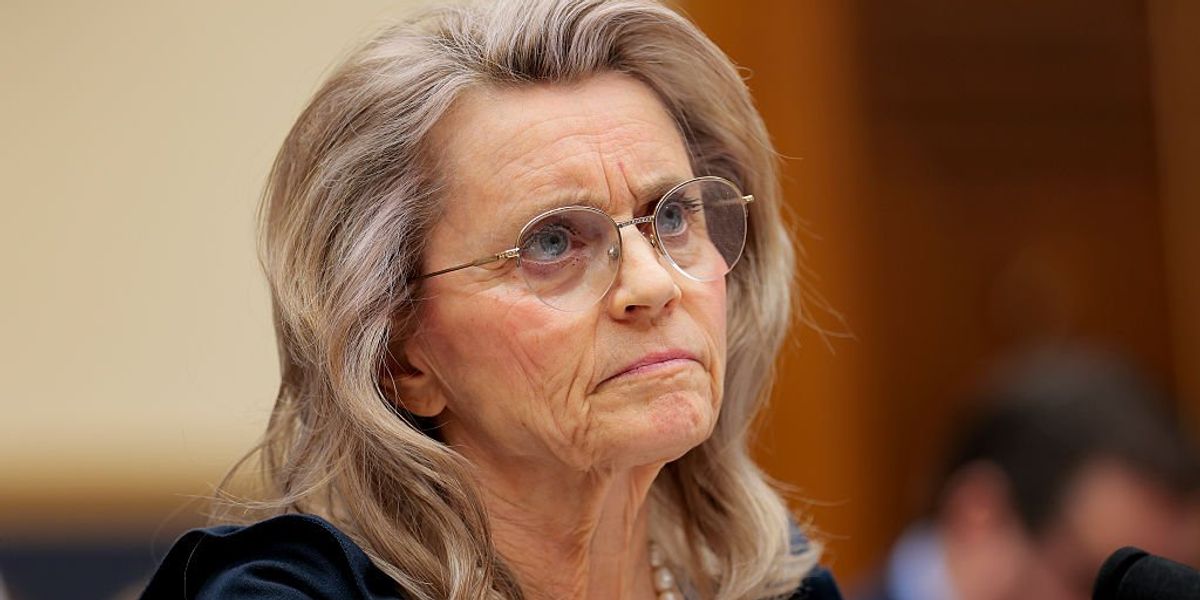
The MP fears the decision could block her from delivering a keynote address at a religious freedom conference in Belfast
A Finnish politician convicted under "hate speech" law has lodged an appeal with the European Court of Human Rights.
The case marks the concluding legal chapter in a seven-year battle over freedom of expression in Europe.
Päivi Räsänen, a Finnish MP found guilty of "insulting" a group by Finland's Supreme Court, received her conviction in March 2026 for views on marriage and sexual ethics she had set out in a booklet produced for her church more than two decades ago, in 2004.
Alliance Defending Freedom, the legal organisation acting on her behalf, described the Strasbourg appeal as her final chance to have the conviction overturned.
The UK's cancellation of Ms Räsänen's Electronic Travel Authorisation in July has added a further dimension to the case.
Her application had initially been granted in June, only to be revoked weeks later, with authorities saying that the information she provided indicated she was "not eligible for an ETA".
Lutheran Bishop Juhana Pohjola, who was convicted alongside Ms Räsänen for his role in publishing the booklet, was similarly refused clearance to enter the UK.
Beyond being unable to pass through Heathrow Airport in July, Ms Räsänen now fears the decision could block her from delivering a keynote address at a religious freedom conference scheduled for late August in Belfast.
Ms Räsänen said: "I have been invited to give the keynote speech at a religious freedom conference in Belfast in August, where I intended to discuss the importance of free speech.
"I find it shocking and deeply ironic that in a democratic country like the UK, I am being prevented from speaking at a conference about fundamental freedoms due to my conviction for 'hate speech'."
Lorcán Price, a barrister at Alliance Defending Freedom representing Ms Räsänen before the European Court, called the UK's decision "completely disproportionate and unnecessary."
He argued that Europe is confronting a deepening censorship crisis.
Adding that the prosecution over a church booklet written two decades ago stands as one of its most striking illustrations.
Bishop Pohjola, who is jointly appealing to the Strasbourg court alongside Ms Räsänen and the Luther Foundation Finland, warned that allowing state authorities to dictate religious teaching would transform faith into "a tool of the state rather than a means to freedom and human flourishing."
Finland's Supreme Court had not only imposed financial penalties but also ordered that the contested passages in the booklet be "removed from public access and destroyed."
He argued it presented a pivotal opportunity to reaffirm that citizens must not face prosecution for peacefully articulating their beliefs.
Mr Price noted that the court has long maintained that freedom of expression extends beyond inoffensive ideas to those that "offend, shock or disturb."