Thank you for subscribing!
'If you’re pointing the finger at Pakistan, I think the bigger responsibility lies in the UK,' Dan Qayyum said
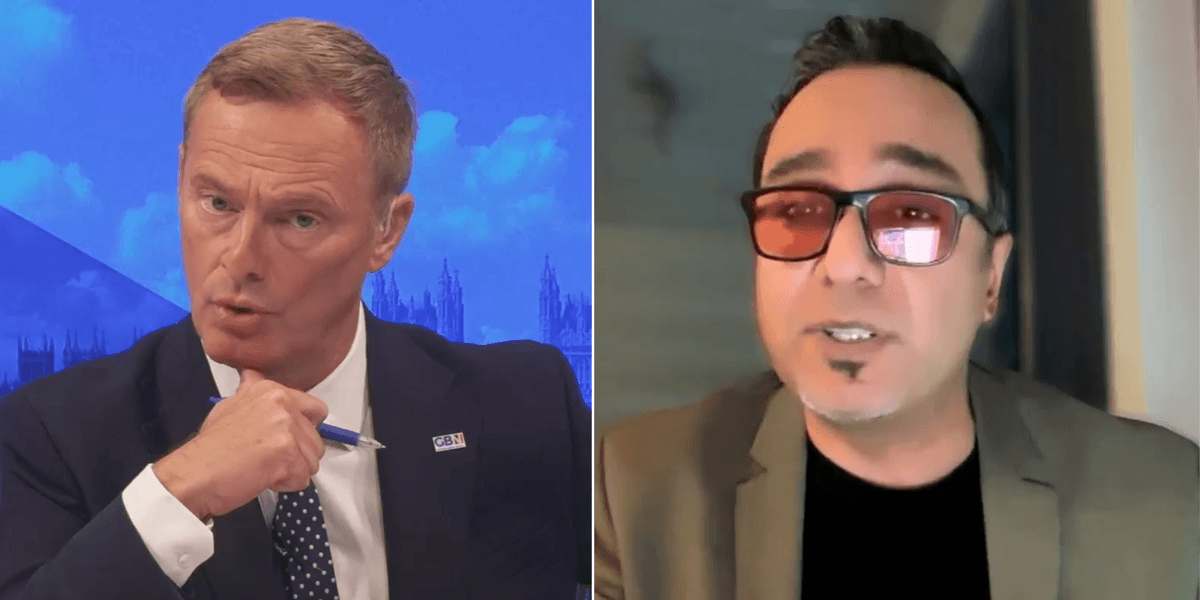
A Pakistani journalist has told GB News the UK bears a “two-way responsibility” over the grooming gang scourge.
Speaking to Martin Daubney, editor of The Pakistani Playbook, Dan Qayyum, shared his thoughts as Britain attempts to deport ringleader Shabir Ahmed.
Ahmed, who was born in Pakistan, walked free from prison in July after serving 14 years of a 22-year sentence for 30 child rape offences.
The 73-year-old was stripped of his British citizenship following his 2012 conviction but intially avoided removal under the protections in the Immigration Act 1971.
Despite the Home Office's efforts to secure his return to Pakistan, the UK remains deadlocked in negotiations with Islamabad.
Addressing the situation, Mr Qayyum described Ahmed as an “absolute monster”.
However, he argued there was a “two-way responsibility” for his crimes, ultimately resting primarily with the British authorities and the systems that allowed them to happen.
“If you’re pointing the finger at Pakistan, I think the bigger responsibility lies in the UK, where this guy actually grew up,” he said.
The journalist pointed out Ahmed arrived in Britain aged 14 in 1967 and had lived in the country continuously, arguing he had grown into adulthood and committed his crimes in Britain.
“He was sentenced in England. He was caught in England,” he said.
Mr Qayyum stressed, however, responsibility lay between the two countries, not with victims.
He also criticised the decision to release Ahmed early from prison, saying there was “complete bafflement” in Pakistan over how a dangerous criminal who showed no remorse could be released back into society.
Mr Qayyum acknowledged there was an over-representation of Asian men in grooming gang cases in the UK.
However, he argued the pattern was not present among the Pakistani diaspora in other countries.
“We have immigrants from Pakistan who live and work in multiple different countries in the world. We haven’t seen anything like this anywhere else in the world.”
He said Pakistan had not accepted that Ahmed was currently a Pakistani national, adding Britain had yet to provide evidence publicly establishing his citizenship.
“If the Home Office has proof of a valid Pakistani passport or a valid identity card, let’s produce it,” he said.
“If it has, I would be the first to say that yes, Pakistan should accept him.”
He argued no country could reasonably be expected to accept someone who was not legally its national, claiming Ahmed had ceased to be a Pakistani citizen “a long time ago” through his own choice.
Martin challenged his argument, suggesting Ahmed may have deliberately abandoned his Pakistani nationality because of the severity of the punishment he could have faced there.
The presenter said Britain had become a “soft touch”, accusing people like Ahmed of believing they could come to Britain, commit serious crimes against women and girls and escape meaningful consequences.