The discovery has prompted fresh concerns about environmental contamination from the facility
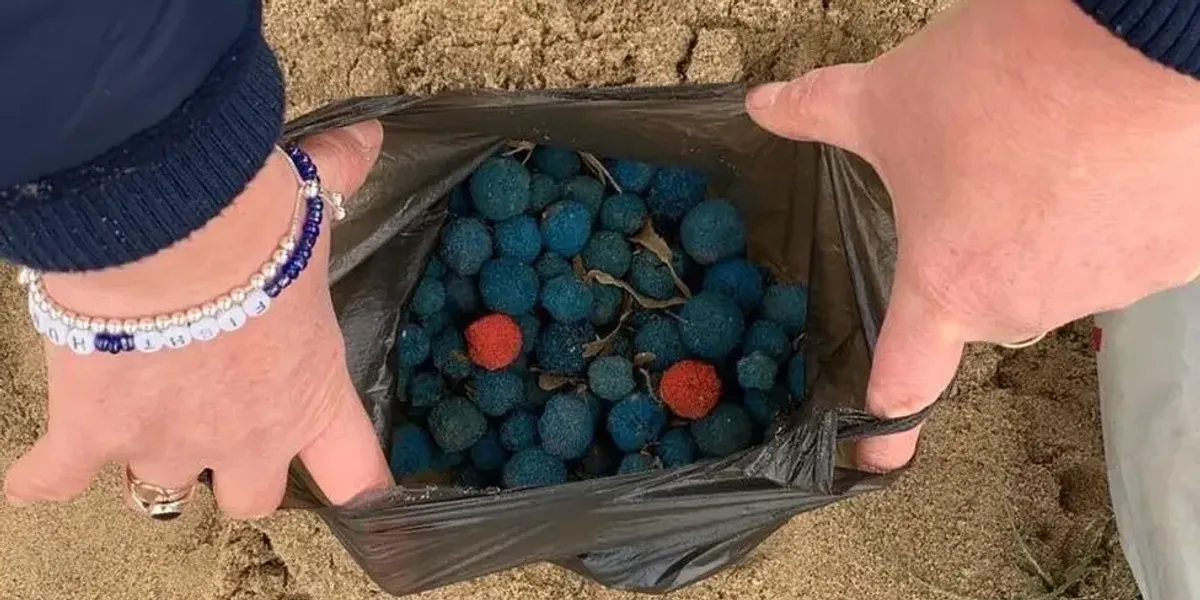
More than 40 vivid blue taprogge balls originating from Hartlepool nuclear power station have been discovered scattered along the high tide line on Redcar beaches.
Neil Baldwin, a local walker, came across the distinctive cleaning balls during a stroll along the coast.
Used to scrub internal pipework at the EDF Energy-operated plant, the small spheres had been deposited across a wide stretch of shoreline.
Writing on social media, Mr Baldwin said: "On the beach this morning I noticed a lot of these (Taprogge balls) on my walk out this morning, at the Majuba Bay end.
He added: "Collected 41 in half an hour. The nuclear plant uses them to clean out pipes. EDF say they’re biodegradable & not a hazard."
Mr Baldwin, who has resided near the beach for two decades, expressed concerns about environmental contamination from the facility.
He told the BBC: "I noticed a lot of them and I kept seeing more and more as I was walking.
"I looked for a bag to pick them up in and I found a plastic bottle which I filled on my walk back."
He added that the balls could be swallowed by dogs or seabirds frequenting the shoreline and claimed he has noticed the phenomenon appearing regularly throughout his time living in the area.
With water companies currently facing intense public scrutiny over pollution and water quality standards, Mr Baldwin argued that EDF Energy ought to be subjected to the same level of questioning.
The balls have been washing ashore for years, he stressed, yet the issue has attracted comparatively little attention or accountability from the power station's operator.
EDF Energy, the operator of Hartlepool power station, sidestepped questions regarding potential faults within its cleaning system.
The company instead pointed to what it described as a significant reduction in the number of ball releases over the preceding 18 months.
According to EDF, the taprogge balls are occasionally discharged into the surrounding environment during the pipe-cleaning process, with tidal patterns then carrying debris onto neighbouring beaches.
The firm stated it had received no reports of comparable discoveries since April, though it declined to disclose how many balls it had retrieved over the past year.
John Stevens, a resident of Saltburn who took up litter picking some 14 months ago, recalled his initial confusion upon encountering the balls on the beach.
Mr Stevens highlighted the potential danger the spheres pose to ocean life.
He noted that they represent both an ingestion hazard for marine creatures and a source of coastal pollution.
The resident also told the national broadcaster: "I find it ironic that they clean the power plant machines, but there is a potential they come out and mess up the sea life and beaches."