Thank you for subscribing!
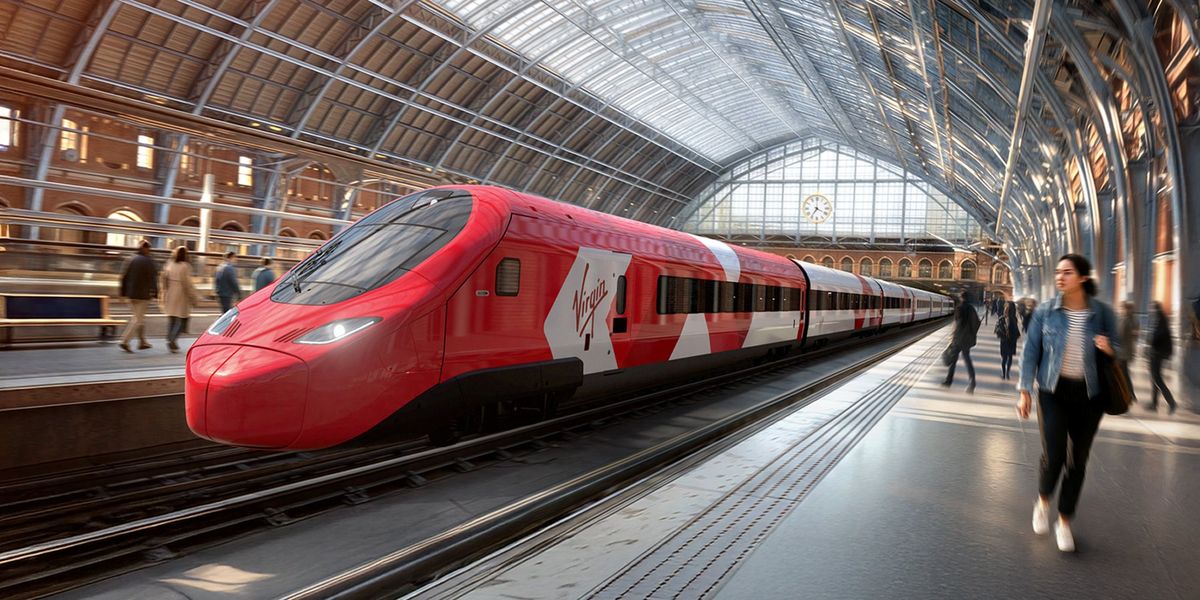
Virgin Trains last week secured approval from the Office of Rail and Road to operate 20 daily round trips between London, Paris, Brussels and Amsterdam
High-speed trains between Britain and mainland Europe could run as often as every 15 minutes by the end of the decade, as new operators prepare to challenge Eurostar’s established cross-Channel rail travel.
The number of daily services between London St Pancras and cities such as Paris, Brussels and Amsterdam could more than double, rising from the 25 daily round trips operated by Eurostar, to about 55 by 2030.
The increase to an average of almost four departures per hour follows efforts to compete against Eurostar, which has operated below its capacity since opening in 1994.
Virgin Trains last week secured approval from the Office of Rail and Road (ORR) to operate 20 daily round trips between London, Paris, Brussels and Amsterdam, with Sir Richard Branson’s company planning to begin services in 2030.
Martin Jones, of the ORR, described the approval of Virgin’s track access rights as an “important next step” towards greater competition and growth in international rail.
Meanwhile, Italy’s state railway Trenitalia has separately pledged to operate 10 daily round trips from 2029.
The company has ordered 19 new high-speed trains from Hitachi in a deal worth €2bn (£1.7bn), with some expected to operate through the Channel Tunnel.
Trenitalia’s plans could benefit from a new maintenance facility in France, allowing the operator to avoid capacity restrictions at Eurostar’s Temple Mills depot in east London.
Competition could increase further if Gemini Trains also succeeds in launching its own services.
The company has said it wants to operate 11 trains a day through the tunnel by 2030, despite being denied access to Temple Mills.
Gemini is instead considering building its own depot in Kent, and has partnered with Uber - although it does not yet have trains or track access.
If all the proposed services launch, the number of cross-Channel return journeys could reach a whopping 66 a day.
Deutsche Bahn (DB), the German state railway, also planned services through the tunnel at a time, going so far as to send a promotional train to St Pancras for a photo opportunity in October 2010.
The operator was ultimately hindered by Brexit and backed down from the idea, although it has since shown some renewed interest.
Amid the growing competition to improve efficiency, Eurostar is also planning a major expansion to existing services.
The company expects to receive up to 50 new trains in the early 2030s, allowing it to increase its services by about 30 per cent, and potentially introduce routes to new destinations such as Frankfurt and Geneva.
However, while the high-speed railway in Britain was designed to accommodate up to eight international trains an hour, operators must secure additional capacity on rail networks in France, Belgium and other countries.
Passenger capacity at St Pancras International could also become a major constraint, as the station can already become crowded beyond passport control, raising questions over whether existing facilities can cope with such an increase in services.
Gwendoline Cazenave, Eurostar’s chief executive, has called for “a bold vision” to match the private investment being proposed, including greater depot capacity, an expanded St Pancras and a more seamless border process.
The expansion would serve as a major shift in international rail competition, potentially giving passengers a reliable and frequent alternative to air travel between Britain and continental Europe.