Spain's health ministry has confirmed five cases of West Nile fever this season, the most recent described as 'mild'
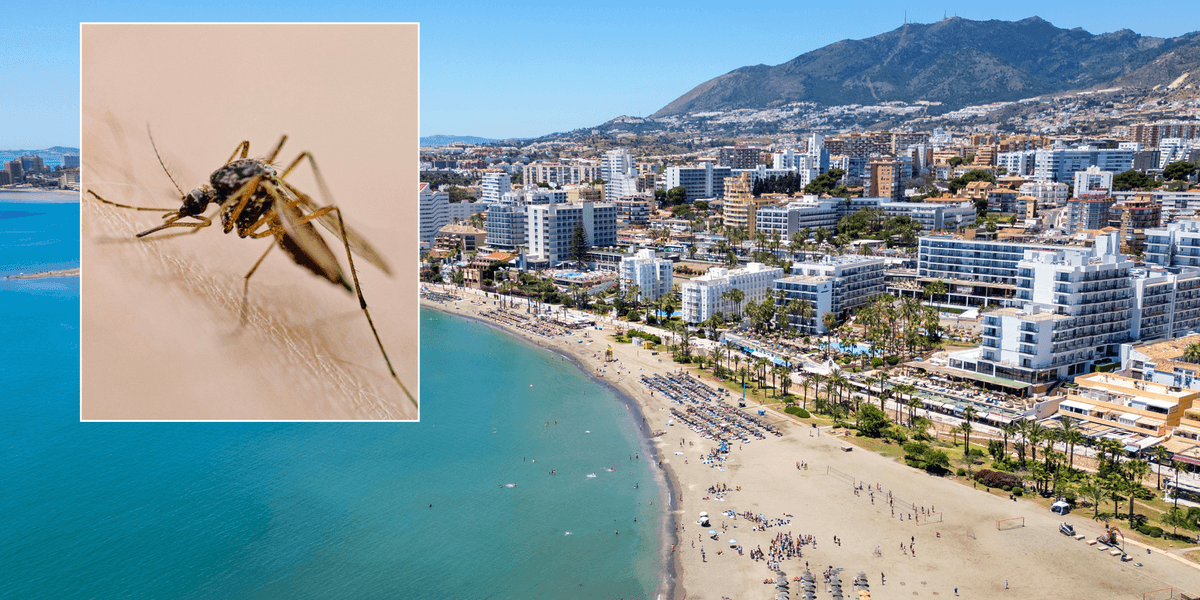
British tourists have been issued a holiday warning as two coastal towns on Spain's Costa del Sol have been placed on red alert following the discovery of mosquitoes infected with West Nile virus.
Fuengirola and Mijas, beloved by British holidaymakers and attracting thousands of UK visitors annually, are now subject to heightened surveillance of insects, animals and people, alongside public health warnings to residents and tourists.
The alert comes after disease-carrying mosquitoes were identified in the area, prompting Spanish authorities to intensify monitoring efforts and launch community awareness campaigns.
Both destinations sit within the Andalusia region, where the virus has claimed at least 10 lives in previous years, raising concerns ahead of the peak summer holiday season.
Spain's health ministry has confirmed five cases of West Nile fever this season, the most recent described as "mild."
The latest patient, a man from Coria del Río in Seville province, first showed symptoms on July 17, with laboratory results confirming the diagnosis on Friday.
A health department spokesman said: "The ministry has decided to extend until August 14 the period of alert area of this Sevillian municipality."
A total of 15 municipalities across Andalusia are now designated alert zones, including Bollullos de la Mitación and Coria del Río in Seville province, as well as Fuengirola and Las Lagunas in Malaga province.
The Andalusia region has recorded no fewer than 10 fatalities linked to the virus in earlier years.
According to the European Centre for Disease Prevention and Control, 35 affected areas spanning six nations had been identified as of July 22, with 81 locally acquired human infections recorded in total.
Italy accounts for the largest share, with 20 affected areas and more than half of all cases.
Greece follows with six areas, Romania with four, North Macedonia with two, Spain with two and France with one.
No mosquito-borne infections have been contracted within the UK itself.
However, the UK Health Security Agency disclosed last week that over 750 cases of such illnesses had been reported in England, Wales and Northern Ireland since January, all acquired abroad.
With cases mounting across the continent, the World Health Organisation is calling on people in affected regions to prioritise preventive action.
"Simple steps like covering up, using insect repellent and clearing stagnant water around the home can make a real difference," said Hans Kluge, WHO Regional Director for Europe.
No licensed vaccine currently exists for humans, with treatment restricted to symptom management and hospital-based supportive care for serious cases.
Between 70 and 80 per cent of those infected experience no symptoms whatsoever.
Those who do fall ill may suffer fever, headaches, fatigue, muscle pain, nausea or a rash, typically lasting days to weeks.
Fewer than one per cent of symptomatic patients develop West Nile neuroinvasive disease, a severe condition in which the virus attacks the brain, potentially triggering encephalitis, seizures, paralysis and coma.
Mr Kluge said: "Anyone who develops a high fever, rash or neck stiffness after a mosquito bite should see a doctor without delay."