The Ministry of Defence has highlighted three new sites that will accommodate 3,750 asylum seekers and announced an expansion of two others
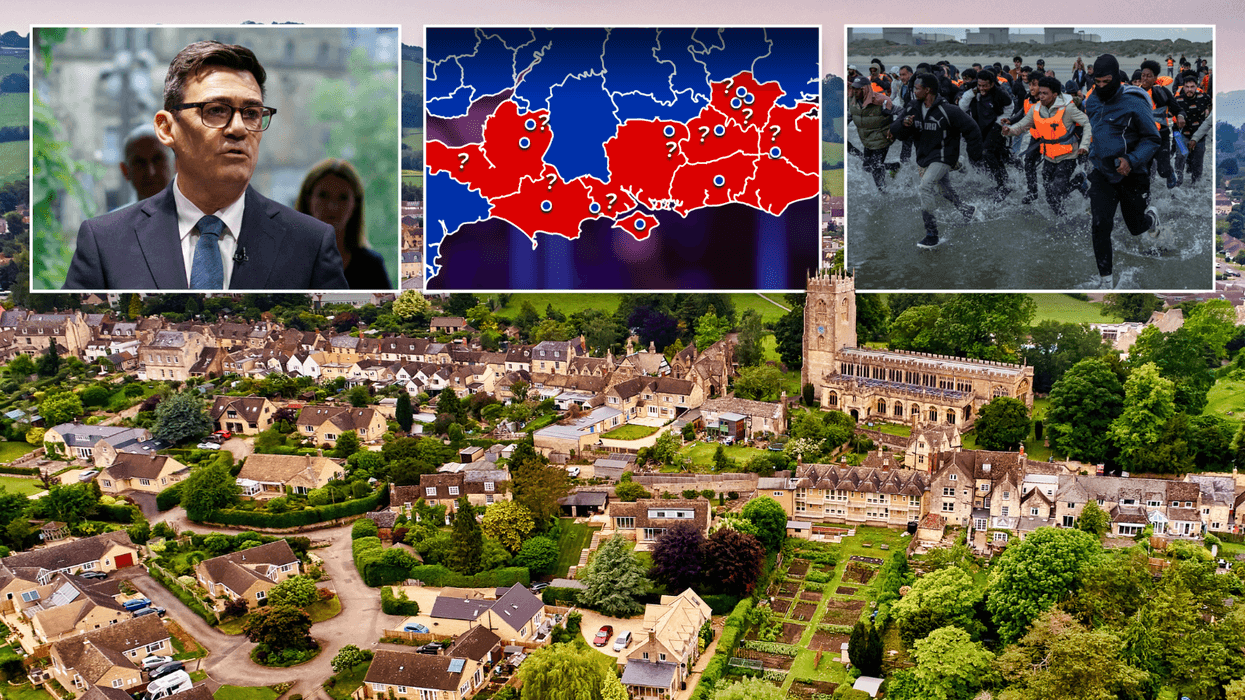
Labour is seeking to house thousands of asylum seekers in three new ex-military sites around Britain.
The fresh immigration reforms, introduced to Parliament next week, threaten to affect rural towns across the UK.
Labour has pledged to permanently end the use of asylum hotels by 2029, with locals fearing the redirection of migrants will have a detrimental effect on communities.
The number of asylum seekers being housed temporarily in UK hotels has fallen to its lowest level since data was first reported in 2022, according to Home Office figures published last month, as Labour begin the shift to HMOs and former military barracks.
There were 20,885 people staying in hotels while they were awaiting a decision on their asylum claims at the end of March, down 35 per cent year-on-year from 32,326.
The total had climbed as high as 56,018 at the end of September 2023.
The issue of people being housed in hotels came to the fore last year with protests outside some sites.
On Thursday, the Home Office said 20 more hotels have now been closed.
Border security and asylum minister Alex Norris said: ”We promised to close every asylum hotel and hand them back to communities, and that is exactly what we are doing.
"Twenty more hotels have closed, and hotel numbers have more than halved since their peak. Instead, we’re moving asylum seekers into ex-military sites that are a far cry from the hotels the last Government left us with.
"This is a system being brought back under control - and we will not stop until the job is done."
The Refugee Council’s Imran Hussain said: "Moving refugees from unsuitable hotels to unsuitable former military sites is storing up problems for the next Prime Minister by repeating policies that failed in the recent past. It would be wise to rethink this approach."
Linton-on-Ouse, North Yorkshire
The former Royal Air Force station is located in the village of Linton-on-Ouse in North Yorkshire, roughly 10 miles north-west of York.
Opened in 1937 as part of the Air Force's "Expansion Period", the historic site served as a major operational bomber base where legendary aircraft like the Whitleys, Lancasters, and Halifaxes were flown.
Linton-on-Ouse is described as a small, quiet, and scenic rural village with a close-knit population of around 1,200 residents.
The Home Office previously tried to use the site in 2022 to house up to 1,500 asylum seekers, more than doubling the current population of the nearby town, despite opposition from local people and a legal challenge by the council.
Now, it will house its share of the 3,750 asylum seekers, split between the three new sites, with the exact number at each location remaining unknown.
Bicester, Oxfordshire
Bicester is a rapidly growing, historic market town in the Cherwell District of north-eastern Oxfordshire, near the borders of Buckinghamshire and Northamptonshire, and serves as a major gateway to the North Oxfordshire countryside.
The Anglo-Saxon town's most globally recognised destination is Bicester Village, a massive, pedestrianised open-air luxury outlet mall featuring over 150 designer boutiques and world-class dining.
It welcomes over 6.7 to 7.3 million visitors annually, and it ranks alongside Buckingham Palace as one of the most-visited destinations in the United Kingdom.
An unnamed military base will house its share of the 3,750 asylum seekers.
Recent Home Office data shows the broader Cherwell district houses around 100 to 150 asylum seekers in temporary accommodation, such as local hotels.
GB News analysis shows that Campsfield House, currently an Immigration Removal Centre, is the most likely destination, as it has recently undergone a comprehensive £70 million refurbishment.
In June 2026, the Home Office submitted plans to the Planning Inspectorate to increase capacity to 400 beds.
Barnham, Suffolk
The Home Office is also seeking planning permission to use RAF Barnham to house asylum seekers.
Local residents have recently reported a sudden spike in physical activity on the grounds.
Reports of the installation of new warning signs and welfare units indicate that facilities are being evaluated in anticipation of impending arrivals.
Nick Timothy, the MP for West Suffolk, expressed alarm over the lack of proper local consultation.
He said placing undocumented asylum seekers at the site would heavily strain local infrastructure, safety, and public services.
A major portion of RAF Barnham was a former high-security nuclear weapons storage facility during the Cold War and is a protected Scheduled Monument, while other sections are privately owned as an industrial estate.
Wethersfield, Essex
RAF Wethersfield asylum accommodation centre is increasing the number of single male migrants housed there from 766 to 1,245.
Currently, standard operations typically cap the site at roughly 800 users.
The non-detained site, located in a highly rural pocket of Braintree, Essex, is currently operated by the private contractor Clearsprings Ready Homes.
The Leader of Essex County Council publicly demanded an immediate halt to the expansion plans.
Local officials explicitly state that shifting thousands of individuals from hotels to a rural heartland 11 miles from the nearest town is entirely unsustainable.
Local councils and police forces report that public transport, healthcare, and police resources are severely overstretched, with community tensions strained as well.
Crowborough, East Sussex
Crowborough camp, which costs a massive £160 per person every single night, is being expanded under the new plans.
The amount currently spent exceeds the cost of local asylum hotels.
Under the new plans, the site will remain open until 2030, despite previous promises of a 12-month closure.
The local community has formed a resident-led patrol group, Crowborough Aware, comprising 81 volunteers, in response to concerns about behaviour linked to the nearby accommodation site.
The camp initially welcomed a cohort of 27 men, before introducing a further 325 residents.