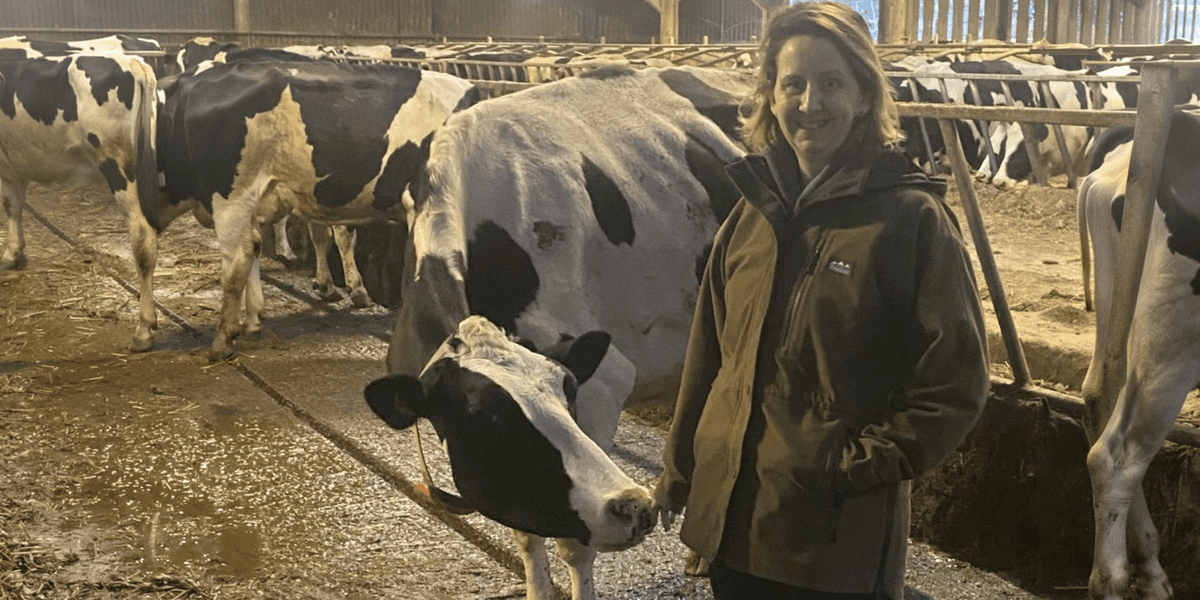
Marie Stephenson will set off from Cornwall before making her way to Scotland
An agricultural worker from Warton in Lancaster is preparing to take on an extraordinary fundraising feat — milking 10,000 cows across Britain in just ten days.
Marie Stephenson, 45, will set off on August 3 from Bodmin in Cornwall before making her way north to Scotland, visiting dairy farms the length of the country in aid of RABI, the charity that offers practical and emotional assistance to farming families across England and Wales.
Dubbed "One Woman, 10 Days, 10,000 Milking Cows", the challenge is rooted in Ms Stephenson's desire to spark honest discussion about the mental and physical toll that farming takes on those who work the land.
She told the Daily Telegraph: "Farmers work tirelessly to put food on our tables and treat their animals well."
The challenge stems from deeply personal grief. Ms Stephenson revealed she and her teenage children had lost friends to suicide over the past year, experiences that left a profound mark on them.
"It hit me really hard," she said, explaining her determination to back RABI's work with those who may be struggling.
She described the idea as having emerged from "a very personal place", adding: "After a series of losses close to my family and local farming community, I saw the impact left behind on families, schools and whole communities."
Ms Stephenson, who grew up on a farm and spent a year milking professionally at a dairy operation after university, said the isolation of agricultural life can weigh heavily on those in the sector.
She stated: "But they are exhausted. They have no family time. This is about bringing relief and getting people to talk."
Her marathon arrives against a backdrop of stark decline in British dairy farming. The total number of dairy operations in the UK has dropped below 7,000 for the first time, with just 6,850 producers remaining as of April — a 15 per cent reduction over five years.
The British Cattle Movement Service put the national milking herd at 1.59 million in April, down two per cent on the previous year. Escalating costs and falling milk prices have compounded the pressure on producers already reeling from former chancellor Rachel Reeves's inheritance tax changes.
Ms Stephenson, who serves as head of feed additives at Trident Micronutri, said the tax policy had filled young farmers with dread.
Ms Stephenson commented: "It has had a massive impact to the extent that kids are talking about it, saying: 'I don't know if there is going to be a farm for me'. Their life plans are disappearing in front of their eyes. It is soul destroying."
On some of the farms along her route, Ms Stephenson will use rotary milking parlours capable of handling 72 cows simultaneously. She will attach the cluster to each animal herself — a physically gruelling task that she acknowledged could take its toll.
She said: "They are not light so it is physically demanding. They are going to have someone stand there next to me in case my shoulders cramp as I'm not used to it."
Her employer, AB Agri, is assisting with planning and logistics, ensuring proper biosecurity protocols are observed at every farm visited. Regional farming networks have been organising routes to help her reach the 10,000 target.
Ms Stephenson's JustGiving page has set a fundraising goal of £5,000, with roughly 10 per cent raised so far.
Paul Pirie, RABI's head of fundraising, praised the endeavour. "Marie's challenge is an extraordinary demonstration of commitment to farming people and the realities they face every day," he said. "By taking on something so physically demanding, she's shining a light on the pressures within our industry and helping ensure more farming families know that support is there when they need it most."
Baroness Batters, who authored the independent Farming Profitability Review, warned rising costs were disproportionately hurting smaller operations.
"I can remember it being a shocking stat when dairy farms went below 10,000," she said. "The dairy sector has been phenomenally and globally efficient — we are still producing the same amount of milk but what we are seeing is those smaller farmers being unable to keep pace."