Thank you for subscribing!
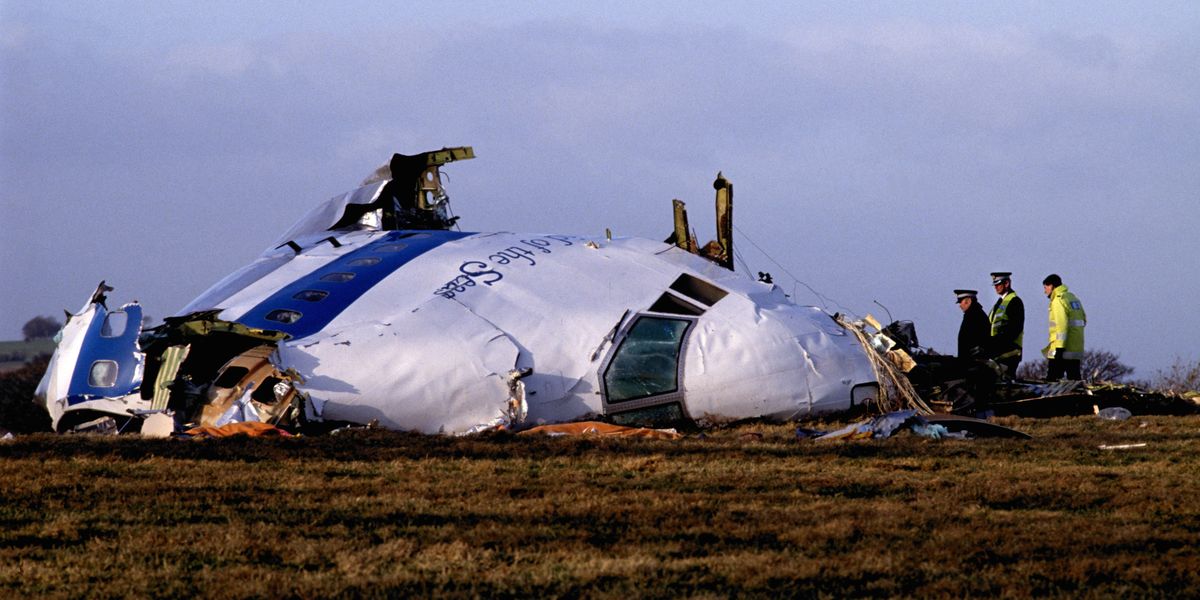
The 1988 bombing - which remains the UK's deadliest terror attack - claimed the lives of 190 Americans and 43 Britons
The trial of Abu Agila Mohammad Kheir Al-Marimi, a Libyan national accused of building the Lockerbie bomb, has been delayed for a third time following the emergence of fresh evidence in the 37-year-old case.
Jury selection in Washington DC had been scheduled to begin on Wednesday, but the proceedings have now been pushed back to January 2027.
"Newly-discovered evidence" that neither the defence team nor US Government prosecutors had previously been aware of surfaced on August 21, according to Al-Marimi's lawyers - nearly four decades after Pan Am Flight 103 was downed.
His legal representatives told the court that "constitutional and ethical obligations" require the defence to investigate the development.
The defence team said they consulted with Al-Marimi on Sunday, and he supported their decision to seek the delay.
Judge Dabney Friedrich approved the postponement in a hint the new material could be significant.
Given the extensive preparation and prolonged pre-trial legal wrangling, the judge would have been deeply reluctant to permit such a last-minute adjournment.
For bereaved families, the fresh setback means a verdict may not arrive until next spring.
Al-Marimi denies constructing the explosive device that tore apart the Boeing 747 on December 21, 1988, claiming the lives of 270 people.
The jet had left Heathrow bound for New York when the bomb detonated in the forward cargo hold, ripping the aircraft apart at an altitude of 31,000 feet.
Every one of the 259 passengers and crew were killed, while 11 residents of Lockerbie died as debris crashed onto their homes.
Almost four decades on, the atrocity remains Britain's deadliest terrorist attack and worst mass murder.
Al-Marimi, a grandfather now in his seventies, has been held in American custody since 2022.
TERRORISM - READ THE LATEST:
His trial was first listed for May 2025, but both sides jointly requested a postponement, pointing to the case's complexity and the defendant's poor health.
A second date was arranged for April 2026, only for the defence to seek further time for preparation.
Al-Marimi stands accused of carrying out the attack alongside two other Libyans who appeared before a Scottish court in May 2000.
That trial took place at Camp Zeist, a former American air base in the Netherlands, before a panel of three judges.
Following eight months of proceedings, the court determined the bombing was an act of state-sponsored terrorism perpetrated by Libyan intelligence operatives.
One defendant, Abdulbasset Al-Megrahi, was found guilty of mass murder and sentenced to life imprisonment.
He was released on compassionate grounds by the Scottish Government and died of cancer in 2012.
His conviction was twice referred to the appeal court by the Scottish Criminal Cases Review Commission but was ultimately upheld.
The other accused, Al Amin Khalifah Fhimah, was cleared and returned to Tripoli, where he received a hero's welcome.
According to US prosecutors, Al-Marimi confessed to bombing the aircraft together with Megrahi and Fhimah during questioning at a Libyan detention facility in 2012.
That alleged admission was passed to Scottish investigators in 2017 and now forms the cornerstone of the prosecution's case.