Thank you for subscribing!
Swimmers have been issued a warning over toxic algae at a London bathing spot.
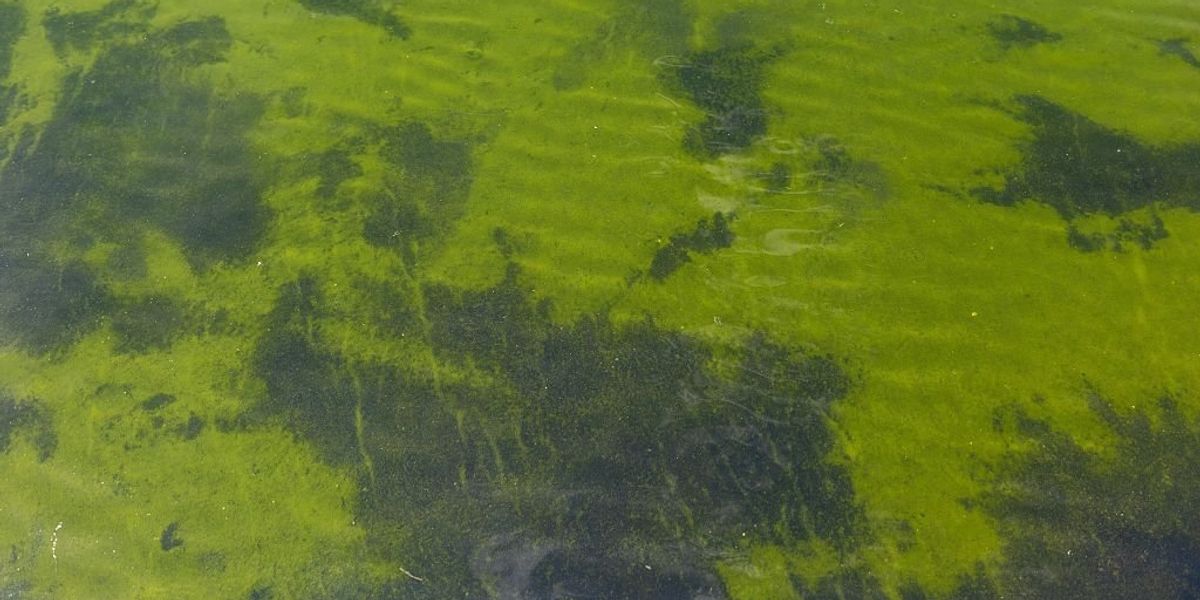
A toxic bloom of blue-green algae has forced the Environment Agency to warn swimmers away from the Ham and Kingston stretch of the Thames, London's first officially designated river bathing water, which only received its status in May.
The regulator issued a formal notice on Tuesday said: "Bathing is not advised, due to pollution from harmful algae."
The non-tidal site, where the Thames bends past Trowlock Island, had been designated as part of wider efforts to assess the safety of inland swimming spots.
Locals have described the location as "almost countrified" and it proved hugely popular during this summer's heatwaves.
Since May, Environment Agency staff have been collecting bacterial samples to determine water quality at the site, which remains officially unclassified.
Marlene Lawrence, the semi-retired swimmer who founded the local group Teddington Bluetits, first spotted signs of algae at the site last week.
She had been instrumental in campaigning alongside other residents to secure the bathing water designation.
Ms Lawrence swam in the river before the warning was published and quickly suffered a reaction.
She told The Times: "Instantly on Sunday night I came out in a really bad rash, itchy spots, and that's not like me. I can only attribute it to the algae in the river."
According to Ms Lawrence, neither she nor her fellow swimmers have ever encountered a blue-green algae bloom at this particular stretch of the Thames.
She added: "I'm used to this happening in the Serpentine but not the Thames. So that's a worry for the future."
Blue-green algae, technically known as cyanobacteria, can produce toxins that are dangerous to both humans and animals, including dogs.
Such blooms have become increasingly common at locations like Windermere as water temperatures climb, but they have historically been uncommon in the Thames.
Research published by UK scientists last year revealed warming river temperatures have left the Thames increasingly vulnerable to these blooms, even as phosphorus pollution levels have declined.
Cyanobacteria flourish in late summer when water temperatures rise above 20C.
During the 1960s, July and August offered a median of just nine days warm enough to support their growth.
Ms Lawrence pointed to the record-breaking hot and dry summer as the likely trigger for the bloom, with reduced river flows and elevated water temperatures creating ideal conditions for cyanobacteria.
At Kingston, flow levels are currently classified as "exceptionally low" following a prolonged period of minimal rainfall.
She argued the river's evident stress bolsters the case against Thames Water's proposed abstraction scheme at Teddington, which would extract additional water from the Thames and replace it with heavily treated effluent.
The temperature of the discharged water has been a particular point of concern among campaigners.
She said: "It's another argument to Thames Water to say, 'For God's sake don't do this to the river.'"