Thank you for subscribing!
Bosses say the decision 'aligns' with what the woman who died around 650 BC would have wanted
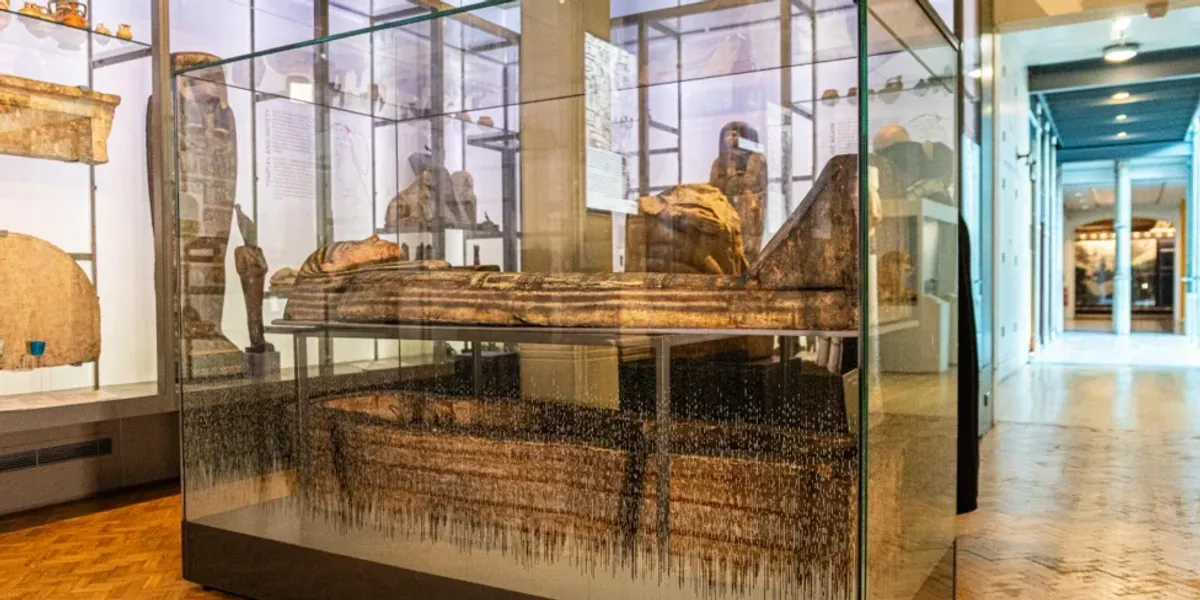
A museum has pulled a 2,700-year-old Egyptian mummy from public display after bosses said the decision "aligns most closely with what we understand about her own wishes".
Manchester Museum has removed the mummified remains of Asru, an ancient Egyptian temple musician, after displaying her for 200 years.
The remains had been exhibited at the institution since 1825 and were the last mummified human remains still on public display at the museum.
A museum spokesman said the decision "reflects changes in how we think about our responsibility towards ancestors, museum collections and the communities they represent".
Bosses said they consulted Egyptian colleagues, diaspora communities and museum visitors before taking action.
But the spokesman told the BBC: "However, the decision to remove Asru from display aligns most closely with what we understand about her own wishes."
Inscriptions on Asru's coffin identify her as a musician who served in an ancient Egyptian temple, with her death dated to around 650 BC.
Her remains and coffin were discovered at the ancient city of Thebes, in modern-day Luxor, before eventually coming into the possession of Manchester traders William and Robert Garnett.
The pair donated the remains to the Manchester Natural History Society, a predecessor of Manchester Museum, in 1825.
Asru's body was subsequently unwrapped and put on public display.
The decision comes amid a growing debate over whether ancient human remains should continue to be exhibited in British museums.
Some Egyptian academics have argued that displaying mummified bodies is unethical because ancient Egyptians preserved their dead in preparation for the afterlife rather than for public exhibition.
WOKE MADNESS - READ THE LATEST:
Oxford's Pitt Rivers Museum removed Egyptian mummified remains and South American shrunken heads from display in 2020 amid concerns about reinforcing "racist or stereotypical thinking".
A 2025 report from the All-Party Parliamentary Group for Afrikan Reparations also called for an end to displays of human remains without consent, linking the practice to "museums' participation in colonial regimens of exploitation".
Jasmine Day, president of the Ancient Egypt Society of Western Australia, has previously warned of a "wave of conservatism and risk aversiveness sweeping through the world of museums".
She has argued that while ancient Egyptian remains should be treated respectfully, removing them from public view risks accommodating modern discomfort surrounding death.
The British Museum, which holds more than 100 mummified remains, has said it follows Government guidance to ensure human remains are "always treated and displayed with respect and dignity".
Asru's remains are now being kept in storage while Manchester Museum considers their future.
Options include retaining the remains or repatriating them to Egypt.