Thank you for subscribing!
Organisers have refused to restart the event until the frenzied colony has calmed down
A Nottingham parkrun has been cancelled after a swarm of hornets launched a series of attacks on its runners.
At least one person taking part in the weekly Bestwood Village Parkrun was sent to hospital after suffering stings from one of the insects.
The parkrun team revealed on social media that an "unexpected issue" had emerged, with several runners stung over a fortnight, some on multiple occasions.
A local wildlife group helped identify the source of the problem - a hornets' nest situated in an old tree directly beside the route on the course's first hill.
Organisers confirmed the discovery on Wednesday and explained why the insects had become aggressive.
"Hornets are super sensitive to vibration and CO2, which explains why a group of us running past sets them off," the social media post said.
"Did you know that one sting can quickly prompt others nearby to join in, so best to give them space?"
The call to halt the event was made on Sunday, with Saturday's scheduled run scrapped.
Organisers said they would not resume running past the nest until the colony had calmed down.
No definite date for the parkrun's return has been set, with the suspension potentially lasting several weeks as the core team weighs up alternatives.
"We don't have a firm timeline yet and it could be a few weeks, but the core team are looking at our options and will keep you posted as soon as we know more," they added.
Johnny Leaper, a 55-year-old regular at the event, was among those stung, coming under attack from a hornet on August 29.
ANIMALS - READ THE LATEST:
He told the BBC it was "very painful" and added: "I swore when I shouldn't have done."
Britain is home to two species of hornet - the native European hornet and the invasive Asian hornet, which broke into the UK from the Far East.
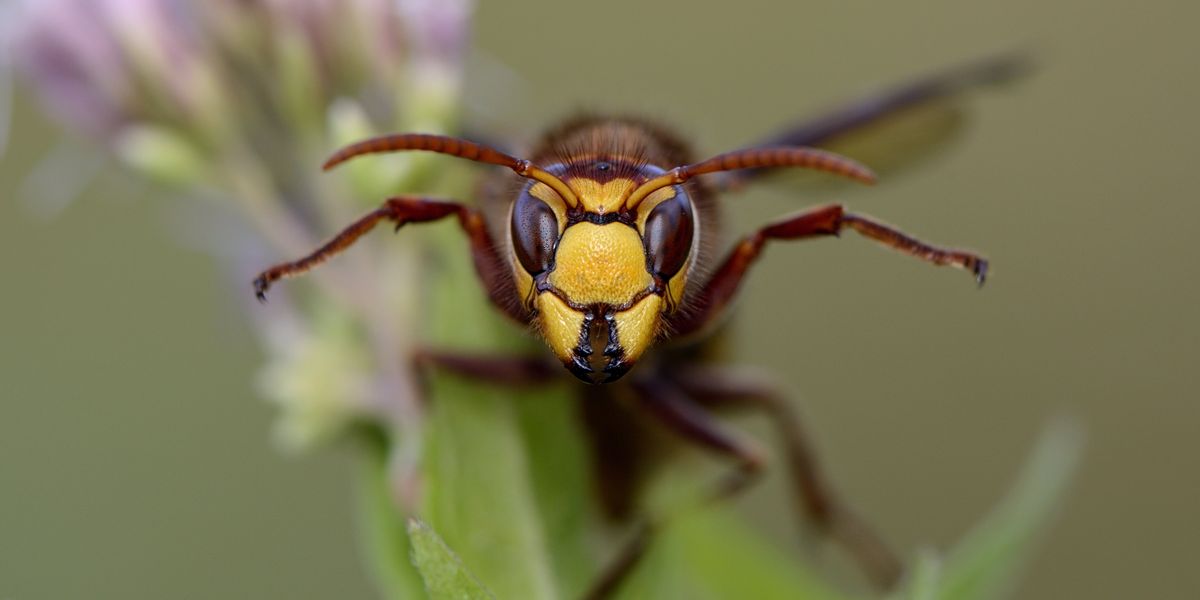
The European hornet is larger than its Asian counterpart, and can be distinguished by its yellow face, red scalp and black-striped abdomen.
The Asian hornet has an orange head and an almost entirely dark abdomen with thin yellow stripes.
Earlier this summer, experts warned the Asian hornet population in Britain could surge amid soaring temperatures.
Luke Newnes, an Asian hornet specialist, said: "With 2026 is tracking as one of the warmest years in recent records, the warmer conditions are likely to accelerate emergence activity."
Asian hornet numbers have already risen sharply, with nest numbers increasing from just 24 in 2024 to 161 across Britain.
A single nest can generate dozens of queens, meaning one overlooked colony could spawn 30 additional nests the following season.
These predatory insects consume roughly 11 kilograms of other insects annually, with honeybees making up roughly a third of their diet.
Moths, flies, butterflies and various bee species account for the remainder, placing Britain's pollinator populations under threat.