Thank you for subscribing!
A Home Office blunder may finally block the much-maligned asylum site and spare locals from having 1,250 new neighbours
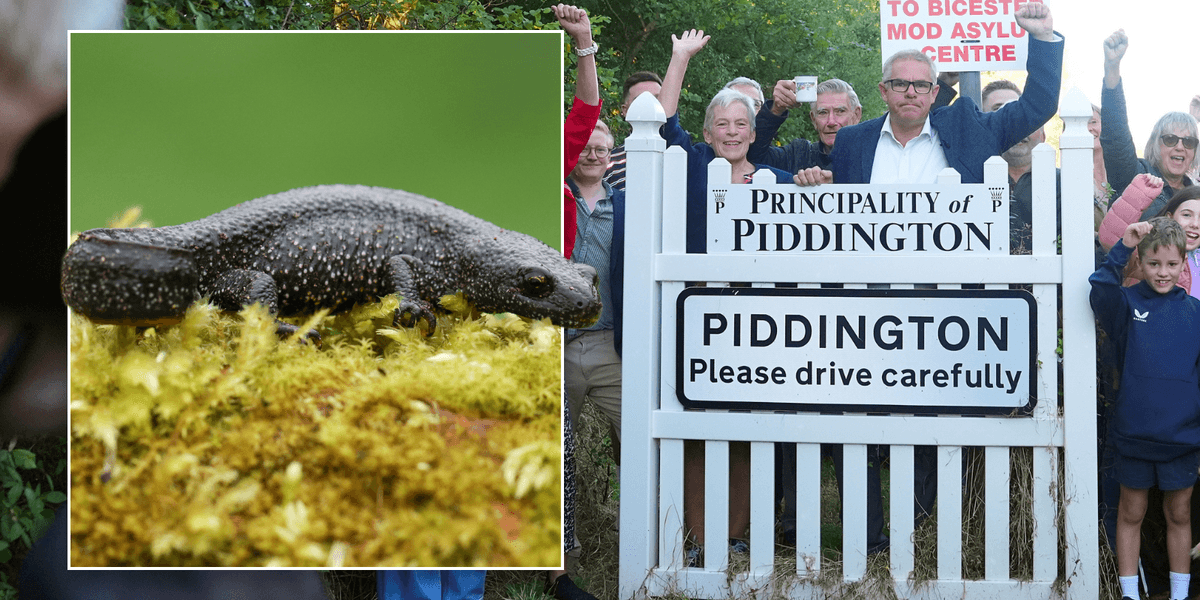
Plans to convert a Ministry of Defence barracks near Piddington into asylum housing could be scrapped because of great-crested newts.
Campaigners in the tiny village, which voted for independence on Wednesday in protest against the camp, have discovered environmental records showing protected wildlife near the site.
But in what appears to be a blunder, the Home Office's own ecological assessment claims there was no evidence of any protected newts, bats or reptiles in the area.
Qualified zoologist Dr Claire Brenner identified at least five different protected wildlife species around the site, and has branded the Home Office assessment "not fit for purpose".
Great crested newts are a European Protected Species under UK law, forcing developers to stop work if there is evidence of their presence.
As a result, locals - who have already warned MPs they may be outnumbered 10 to one by illegal migrants - have urged the Government to redo its assessment.
Dr Brenner told The Telegraph: "If the Secretary of State determines this application with this materially incomplete information, that's open to legal challenge.
"If they proceed to work on the site without a licence, then potentially it's a wildlife crime."
She claims Thames Valley environment centre records show evidence of newts, 12 different species of bats, including a near-extinct species in the UK, nightingales, badgers and an otter.
The zoologist said the Home Office has incorrectly consulted the Buckinghamshire and Milton Keynes centre, which only holds records for a small percentage of the site.
The migrant housing plans may also be thwarted after a Home Office assessment determined there was no viable gas network and limited use of the main water supply at the former military storage site.
A separate campaign, named Wrong Plan, Wrong Site, has filed a pre-action legal letter to the Home Office and hopes to bring a judicial review in the High Court.
The campaign amassing funds in a bid to cover the £250,000 estimated cost of a judicial review.
Bicester Town Council is said to be considering giving £20,000 to the cause.
It was slated to receive a presentation by Dr Brenner on her ecological findings yesterday evening.
But Labour is pushing hard to press ahead and put up the illegal migrants next door.
LATEST IN THE BATTLE FOR BRITAIN:
The Government has lodged a Crown development application for the camp, bypassing the local planning authority, Cherwell Council.
The power to decide has been ripped from locals' hands and will be sent to Housing Secretary Angela Rayner, who has failed to visit Piddington and has previously campaigned for every borough in Britain to take its "fair" share of asylum seekers.
Piddington residents yesterday voted 258 to 26 to leave the UK in a landmark second independence referendum, a symbolic vote to display their resistance to the migrant camp plans.
Locals also created a hit song entitled Battle for Britain, described by Chairman of Piddington Parish Council Tim McNally as a "rallying cry".
After the historic independence vote, Andy Burnham said he understood the "strength of feeling" displayed by residents, adding that he aimed to get small boat crossing numbers down.
"The only thing to do is to get the numbers down - the number of crossings down - and they are significantly down," he said.
But one resident, Christina, told GB News the Prime Minister needed to visit the town and tour the site himself.
"I want him to see the houses here, I want him to see the site, and I want him to drive to Bicester as well and see the surroundings, and then consider it himself," she said.
"There's no barracks here, it's a piece of concrete land. So I just love for him to just come here and see it for himself."
The Home Office said: "The Government is closing every asylum hotel, saving taxpayers over £1billion on asylum support since the election.
"We are working to fairly house asylum seekers across the country, moving asylum seekers into alternative accommodation, including former military sites which are designed to be self-contained to reduce impact on the local community.
"While no final decision has yet been taken on the site, we routinely undertake detailed assessments to identify any outstanding requirements before any decisions are made."