Thank you for subscribing!
The move has been criticised by councillors, who argue it unfairly punishes all under-16s for the actions of a minority
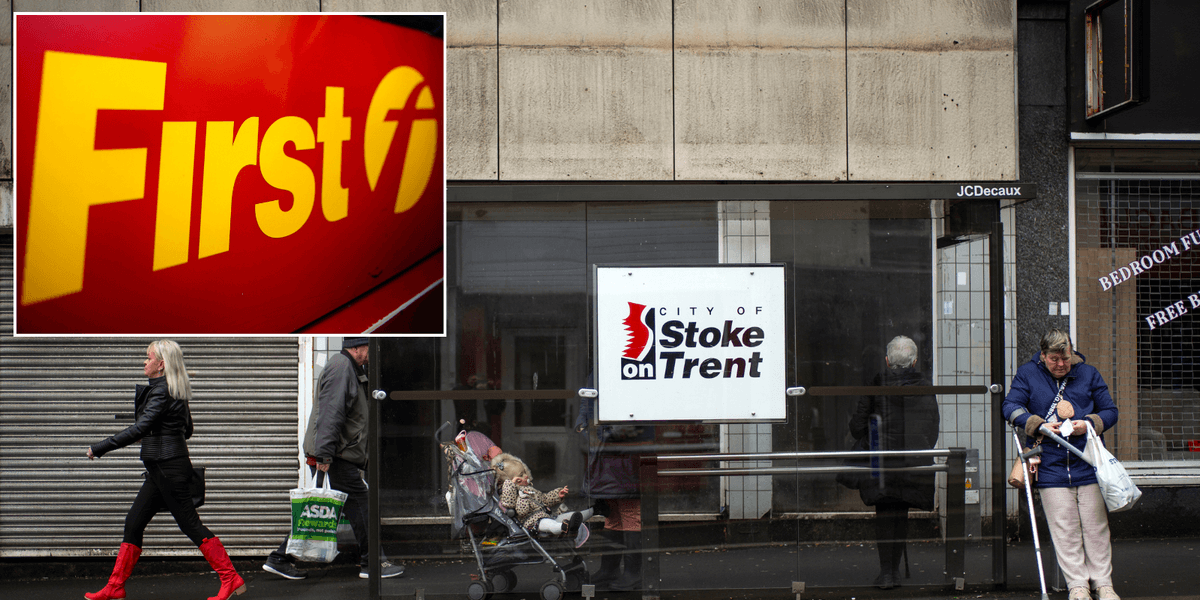
First Bus has prohibited all passengers aged 15 and under from travelling without an adult after 6pm in Stoke-on-Trent.
The move follows a wave of disruptive behaviour connected to the Government's free bus travel initiative for children.
The restriction, introduced on Friday, came after numerous incidents of antisocial conduct since the "Great British Summer Savings" scheme launched on August 1.
The scheme offers complimentary travel to youngsters aged five to 15 across England throughout the month.
First Bus described the measure as regrettable but necessary to safeguard both staff and passengers.
The Department for Transport has given its approval to the ban.
However, local politicians argued the vast majority of young people are being penalised for the actions of a disruptive few.
One of the most serious episodes saw more than 100 young people behaving in an "intimidating and aggressive way" at Hanley bus station in the city centre, requiring police intervention.
Simon Mathieson, First Bus's regional director for the area, told the BBC: "Lots of my drivers, who want to do a good job, [were] feeling very unsafe; lots of passengers, trying to get home, [were] feeling very unsafe."
He acknowledged the free travel offer had proved hugely popular with children locally and called it a brilliant initiative for encouraging bus use.
However, he noted drivers had reported youngsters swinging from handrail straps and running through vehicles while they were moving.
"That's not really helping people feel like they can travel in safety and comfort," he said.
Councillor Finlay Gordon-McCusker, Stoke-on-Trent council's cabinet minister for transport, expressed his disappointment at the blanket restriction.
"Sadly, the children paying the price are overwhelmingly the ones who did nothing wrong," he said.
He revealed he had raised with First Bus the possibility of deploying additional transport safety officers on the affected routes as an alternative.
"It's a real shame that First Bus felt that this was their only option," he said.
"It's certainly not the option I would have liked to see put in place."
Mr Gordon-McCusker argued a stronger police presence at the bus station would have been a more proportionate response, allowing well-behaved young people to continue enjoying the freedom of unlimited summer travel.
"I think it's a crying shame that that freedom [to travel] has been taken away because of the unacceptable behaviour of a very small minority of young people."
Mr Gordon-McCusker was keen to stress that the free travel scheme itself was not to blame for the disorder.
He and his fellow councillors had welcomed the initiative, he said, but it had given some young people the means to travel across the city and cause trouble.
The complimentary bus passes had effectively relocated antisocial conduct that would otherwise have taken place on housing estates — where it tends to be scattered and goes largely unreported — to a single, highly visible location like the bus station, he said.
First Bus stated the restriction had received approval from the Department for Transport and was fully supported by the council.
Drivers retain the discretion to allow unaccompanied under-16s to travel free of charge if they are deemed vulnerable or if refusing them would compromise their safety.
A Government spokesman said: "Our Great British Summer Savings scheme allows kids under 15 to travel for free on participating services, to give families room to breathe and enjoy days out throughout August."
The spokesman added the scheme was designed to give local operators flexibility to address antisocial behaviour, including the ability to refuse travel or impose localised time restrictions.