Thank you for subscribing!
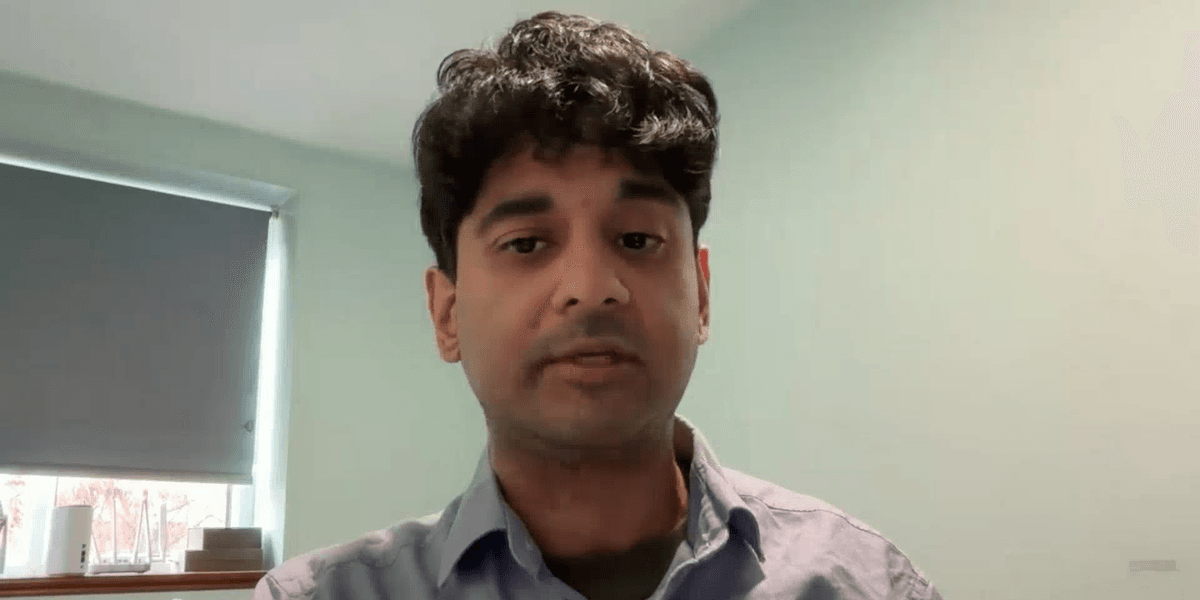
'We’re increasingly moving towards a more divided world and social disunity,' Sohail Ahmed said
A former Islamist has warned Britain “has to change” the way it approaches emerging terror threats.
Counter-extremism expert Sohail Ahmed was speaking to GB News as it emerged that suspected Islamic State propaganda was posted on an online forum encouraging supporters to carry out attacks using wildfires.
He explained that it was the latest example of extremists moving away from sophisticated, centrally directed attacks towards decentralised networks and individuals radicalised online.
“The world is a dangerous place. Not everyone out there is our friend,” he said, advising that the UK had to adjust to the new status quo rapidly.
“There are people out there, there are ideologies that seek our destruction, that seek to sow fear and seek to sow division to make us weaker.”
“We’re increasingly moving towards a more divided world, increasingly moving towards social disunity,” he said.
“We are having high levels of immigration without the requisite level of integration. We are having wars around the world that are radicalising individuals in the UK.”
To that end, Mr Ahmed said he was “not very happy” with the direction in which Britain was heading and admitted he was “not very confident” or “particularly too optimistic”.
Asked whether the Government would be able to rectify the situation, he said: “To do so, a lot of things will have to change.”
“That includes some of our post-Enlightenment assumptions, including our assumptions with liberalism, the way we think as a country, as a culture, as a society, as a civilisation.”
Detailing the evolution of threats to the UK, Mr Ahmed said security services now face a fundamentally different challenge than the centrally planned attacks of previous decades.
“They now know that centralised attacks like 7/7, which was a very sophisticated attack directed by al-Qaeda, (are no longer optimal) because the security services are very good at tracking those groups and dismantling them.
“What’s now increasingly happening is that, one, there’s a cell structure where individuals are working together completely independent of one another.
“And then there are individuals who are just directly being radicalised online, reading material, and then one day go, ‘You know what? I’m going actually to harm people.’”
The former Islamist explained that extremist groups typically use mainstream social media platforms to identify and radicalise potential recruits before moving the most committed individuals into more private online spaces.
“What tends to happen in terms of the radicalisation pathway and how extremists recruit is that they tend to have propaganda messaging on social media platforms, pretty regular ones like Facebook, X,” he said.
“That’s where they then move the people that are the most extreme and that have the greatest likelihood of joining their organisation or helping them materially; they then off-ramp them onto private servers.”
Mr Ahmed warned that advances in artificial intelligence could make it increasingly difficult for security services to track extremist activity.
“Particularly with the advent of AI, people are going to be able to — terrorists will be able to — more easily utilise AI to cover their tracks so that they cannot be tracked,” the counter-extremism expert said.