

You are about to be charged £0.00








An American space surveillance firm has detected China's highly classified Reusable Experimental Spacecraft deploying an unknown object into Earth's orbit.
Leo Labs, which operates a global network of tracking stations, identified the mysterious release using radar equipment based in New Zealand.
The company announced on X that at 2.30am on June 22, its systems picked up "an unknown object in the vicinity of the Chinese Shenlong reusable space plane".
Following further monitoring across multiple facilities, Leo Labs stated it had "independently catalogued this object and assessed with high confidence that it was released from the Chinese space plane".
The firm noted this behaviour matches sub-satellite deployments observed during the spacecraft's earlier missions.
Chinese officials have offered no comment regarding the craft's purpose or the nature of the released object.
Professor Jonathan McDowell, from Durham University's Space Research Centre, confirmed the object has been recorded by the American Space Force, though its exact nature remains unclear.
Speaking to the Daily Mail, Professor McDowell said: "It's hard to say at the moment, it might just be a cubesat (a small satellite commonly used to conduct research), but it could be a very small spy satellite - nothing fancy."
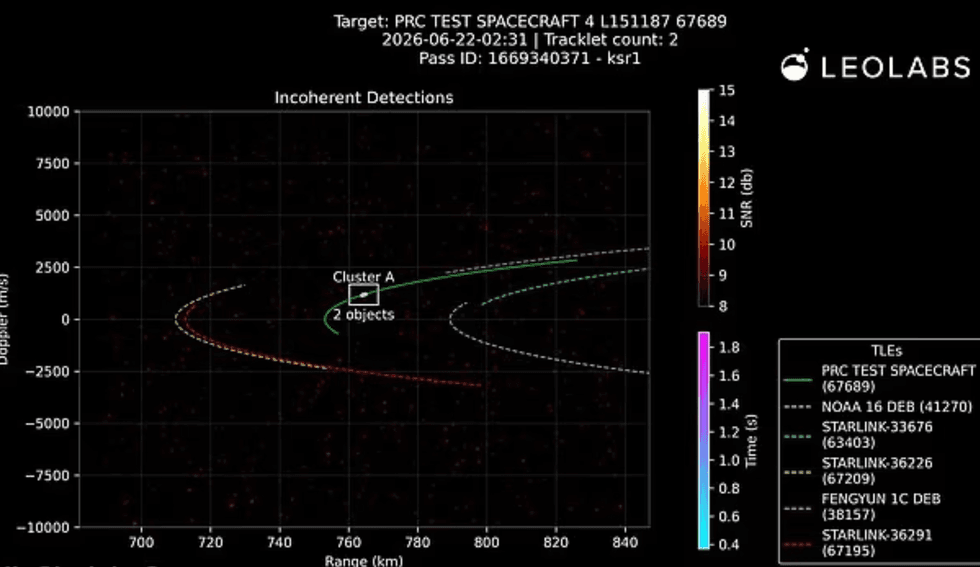
Leo Labs announced that it had picked up the object last week
|LEO LABS
He added: "Previous things ejected from earlier flights of the space plane have not manoeuvred or done anything particularly interesting."
This pattern indicates the spacecraft is likely being used for experimental purposes and technology testing rather than operational missions, according to Professor McDowell.
He suggested that observing whether the space plane subsequently retrieves the satellite using a robotic arm would provide more significant insights into its capabilities.
The Reusable Experimental Spacecraft ranks among the China National Space Administration's most tightly guarded programmes, with virtually no confirmed details about its construction or function.
LATEST DEVELOPMENTS:
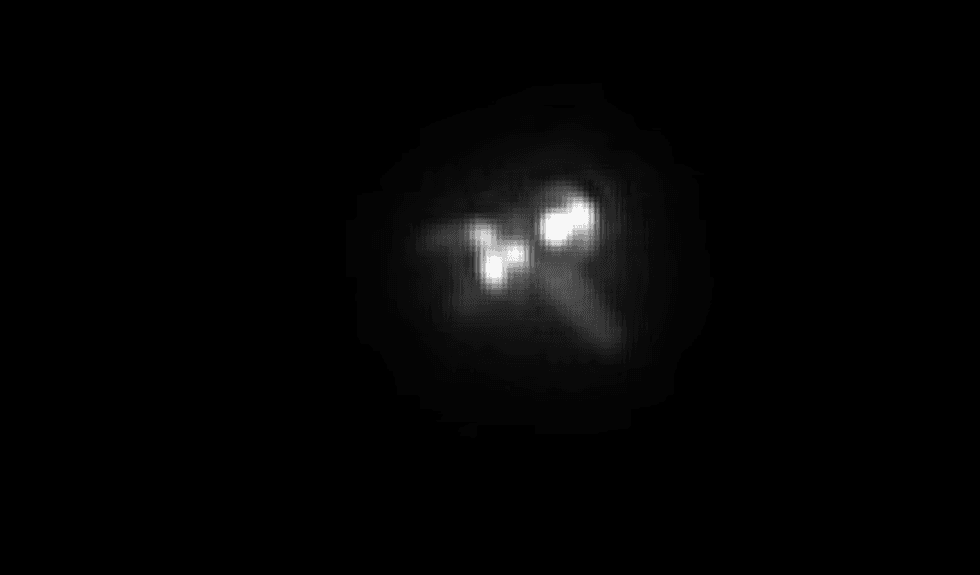
The Reusable Experimental Spacecraft is one of China's most guarded secrets
|FELIX SCÖFBÄNKER
Experts believe it resembles America's secretive X-37 vehicle or NASA's retired space shuttle, though no official photographs exist beyond a handful of digital renderings.
Amateur astronomer Felix Schöfbänker captured the only publicly available images using a ground-based telescope, revealing in 2024 that the craft featured solar panels absent from any official depictions.
The spacecraft has now completed three previous missions, accumulating approximately 500 days in orbit, and has demonstrated a pattern of unusual activity.
Observers have documented the craft performing rendezvous and proximity operations, manoeuvres involving approaching other objects as closely as possible.
While such operations serve legitimate purposes like satellite refuelling and repairs, growing concerns exist that China, the United States, and Russia are developing spacecraft capable of disrupting enemy satellites.
Potential hostile applications include forcing spy satellites out of their orbits, reorienting communication satellites away from their targets, or physically seizing spacecraft using robotic arms.
The US Space Force is widely believed to be advancing its own proximity operations capabilities, having commissioned artwork depicting a space plane intercepting a satellite as its inaugural official image.
Russia has similarly intensified its space warfare research, with two of its inspector satellites passing within three metres of each other in May.
Professor McDowell suggested China's pursuit of such technology may have been spurred by American developments in the same field, though whether the Reusable Experimental Spacecraft serves peaceful or military purposes remains impossible to determine.