




The European Union has been left tearing itself apart after Spain opened the floodgates to 1.3 million undocumented migrants.
Spanish Prime Minister Pedro Sanchez sparked a furious row with Italian leader Giorgia Meloni after enacting the biggest amnesty seen in European history.
The amnesty was initially only expected to result in 500,000 applications, with undocumented migrants having until Tuesday to finalise outstanding requests.
Mr Sanchez hailed the amnesty as an act of justice and necessity, insisting it will help Spain pursue economic growth while safeguarding public pensions.
Undocumented migrants were invited to apply for amnesty on April 16, with more than 360,000 people out of 900,000 being granted provisional residency permits by mid-June.
The amnesty sparked shocking scenes of huge queues of migrants outside application centres.
To apply for permanent residency, undocumented migrants needed to prove they had spent five consecutive months in the country and had a clean criminal record.
A successful applicant will be handed a one-year residence and a work permit.

Italy's Giorgia Meloni is locked in a bitter row with Spain's socialist PM Pedro Sanchez
|GETTY
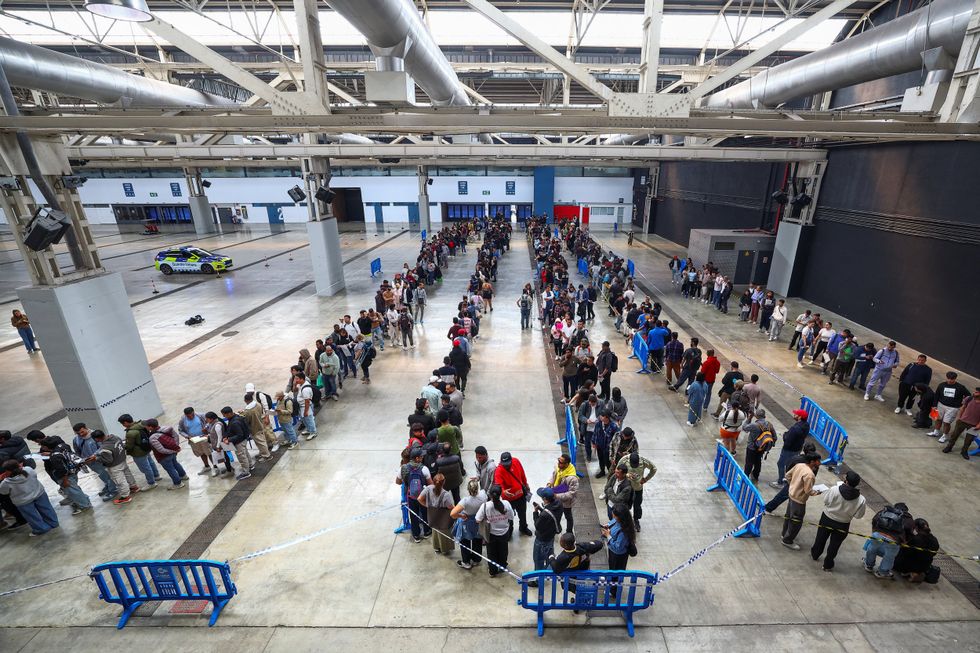
Huge queues were seen snaking around in Barcelona as the amnesty officially started earlier this year
| REUTERSMr Sanchez is said to have clashed with Ms Meloni during June's European Council summit over the amnesty.
Ms Meloni, who has spearheaded tougher EU-wide migration rules, fears the amnesty could have consequences for the bloc’s passport-free Schengen Area.
Spain's right-wing Partido Popular and Vox parties both opposed Mr Sanchez enacting the nation's seventh amnesty since the 1980s.
Voters will have the opportunity to deliver their verdict on Mr Sanchez's amnesty when the nation goes to the polls next year.
LATEST DEVELOPMENTS
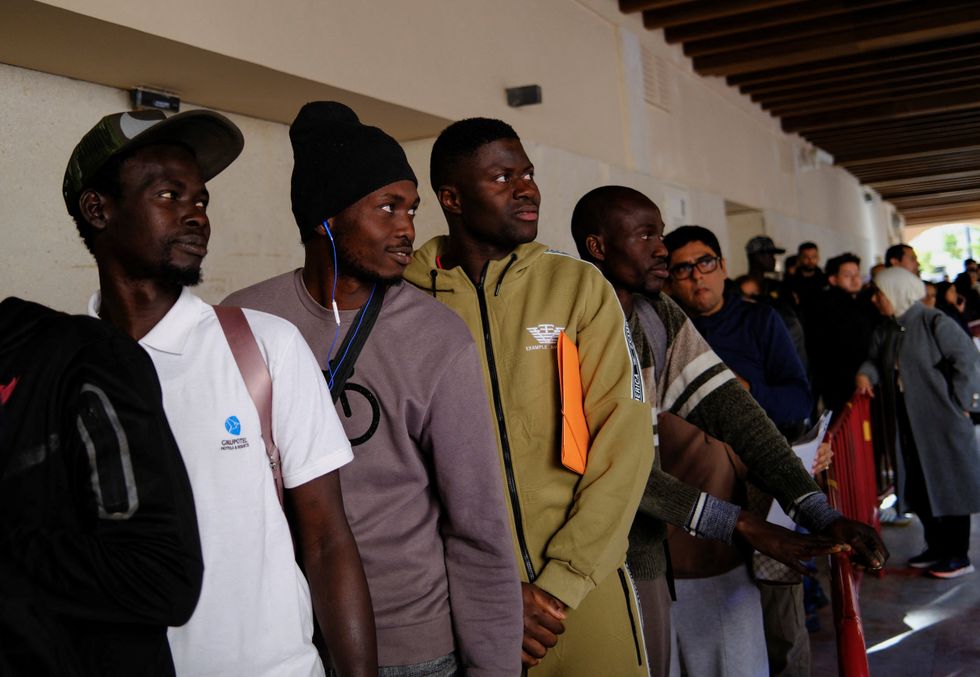
Thousands of illegal migrants were spotted lining up at more than 400 registration points across the country in April
| REUTERSPartido Popular is now seven per cent ahead of Mr Sanchez's Spanish Socialist Workers' Party, with Vox sitting in third place on 18 per cent.
However, the European Commission has sought to soften concerns from other member states.
It warned that the residence permits would apply only to Spain and not the rest of the EU after the amnesty was announced.
Mr Sanchez, who is also embroiled in a corruption scandal, believes the amnesty will help continue Spain's strong economic growth.

The EU has been forced to clarify the residence permits would apply only to Spain and not the rest of the EU after the amnesty was announced
|GETTY
Spain outpaced other European countries following Russia's invasion of Ukraine in 2022.
Forecasts now suggest Spain could enjoy economic growth of 2.6 per cent in 2026, up from 2.2 per cent.
The boom was partially driven by migrants entering key sectors, including hospitality and elderly care.
But the amnesty sparked anguish after it was revealed it would dwarf the 500,000 regularised in 2005.
It is also larger than the Italian amnesty of 2002 which invited 634,700 undocumented migrants to settle in Europe.
Spain's amnesty remains smaller than the one imposed in the US in 1986, with Ronald Reagan granting 2.7 million undocumented migrants legal status.
Meanwhile, Brussels is pushing for a firmer crackdown on illegal migration.
The European Parliament this month passed draft legislation to facilitate the deportation of migrants who had been denied asylum.