






A miniature AI-powered missile designed to neutralise deadly Russian drones has been successfully tested.
The weapon, dubbed the "Kreuger," is roughly the size of a shoebox and carries an estimated price tag of around $10,000 (£7,400) per unit.
Dominic Surano, an aerospace engineer at Nordic Air Defence (NAD), a Swedish defence firm, said: "In essence it's a flying cellphone with a warhead."
The system represents a direct response to an increasingly urgent imbalance: NATO allies have been deploying fighter jet missiles worth $1m (£740,000) each to bring down crude Russian drones assembled for just a few thousand dollars in sanctions-hit factories.
The Kreuger kit itself costs approximately £8,000, which is a fraction of the cost Nato currently spends on the problem.
At a concealed rural site in Sweden, the test launch took place before a select audience of journalists and senior NAD personnel, including former UK Armed Forces minister James Heappey.
Footage from a nose-mounted camera showed the Kreuger initially overshooting its dummy drone target before autonomously correcting course and circling back for a second attempt.
On its return pass, the missile closed to within blast radius and successfully triggered its dummy warhead.
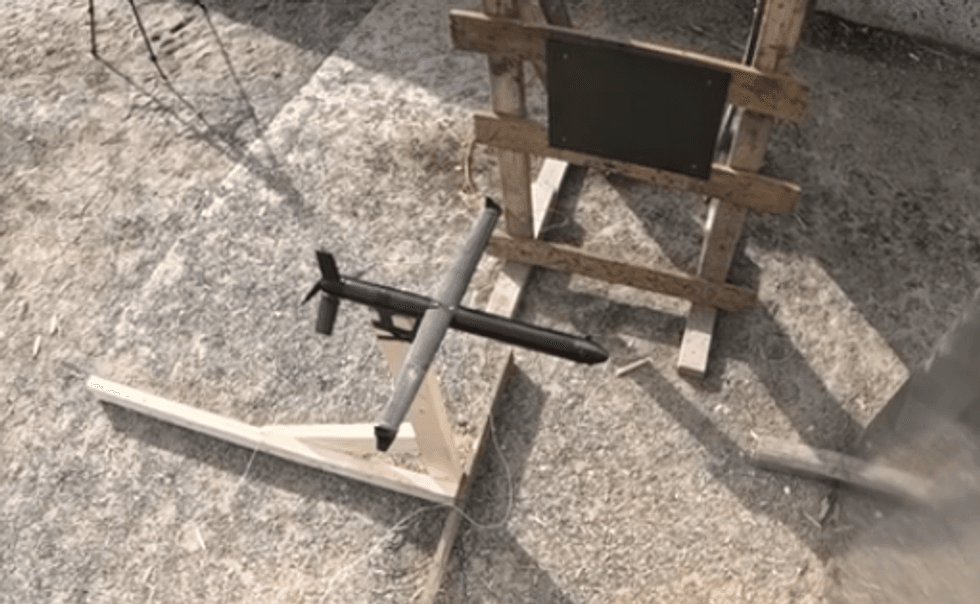
A miniature AI-powered missile designed to neutralise deadly Russian drones has been successfully tested
|NORDIC AIR DEFENCE
"That is physical contact and the threat is going down!" Mr Surano told the Telegraph.
In a genuine combat scenario, the AI-guided interceptor would autonomously locate a hostile drone, manoeuvre into striking range, and detonate - either through an explosive warhead or a kinetic interceptor designed to shred the target's propellers.
Mr Heappey, who served as Britain's Armed Forces minister between 2020 and 2024, believes the Kreuger could prove valuable for the Royal Navy as it weighs up the danger posed by Russian drones potentially launched from vessels operating near UK waters.
He drew a parallel with Iran's massed aerial assault on Israel, noting that any adversary would attempt to overwhelm defences - whether protecting the British homeland or a naval task force - by timing multiple threats to arrive simultaneously.
LATEST DEVELOPMENTS
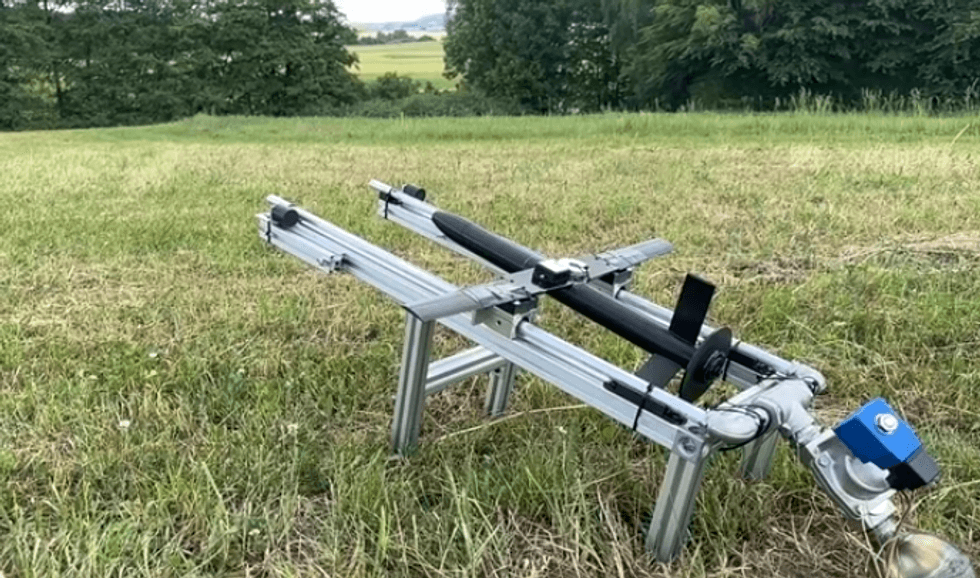
The weapon, dubbed the 'Kreuger,' is roughly the dimensions of a shoebox
|NORDIC AIR DEFENCE
Mr Heappey said: "The key principle is that the defender needs to be cheaper than the attacker.
"One way of doing that is directed energy [lasers], but that can't be done everywhere.
"This is the next cheapest thing, and it can overcome drones designed to confuse and overwhelm."
NAD is far from alone in tackling what the defence sector now calls the "cost-effectiveness problem" of countering drones.
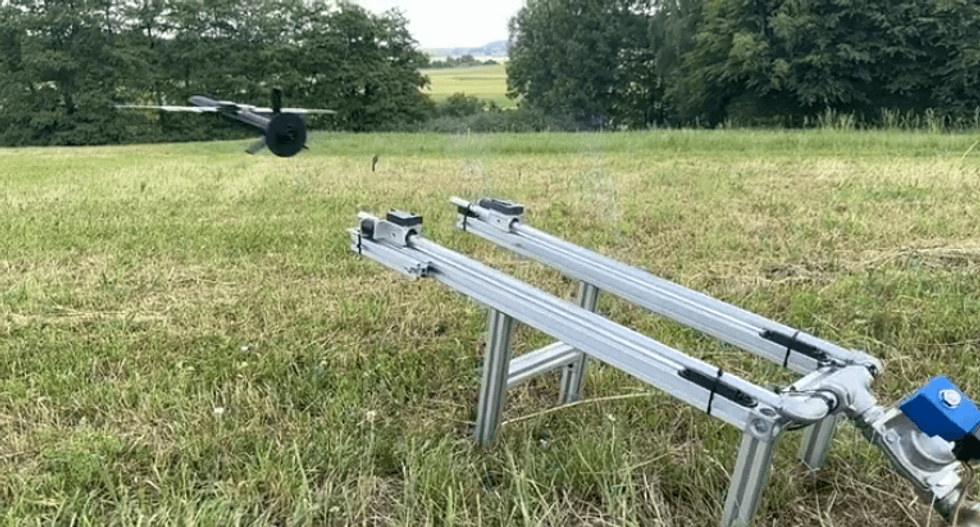
The weapon carries an estimated price tag of around $10,000 per unit
|NORDIC AIR DEFENCE
Heckler & Koch is working on an AI-assisted grenade launcher, whilst Rheinmetall has developed its "Skynex" platform, capable of firing 1,000 smart rounds per minute.
Yet established manufacturers continue to dominate procurement, particularly in Germany, where officials remain wary of awarding contracts to newer AI-driven firms over concerns about long-term reliability.
Ulrike Franke, a drone warfare specialist at the European Council on Foreign Relations, argued that affordable counter-drone tools are nonetheless essential for NATO's future.
Ms Franke said: "If you imagine a situation like Ukraine, where you have thousands coming, you risk going broke by defending yourself."