

You are about to be charged £0.00






Russia is covertly helping Iran develop supersonic cruise missiles through a a defence firm sanctioned by the US, it has been revealed.
A multi-year operation, codenamed C430L, has provided Tehran with advanced military technology and enlisted some of Moscow's most experienced missile specialists.
The main goal of the project is to help Iran develop a ramjet propulsion system, an incredibly efficient engine with no moving parts which allows missiles to sustain flight at several times the speed of sound.
The programme first began in 2023 and has continued throughout the Iran war as revealed by leaked Russian correspondence, travel records and analysis of military patents first reported by the Financial Times.
Defence analysts confirmed the technology was almost certainly being used for anti-ship and land-attack cruise missiles.
"This is the transfer of a highly strategically sensitive military technology from Russia that the Iranians have wanted to acquire for decades," Fabian Hinz, an expert on Iranian missiles and senior analyst with Conflict Armament Research told the newspaper.
"A programme like this would require political clearance from the very top in Russia."
Ramjet engines enable missiles to sustain high speeds at low altitudes, shortening the time air defence systems can detect them.
Iran has built and tested the propulsion system, but there is no evidence a Russian-assisted supersonic cruise missile has been deployed.
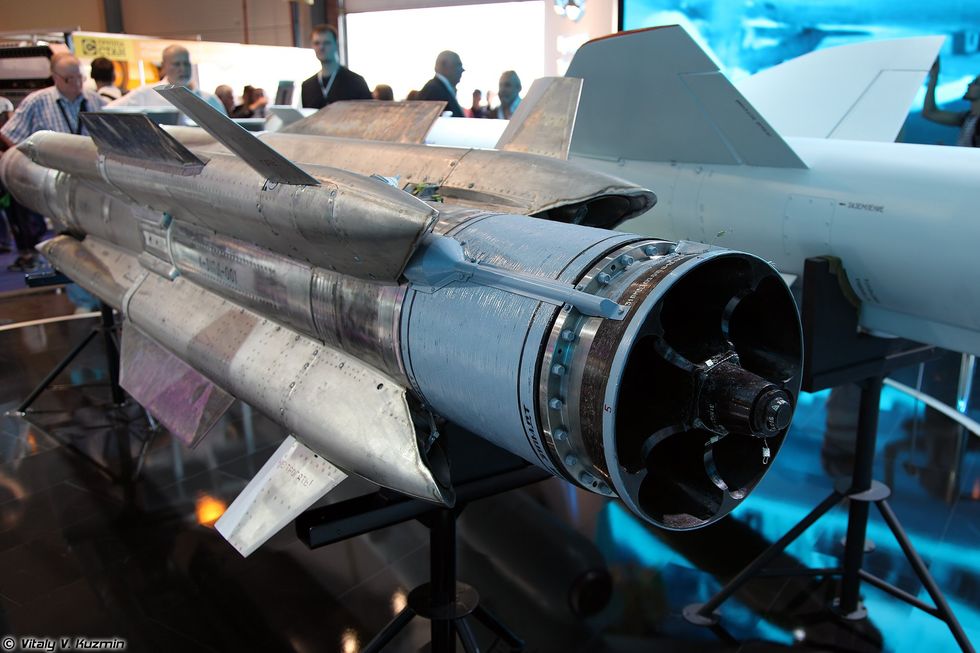
PICTURED: The ramjet exhaust of a Kh-31 missile, a Russian air-to-surface missile
|WIKIMEDIA / VITALY V KUZMIN
Leaked correspondence revealed discussion between the two sides continued into the summer as it was revealed Rosoboronexport, a state arms exporter, coordinated the project with NPO Mashinostroyenia.
The US sanctioned the defence company in 2014 to support Ukraine, saying it "develops and fabricates weapons and military hardware".
Travel records showed Russian arms and exports officials and senior NPO Mashinostroyenia engineers made repeated trips to Iran before the C430L contract was signed.
Russian engineers reviewed data from an Iranian test of a ramjet propulsion system and asked questions to Tehran about how the system performed in 2025.
Rosoboronexport also offered to send two dozen missile specialists to Iran for technical consultations on the project in April 2025.
LATEST RUSSIA NEWS:
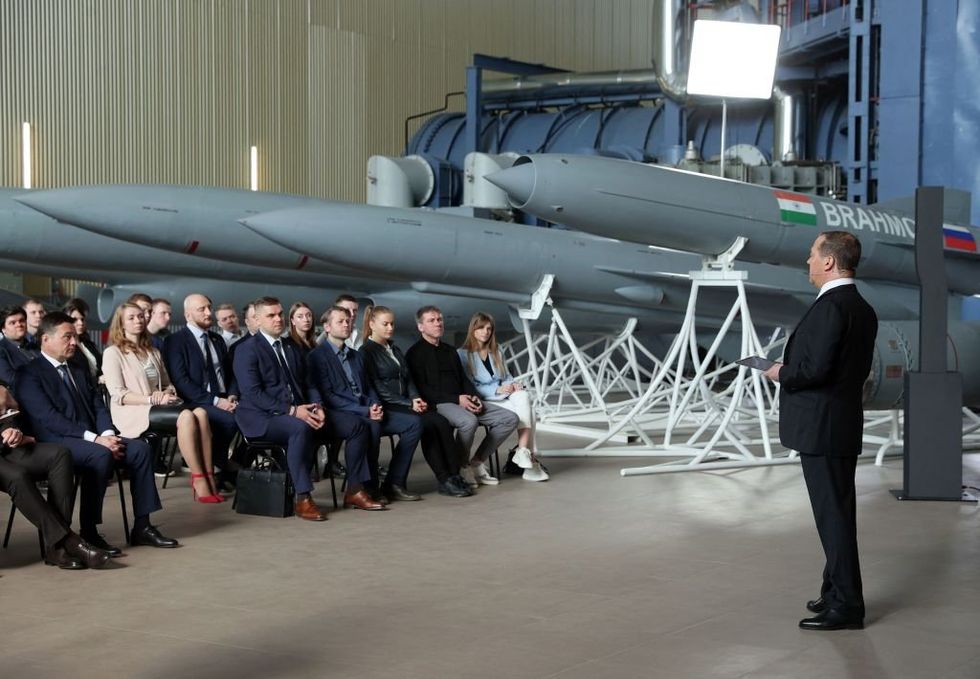
Ally of Mr Putin and chair of Russia's security council Dmitry Medvedev talks to staff at a visit of NPO Mashinostroyenia
|GETTY
Separately on Tuesday, Vladimir Putin vowed to continue supporting Iran and its people's "courage and resilience" during the war in a meeting with Iranian President Masoud Pezeshkian.
"During this difficult time, we are trying to provide you with the assistance you need," the Russian leader said.
"We have discussed this with you and are supplying you with the necessary goods."
It was not immediately clear what goods Mr Putin was referring to.
The revelation of the military project comes after Germany directly blamed Russia for a drone disruption at Leipzig/Halle Airport in August.
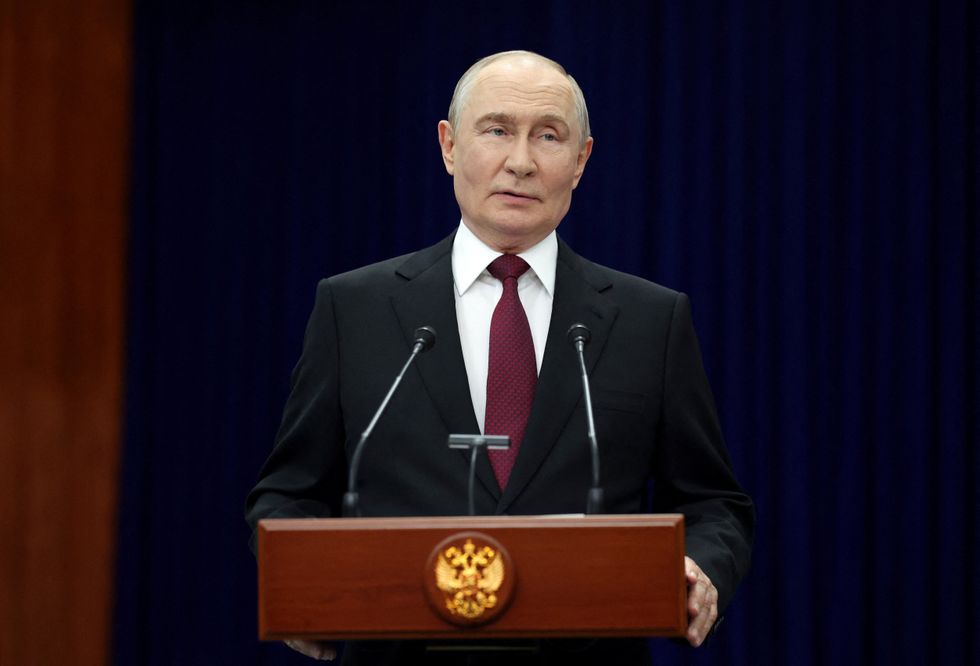
Vladimir Putin told Iran's President Moscow would supply him 'with the necessary goods'
|REUTERS
This is not the first reported instance of Moscow aiding Tehran as the Iran war wages on.
In June, it was revealed the Kremlin had provided intelligence to help the IRGC target American military positions in the Middle East, according to Russian insiders.
And in March, Moscow held talks to discuss sending a handful of drones to Tehran.
Ukrainian President Volodymyr Zelensky ordered strikes on an Iranian vessel in the Caspian Sea in July as the two leading global conflicts threaten to merge.
Iran, in turn, threatened to respond, saying the strike would not go unanswered.