Thank you for subscribing!
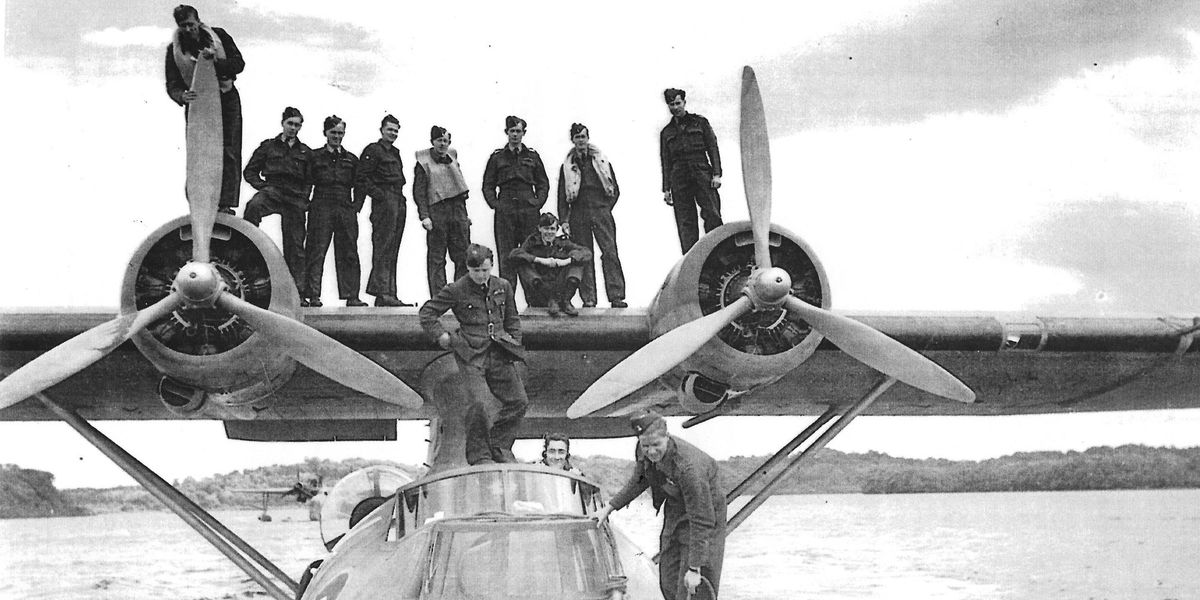
The Coastal Command were responsible for keeping the sea lanes of Britain safe
The names of thousands of airmen and women who died serving in a forgotten RAF branch have been remembered in a virtual memorial.
During World War Two, Coastal Command were responsible for keeping the sea lanes of Britain safe from U-boats, escorting Allied shipping convoys and for offensive operations against the enemy’s surface fleet.
Now, the first truly comprehensive record of the 12,500 airmen and women who died whilst serving in the RAF branch can be found on the Losses Database at the International Bomber Command Centre in Lincoln.
The database allows people to find service details, biographical descriptions and even next of kin’s, so families across the world can find out if they have a connection.
Dave Gilbert has been the centre’s Losses Archivist for more than 13 years and led the research.
He told GB News: “It was called the Cinderella service because it was forgotten, nobody cared about it.
“It lacked the enormity of Bomber Command and the drama, perhaps, of Fighter Command.
“For the first time, I’ve had to be looking internationally. I’ve found records in the far east, Singapore, Africa, and in the Americas.
“Using the Coastal Command’s existing Book of Remembrance as a foundation, I have identified more than 2,000 additional losses not previously recorded, bringing the total to more than 12,500.”
Creating the database was made harder by the fact that half of all Coastal Command airmen have no known grave, due to the nature of fighting over the seas.
Dave added: “Often they were in flying boats like Catalinas, and in theory they could put down on the water, but in practice, if the seas beneath them were raging, there was no practical opportunity to land because you would almost certainly capsize.
“Even if you did land, then you would probably be so far from home that there was no realistic chance you would have been recovered.
One of the names added to the database is Flying Officer Lloyd Allan Trigg VC, who enlisted in the Royal New Zealand Air Force and was posted to No. 200 Squadron, Coastal Command, in West Africa.
In August 1943, Trigg’s crew sighted a German U-boat and set course for attack, coming under a hail of fire from the submarines’ anti-aircraft battery.
It was clear they were going down, but rather than pull out and attempt to ditch into the sea, FO Trigg maintained his course and, with his aircraft ablaze, dropped six depth charges on to the U-boat.
Flying Officer Trigg and his seven crew were killed when they hit the water.
The u-boat sank within 10 minutes, but a few surviving Germans were saved by the lifeboat of Trigg’s plane that had deployed on impact with the water.
Dave Gilbert told GB News: “The captain of the U-boat got to tell the story and he said it was the bravest thing he'd ever seen, and whatever the highest award was for the British, then he should receive that.
“So Trigg was indeed awarded the Victoria Cross, and it's still the only time in the award's long and rich history that it's been awarded to somebody solely on the evidence of the enemy.”
With the right funding, the International Bomber Command Centre hopes to erect memorial walls for all Coastal Command losses at the site, to ensure they won't be forgotten in the decades to come.
Chairman of the Coastal Command Association, Squadron Leader Hector Hillman, said the database was an “important” first step.
“You go through checking out the names on the list against squadron histories and various other records, and some of the stories that come out of it are really very moving.
“To have those that didn't return marked in this way, and for people to be able to access the information remotely, is very important.”