



Ten years ago, almost to the day, Britain voted to leave the European Union. I considered it the right decision then and still do today.
I had thrown my heart and soul into campaigning for Brexit. As the national organiser of an excellent little group called ‘Trade Unionists Against the EU’, I spoke in the media and debated at several public events. I even lost my position as a senior union official over my pro-Brexit activities.
The Left’s dramatic ideological shift on Europe remains one of the great unfathomables of modern British politics. In a referendum in 1975, huge sections of the Left – including heavyweight Labour Cabinet ministers and most trade unions – voted to leave the Common Market, a forerunner of the EU. They saw that institution as a “capitalist club” which eroded national democracy and placed power in the hands of big business and bureaucrats.
Come 2016, however, it was a very different story. Though the EU was more than ever in the grip of free marketeers and unaccountable functionaries, most on the Left had been beguiled by it, looking upon the institution as a beacon of enlightenment values while regarding its critics as xenophobes and reactionaries. Even the fact that it was their nemesis Margaret Thatcher who in 1986, signed the Single European Act, which paved the way for the EU’s Single Market, held no water with them in argument. The EU was good and benevolent; its opponents bad and narrow-minded.
But some of us refused to swallow this narrative, arguing instead that the Left should stay true to its Eurosceptic roots. We still supported all the things that the EU sought to prohibit or discourage: regulation of the labour supply, state aid to industry, economic interventionism and planning, investment-led growth over austerity, exchange rate flexibility, public ownership, and so on.
We also believed in that small thing called national sovereignty. We understood that the European Parliament was essentially a fig leaf for democracy, and that real power lay with the unelected European Commission, Council, Central Bank and Court of Justice.
In June 1974, Tony Benn, then a serving Labour Cabinet minister and a lion of the Left, recorded in his diaries how, during a visit to Brussels to meet with European Commissioners, he felt as if he were going “almost as a slave to Rome”. The experience cemented Benn’s opposition to the European project. “Here was I”, said Benn, “an elected man, doing a job and could be removed. And here were these people, with more power than I had, and no accountability to anybody.”
As Benn understood, the right of people to elect and remove those who make the laws under which they live should be fundamental in any society that professes to be democratic. But as national parliaments became ever more subservient to the institutions of the EU – and especially the European Commission, which exercised the crucial power of legislative initiative – democracy in member states was increasingly sidelined. It has long baffled me that so many across the British Labour movement – which has a proud history of challenging undemocratic and elitist power structures – should ever wish to support such an arrangement.
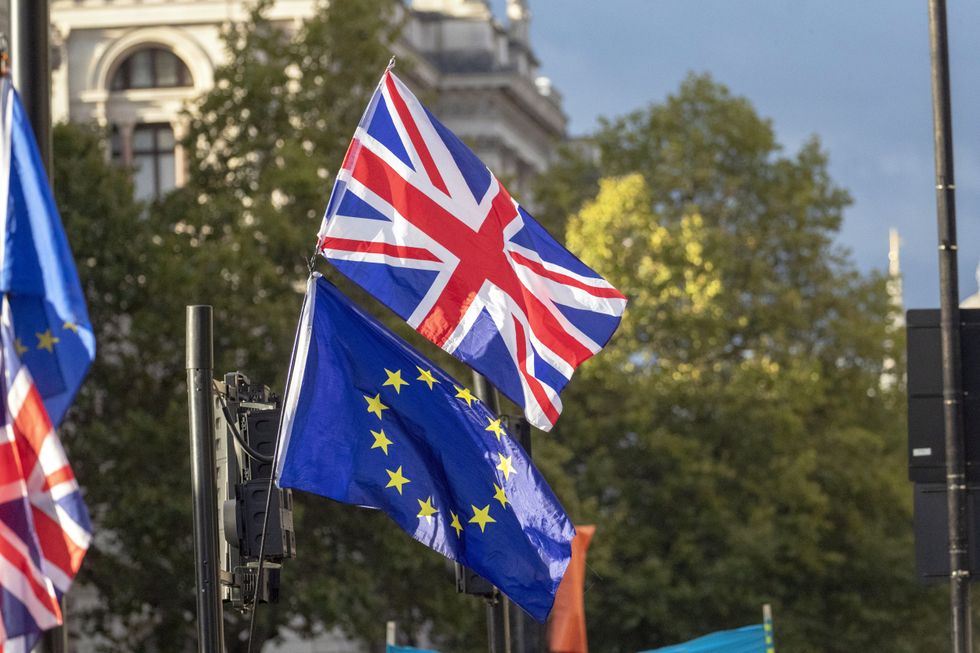
Brexit was always a process rather than an event. I was proud then, and remain proud today, writes the trade union activist and author
|PA
I recognised during the referendum campaign that some on the pro-Leave side had a very different vision for a post-Brexit Britain to my own. Hard-Right Brexiteers, for example, believed the EU wasn’t quite capitalist enough and advocated an aggressively low-tax, low-regulation “Singapore on Thames” model for Britain’s economy. I had very little in common with such people.
But the point, surely, was that, outside the yoke of the EU, we could each make the case for the type of economy and society we wanted to see, and the electorate would have the final say on which vision they preferred. Then everyone accepted the outcome. Isn’t that how democracy was supposed to work?
I remember watching, during the campaign, an interview with Labour’s Hilary Benn in which he accepted that, while inside the EU, there was nothing Britain could do to prevent hundreds of millions of citizens from coming here to live and work. I thought about the message that that conveyed to an electorate which time and again had expressed a desire to get immigration under control. It told them that their democratic wishes were irrelevant. The EU permitted free movement, and that was the end of the matter. No wonder so many Britons were so eager to escape the clutches of Brussels.
Well, now we are out. It has been a bumpy ride since we left – not least because the political class was so determined, even after the referendum result, to keep us in. And it would be daft to suggest there wasn’t a single drawback from being on the outside. There are, after all, always trade-offs when seceding from a large political and economic bloc. Nonetheless, it is clear now that the liberal establishment’s prophecies that leaving the EU would, of itself, lead to an economic catastrophe were ill-judged and hyperbolic.
But though Labour pledged at the 2024 election not to reverse Brexit – a promise that looks more insincere as each week passes – it has not come anywhere near to maximising the freedoms available to the Government of a nation that has, as it were, taken back control. To this day, many inside the party and on the wider Left appear entirely ignorant of their movement’s Eurosceptic traditions, oblivious to the fact that so many of their political forebears fought so hard to defend and then restore our national sovereignty, let alone why they did so. For these people, Britain’s independent status continues to be a problem to be managed rather than an opportunity to be exploited.
C'est la vie. Brexit was always a process rather than an event. It was also a genuine democratic revolt – one in which the working classes of this country, the people who had been scorned and neglected by the political establishment for so many years, played a decisive role. And all power to them for that. I was proud then, and remain proud today, to be among their number.