Thank you for subscribing!
Reform's plan to put British citizens first could restore fairness to the system and save billions for taxpayers, writes the GB News presenter
In Britain today, more than 1.3 million foreign nationals claim Universal Credit welfare payments, paid for by the British people. Close to one in six people on Universal Credit are foreign nationals.
The British people paid £55billion on welfare payouts for foreign nationals in the last four years alone.
Despite a severe housing crisis, more than one in ten new social housing lets in England last year went to people who are not British citizens. And in the last five years, while the number of young British people who were added to UK payrolls increased by only 11,000, the number of young foreign nationals from outside Europe who were added rocketed by nearly 300,000.
What do these facts have in common? They are all symptoms of something I've warned about for a while now: the looming collapse of Britain's social contract.
Nation-states only survive so long as their citizens remain willing to support a social contract, which is based on the idea of reciprocity. You work hard. You pay your taxes. You obey the law. You contribute to the country. In return, the state prioritises national citizens, looks after them, and protects them.
But at some point in the last thirty years, somewhere between New Labour entering power in 1997, and the Tories leaving power in 2024, something went badly wrong.
Britain's social contract stopped being organised around national solidarity. What was once a national welfare state morphed into an international welfare state. And politicians in Westminster, gripped by the new mindset of 'suicidal empathy', no longer displayed any real sense of obligation to their own national citizens who make this welfare state possible to begin with by working hard and paying taxes.
Welfare benefits, once restricted to national citizens genuinely in need, were turned into another entitlement, another right, for people who are often not even British at all and do not work, and hence do not contribute. And now this is leading us into a very dangerous place indeed.
Unless something changes and changes soon, then the number of foreign nationals claiming welfare will continue to skyrocket.
The number of British families being pushed aside in social housing for the likes of the First Lady of Sierra Leone will continue to soar.
People living on welfare will find life more rewarding than those who are actually getting up and going to work. And in this way, day by day, welfare claim after welfare claim, the social contract will continue to unravel.
Confronted with this grim and unavoidable reality of having to subsidise people who are entering Britain illegally, who do not come from Britain, or people who choose welfare when they could instead work, the silent majority of British workers will withdraw their support for the welfare state, withdraw what little trust they still have in the state, and perhaps even leave Britain altogether — as many are already doing.
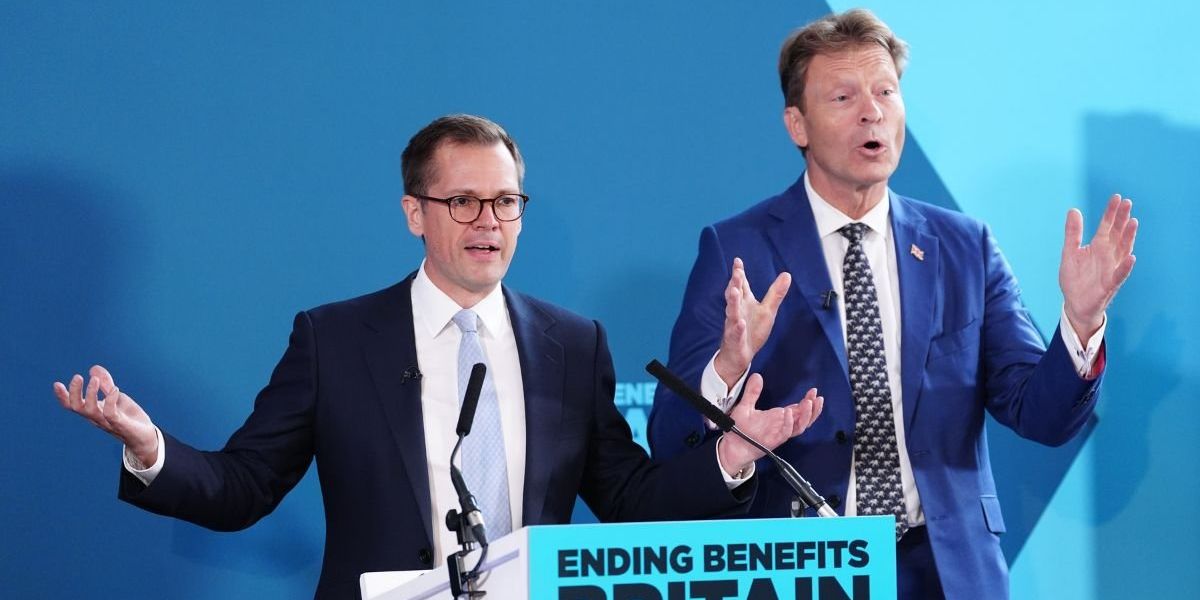
Which is why an important new policy, released today by Reform UK, should grab our attention. The proposal? It's simple but powerful. British welfare for British people.
Under a Reform Government, only British citizens will be entitled to receive the vast majority of welfare benefits. Universal Credit, housing benefit, most other non-contributory benefits, and taxpayer-funded free childcare will be restricted to British citizens. In other words, the principle of prioritising national citizens, which underpins the entire social contract, will be re-established.
Foreign nationals will retain access to the National Health Service but only if they pay a higher health surcharge so that British people are not left out of pocket. No child will lose their right to free school meals. And a child of foreign national parents who has become a British citizen will still be able to access child benefit. But the era of providing mass welfare for foreign nationals, including EU nationals, will end.
This policy, I think, is fair. It is reasonable. It is the only way of ensuring that Britain's social contract remains in place. And it will also save considerable amounts of money that can instead be ploughed into frontline public services for the British people.
By the end of this decade, it's estimated that a policy like this could save the British people £21billion every year – equivalent to roughly 1,000 new primary schools, 400 new secondary schools, 15 new hospitals, or more than a dozen new prisons, not to mention going a considerable way towards filling holes in our national defence.
It would also improve people's lives. Were this policy enacted, an entirely foreign household would no longer be eligible for Universal Credit, housing benefit, Jobseeker's Allowance, tax-free childcare, or child benefit. They would have no choice but to get up every day like millions of others and go to work and contribute to wider society. Or, if they don't want to work and make a net fiscal contribution to our society, they can leave.
While the precise savings will inevitably be contested, the underlying principle should not be. How is it right, how is it fair, that somebody who only recently arrived in Britain has a similar claim on the welfare state as somebody from Britain who, along with their ancestors, has spent decades paying into it? It's not fair. It is absurd.
The reason I suspect this policy will strike a chord out there in the country is because millions of British workers are now united by a palpable sense of unfairness. They can see exactly what is going on in this country.
Politicians are importing more and more workers from overseas while young British people are being allowed to drift into inactivity. Welfare payments are going to nearly 1.5 million foreign nationals while the bill is handed to British workers who get up every morning, go to work, and pay taxes for a settlement that seems to put them last.
The whole thing is insane and makes a mockery of the notion of reciprocity that underpins the welfare state. It is also what many people on the left of politics have still not figured out. You can have a redistributive welfare state. Or you can have mass immigration. But you cannot have both. People will only support a welfare state so long as they feel they have something in common with those they are subsidising.
What we should be doing is prioritising national citizens who genuinely cannot work. Expect those who can work to go out and work. Get British people back into jobs. And restore the principle that national citizens must always come first, especially in the welfare state they pay for.
None of this should be controversial. It should not even be considered radical. It is how nation-states endure and survive over the longer term. And unless we actually fix our social contract here in Britain, then soon we won't have much of a country left.