Thank you for subscribing!
James Hodgkinson, a research associate at the Adam Smith Institute, explains why the North East has a blueprint for success
And with conflicts brewing across the world, the threat to our nation is becoming ever-more real.
Faced with this grim prospect, you might expect that politicians would fund our forces hand over fist.
Alas, they have not. The Defence Investment Plan was delivered a whole nine months behind schedule.
Even when it was released, it left a £4.7billion black hole in the public accounts.
For what is supposedly a matter of national importance, the Government’s response has been decidedly lacklustre.
But the story of failure goes beyond 2024. Since the 1990s, military expenditure has been in freefall.
As demand on public money grew, governments of all political stripes lined up to make the same grave error.
By hollowing out our defences in times of peace, Britain has become grossly ill-equipped for modern war.
Over the last year, the Westminster commentariat has made much of our military blunders.
In truth, it’s no surprise. From HMS Dragon’s belated defence of Cyprus to the announcement of multi-year delays in the production of F-35 fighter jets, Whitehall's grand strategists have hardly covered themselves in glory.
If Brits at home can see our military shortcomings, then so can those abroad who wish to do us harm.
That state of affairs is no laughing matter. Faced with these threats and our obvious warfighting weakness, the government had to act.
Providing our brave armed forces with the tools they need to fight effectively in modern conflicts is non-negotiable.
But with public finances under obvious strain, and our tax burden at its highest level since the Second World War, the challenge ahead is immense.
Rearming Britain for the 21st Century will require a radically different approach.
Any viable plan must do more than boost our military readiness. As the country battles slow growth and skyrocketing unemployment, it must also turbocharge our ailing economy.
The dividends of defence spending should be paid to British workers and spent across our economy. Put plainly, the answer is to build the weapons we need right here in the UK.
Of course, the plight of British manufacturing is well documented. Restrictive planning laws mean major projects take years to get off the ground; sky-high energy prices and net-zero levies increase the cost of production; and our punitive tax system acts as an impediment to entrepreneurialism.
Against such entrenched obstacles, it is no surprise that major manufacturers have simply voted with their feet and moved their operations overseas.
To bolster Britain’s defences, this issue must be tackled head-on. True rearmament means more than just stockpiling bombs and bullets.
Instead, it is about building supply chains, skill bases, and resilience across the economy.
And new research from the Adam Smith Institute shows how we can make this a reality.
By creating a network of bespoke enterprise zones across the North East of England, the Government can unlock the industrial capacity our nation needs.
Through streamlining planning law, applications for strategic shipyards, drone hubs, and technological centres could be approved in months, rather than years.
And with radical cuts to business rates, national insurance and electricity prices, large multinational firms could be encouraged to shift their operations to British shores.
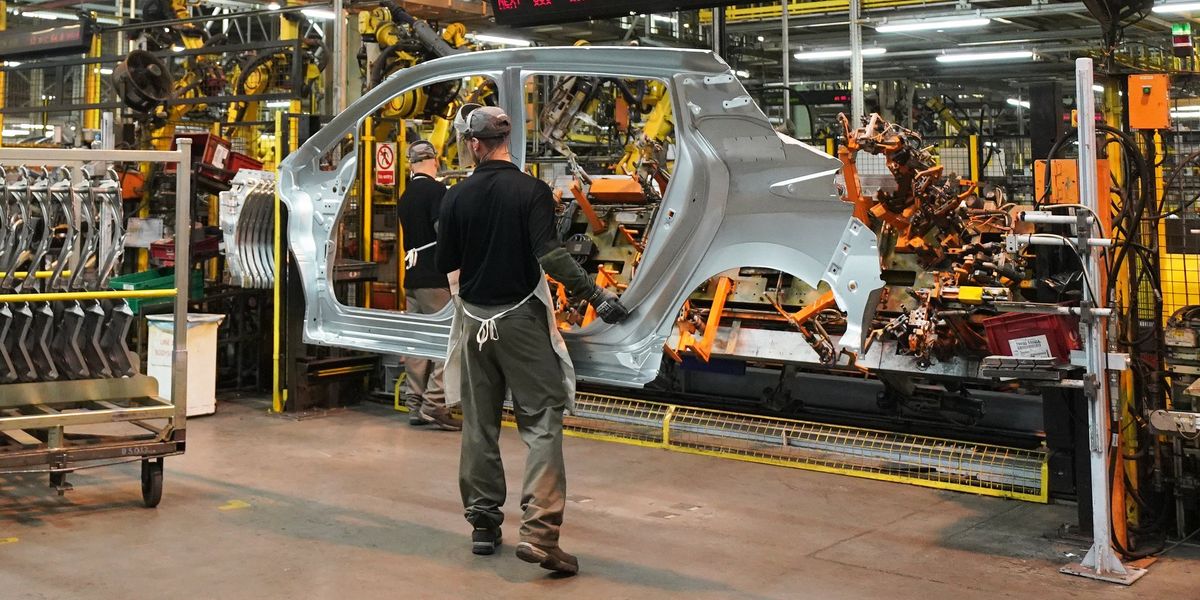
The North East offers a tried and tested blueprint for such a scheme. In the 1980s, cheap public land and swift approvals brought Nissan to Sunderland.
The factory went from plans to production in just three and a half years of Government time and has produced over 11 million cars in the decades since.
In an increasingly unstable world, Britain’s national security demands this same urgency.
Recent events have taught us that deterrence needs more than strong words from Westminster.
Of course, it requires a well-trained fighting force, but that alone is not enough.
Our military strength should be underpinned by our great industrial heartlands; producing the weapons we need in times of war, and running the high-level research in times of peace, to ensure Britain never falls behind her adversaries.
With the land available, local leaders lined up in support, and the threats Britain faces growing, there is no time to lose.
We cannot afford to wait for our military issues to become a crisis. Instead, we must scrap the red tape, enable industry, and start rebuilding our nation’s defences right here at home.