Thank you for subscribing!
People smugglers are adopting new methods and techniques to carry out their operations, writes the social integration expert
With the revelation that a Chinese company is still selling large inflatable vessels that can be used for illegal Channel crossings, even after being subjected to UK sanctions, what can the British Government do next?
A firm in China by the name of Weihai Yamar Outdoors Product Co is continuing to advertise large vessels – despite becoming the first boat manufacturer targeted under the new Global Irregular Migration sanctions regime (for producing inflatable boats being advertised for people smuggling).
Indeed, the firm even provides a bespoke service to make such vessels at specified dimensions – with people smugglers having the option to order larger inflatable boats if their funds allow for it.
Despite the UK sanctions targeting both financial assets and directors, the company in question has continued to trade from the safety of China.
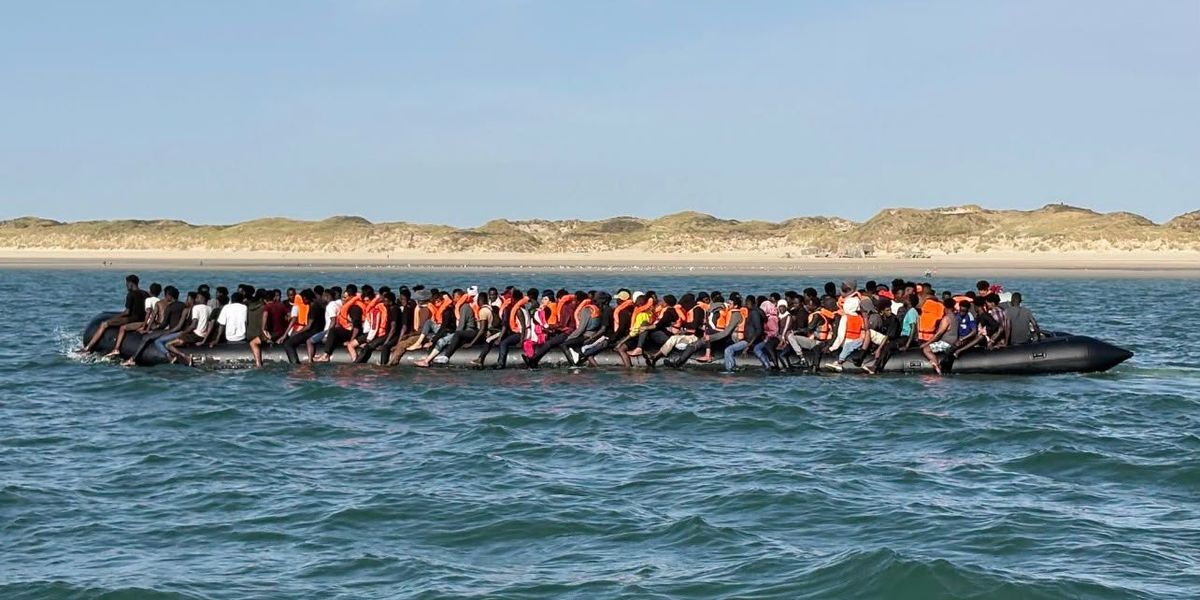
Concerns over the selling of bigger inflatable boats have intensified following Monday morning’s arrival of 230 migrants on a boat measuring 49ft in length – the largest number of unpermitted entrants into the UK, on a single vessel, through this method.
This broke the previous record set in July, when 165 people made the journey on one boat which was 42ft long (with the previous highest number before this being 128 migrants).
These are not small boats as such, but ‘mega-dinghies’ which are able to bring well over one hundred illegal migrants to England’s southern shores in one go – numbers approaching the population size of entire English villages.
The rise in the size of vessels crossing the English Channel and reaching the UK, shows that people smugglers are adopting new methods and techniques to carry out their operations.
For some time, border-security experts have warned that the use of larger vessels is becoming an increasingly popular tactic with people-smuggling networks who are responding to increased levels of enforcement by the French authorities.
The problem of people smugglers using larger vessels for illegal Channel crossings does expose the limits of introducing sanctions without international co-operation.
The National Crime Agency (NCA) has said that the mega-dinghies being used in illegal Channel crossings are made to order in China, shipped to Turkey and then transported to the French coast – often via Bulgaria and Germany.
In the absence of an international irregular-migration sanctions regime – one which includes the UK alongside European counterparts such as France, Germany, the Netherlands, and Belgium – the British Government will struggle to tackle the complex supply chains behind the illegal Channel crossings.
There needs to be greater international co-operation over monitoring the flow of these mega-dinghies, which are being transported through fellow Nato members such as Turkey and Bulgaria.
Indeed, only just last month, the UK and Turkey signed a new Security and Defence Partnership at the Nato Summit in the Turkish capital of Ankara.
This strategic partnership should also incorporate a joint commitment to tackling illegal migration and treating it as a security issue.
For the UK to tackle the ongoing illegal-migration emergency on the English south coast, it must mix domestic policies such as downgrading asylum-seeker entitlements with striking international pacts which target foreign enterprises that thrive on illegal immigration.
Without effective policies at both the national and international level, the migration crisis on the English south coast will only evolve and deepen – with serious consequences for social cohesion and public safety in communities across the country.