A boat carrying 230 people is hard evidence that the smugglers believe Britain's deterrence has failed, writes the US columnist
In the middle of the night, a small boat carrying 230 people was brought into Dover. 230 people in a single vessel! If that astonishing figure does not convince Britain's political class that the Channel crisis has become a national security emergency, it is difficult to imagine what will.
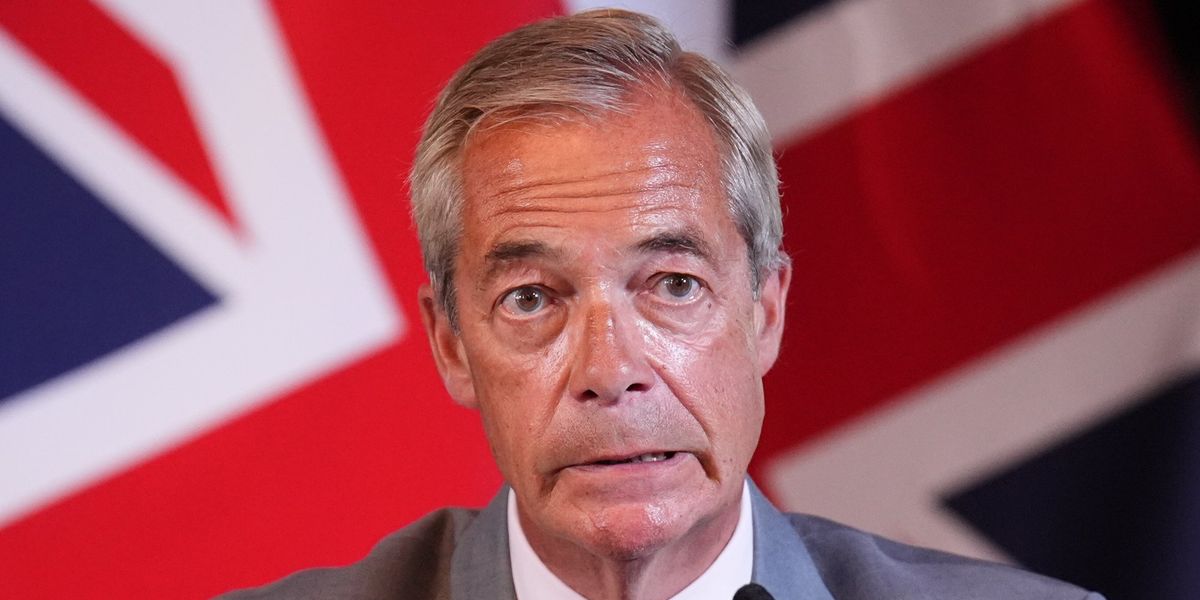
Nigel Farage is absolutely right that Britain is facing an illegal invasion. Treating such an event as merely another humanitarian incident is a failure of strategic judgment that continues to imperil Britain.
From an American perspective, the warning signs are painfully familiar. Prior to Trump, we helplessly watched years of mass illegal crossings along our southern border enrich criminal cartels, overwhelm enforcement agencies and erode public confidence that the Government is capable of controlling who enters the country.
Britain faces a different geography but a similar challenge. Twenty-one miles of water now separate organised criminal networks from Britain's coastline. For an island nation whose security has always depended upon controlling its maritime approaches, that should concern every citizen, regardless of political affiliation.
The sheer scale of this crossing raises questions that ministers must be answering, not avoiding. How does a small boat carrying 230 people make it across one of the world's busiest shipping lanes? How can authorities realistically establish the identities and backgrounds of so many people arriving simultaneously before dawn?
The Channel has become a predictable business model for organised smuggling gangs. Criminals calculate risk and reward with remarkable precision.
One trafficker reportedly earned around £173,000 from a single overloaded crossing before receiving only a one-year prison sentence.
That is scarcely a deterrent. It signals to every other gang that the rewards vastly outweigh the risks. Every successful crossing reinforces the same commercial calculation: launch the boat, collect the money and let the British state deal with the consequences.
Each new grim record demonstrates not simply that more people are attempting the journey, but that criminal networks are becoming increasingly confident in their ability to deliver ever-larger numbers across the Channel. A boat carrying 230 people is hard evidence that the smugglers believe Britain's deterrence has failed.
None of this requires abandoning compassion or ignoring Britain's obligations under international law. Among those arriving may well be people with genuine asylum claims. Equally, there will almost certainly be individuals seeking economic opportunity rather than protection. There may also be people with criminal histories or identities that cannot immediately be verified. Until proper screening is completed, the authorities simply do not know. Recognising that uncertainty is the essence of responsible border security.
Every sovereign nation has both the right and the obligation to determine who enters its territory. That principle is the foundation upon which every other public responsibility rests. Housing, schools, healthcare, policing and welfare all depend upon the state's ability to plan for the population it serves. When borders cease to be effectively controlled, public confidence inevitably weakens because citizens begin to doubt that government can perform its most fundamental duty.
Britain has long understood this reality. For centuries, the country's security depended upon defending the seas that surrounded it. Successive generations invested immense resources in protecting those approaches because they recognised that control of the border was inseparable from national independence. Modern migration presents a different challenge from the naval threats of earlier centuries, but the underlying principle remains unchanged: a nation that cannot effectively control entry into its territory gradually surrenders one of the defining attributes of sovereignty.
This is not merely a British concern. America's own struggles with illegal migration demonstrate how quickly public confidence can deteriorate when borders are unenforced. Friends and allies inevitably observe one another's ability to uphold the basic responsibilities of statehood. Britain remains America's closest strategic partner precisely because it has historically been a stable, sovereign and dependable power. Preserving that reputation requires demonstrating that the country's borders remain under the effective control of the British state.
Farage and Reform UK argue that deterrence, rapid removals and dismantling the smugglers' business model must become the government's overriding priorities. Critics cannot credibly argue that the present approach is succeeding. A boat carrying 230 people into Dover is itself evidence that the status quo is failing.
The networks behind this crossing are already planning the next one. They will judge Britain not by ministerial press releases but by results. If they conclude that ever-larger crossings remain commercially viable, they will continue to push the limits until another record is broken.
A country that cannot decide who enters its territory is surrendering one of the first responsibilities of statehood. Britain still possesses the legal powers, maritime capability and institutional capacity to restore effective control of its borders. The question is not whether it has the means. But rather, can it continue to absorb the ravages of migration policy malpractice until a new right-thinking Government is installed?