Thank you for subscribing!
What would happen if it was a British ship broadcasting the distress call, and finds an uncomfortable answer about the state of the Royal Navy, asks the former army officer
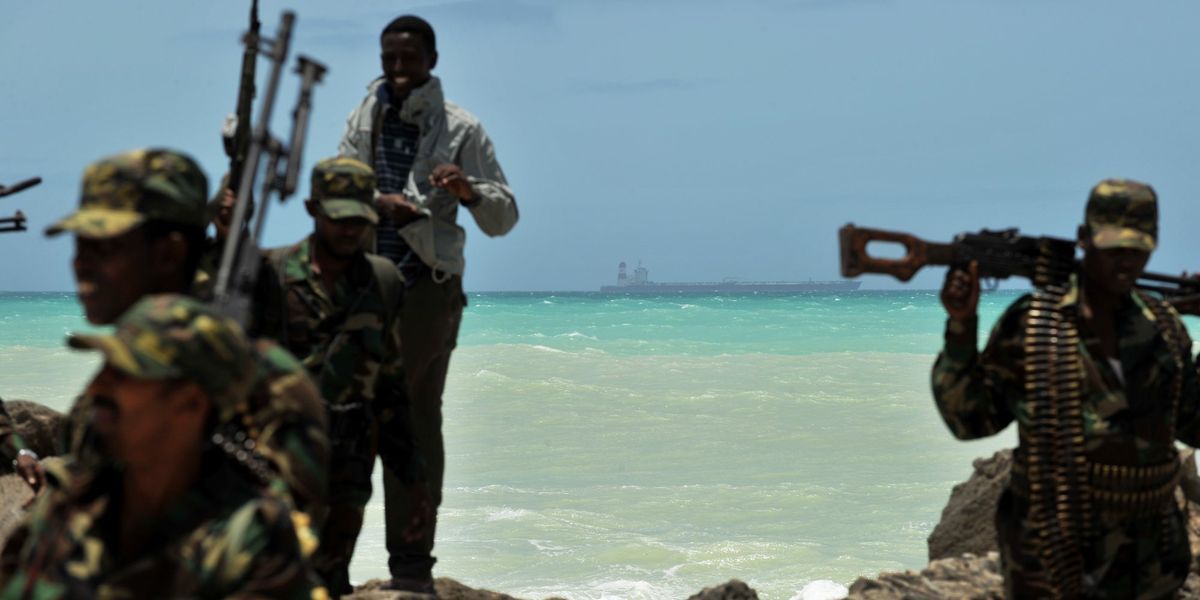
A tanker has been hijacked by six armed men in the Gulf of Aden today, August 20, after issuing a distress call around 136 nautical miles east of Al Mukalla, Yemen. UK Maritime Trade Operations says the attackers boarded the vessel, seized control and began redirecting it towards Somalia. We don't yet know the tanker's nationality. But it raises an obvious question for Britain: what happens when the ship calling for help is British?
The uncomfortable answer is that there may not be a Royal Navy warship anywhere near enough to help.
Britain has two huge aircraft carriers, nuclear submarines and plans for some of the most sophisticated warships in the world. What we don't have is enough frigates and destroyers to meet our commitments. And we know it.
Our current Government doesn't seem to be in any great hurry to solve the problem either.
Take HMS Glasgow, the first of the new Type 26 frigates. Work began on the ship on the Clyde in July 2017. Nine years later, she has still not been delivered into Royal Navy service. The Type 26 programme will eventually provide eight highly capable anti-submarine frigates, but eventually isn't much comfort if a British merchant captain is broadcasting a mayday today.
The Royal Navy is already being stretched. Russian activity around our waters is increasing. Royal Navy vessels were activated 116 times in the year to March 2026, monitoring 61 Russian warships and 28 merchant vessels. The Navy says it spent 25 per cent more time monitoring Russian vessels around Britain in July than during the same period last year.
Then there is the North Atlantic, Nato, protection of undersea cables, the Mediterranean, Gulf, Red Sea and Indo-Pacific.
And now Somali piracy appears to be back. A frigate monitoring Russians in the North Atlantic cannot simultaneously be chasing pirates off Somalia. A destroyer protecting an aircraft carrier cannot escort a merchant ship through dangerous waters. A ship can only be in one place at a time. That is why numbers matter.
Imagine today's tanker were British-flagged. Armed men approach. Six pirates board. The captain issues a distress call. The bridge is seized and the vessel begins heading towards Somalia. The British public would reasonably expect the Royal Navy to respond. But from where?
Warships don't simply materialise when somebody presses the distress button. They need to be close enough to intervene.
Of course, Britain works alongside allies and nobody is suggesting a Royal Navy frigate should escort every British merchant ship.
But there is something uncomfortable about a supposedly major maritime nation increasingly depending upon somebody else's warship being in the right place.
This matters even if today's tanker has no British connection. Britain depends upon the sea for food, fuel, manufactured goods and raw materials. When shipping routes become dangerous, insurance premiums rise, vessels are rerouted and freight costs increase.
Eventually British businesses and consumers pay. Piracy was largely suppressed off Somalia because international naval forces made it dangerous and unprofitable. If pirates now discover they can seize vessels successfully again, others will follow.
We don't need another defence review to tell us that the Royal Navy needs more ships. We already know that.
The ships promised for tomorrow cannot answer distress calls today. Sooner or later that mayday could come from a British vessel.
And when it does, the question won't be how many aircraft carriers Britain owns or how impressive our future frigates look on paper.
It will be much simpler: Where is the nearest British warship – and how quickly can it get there?