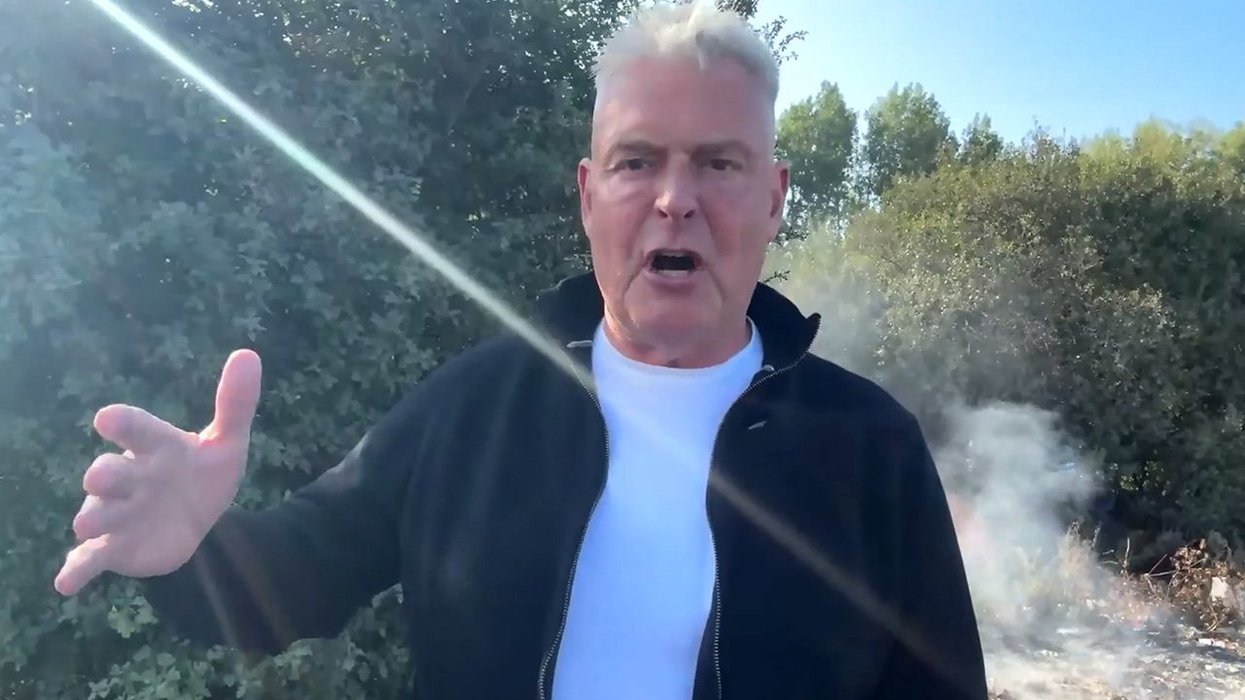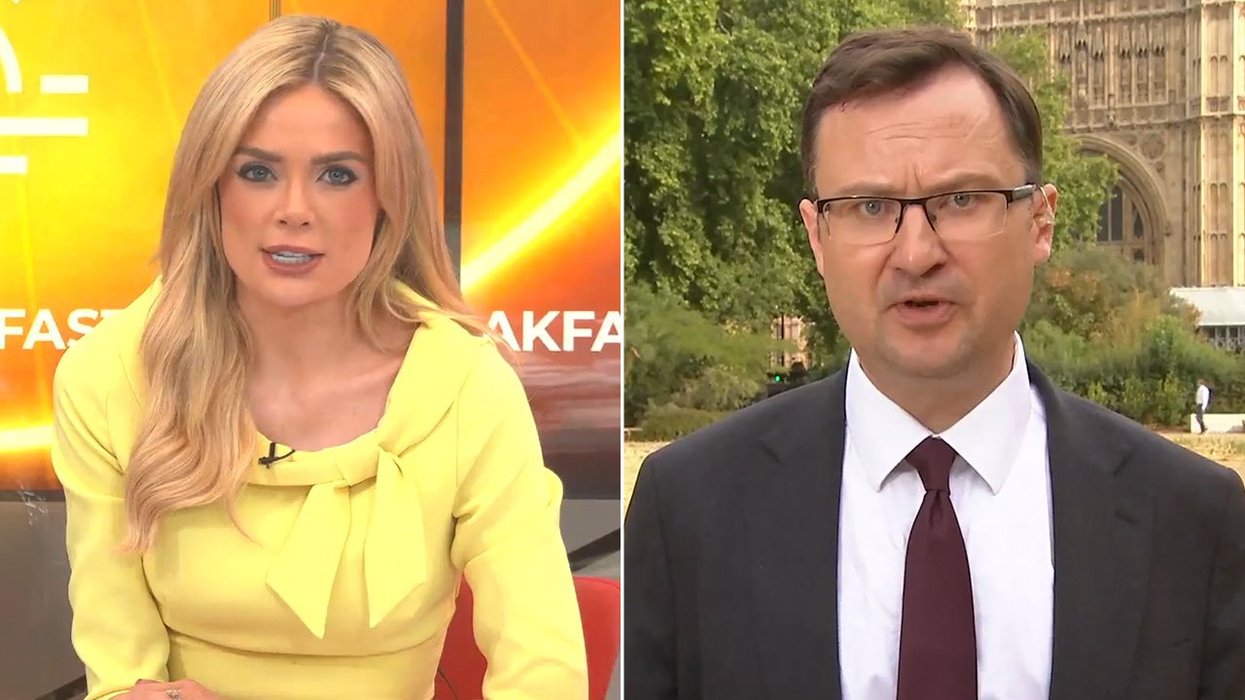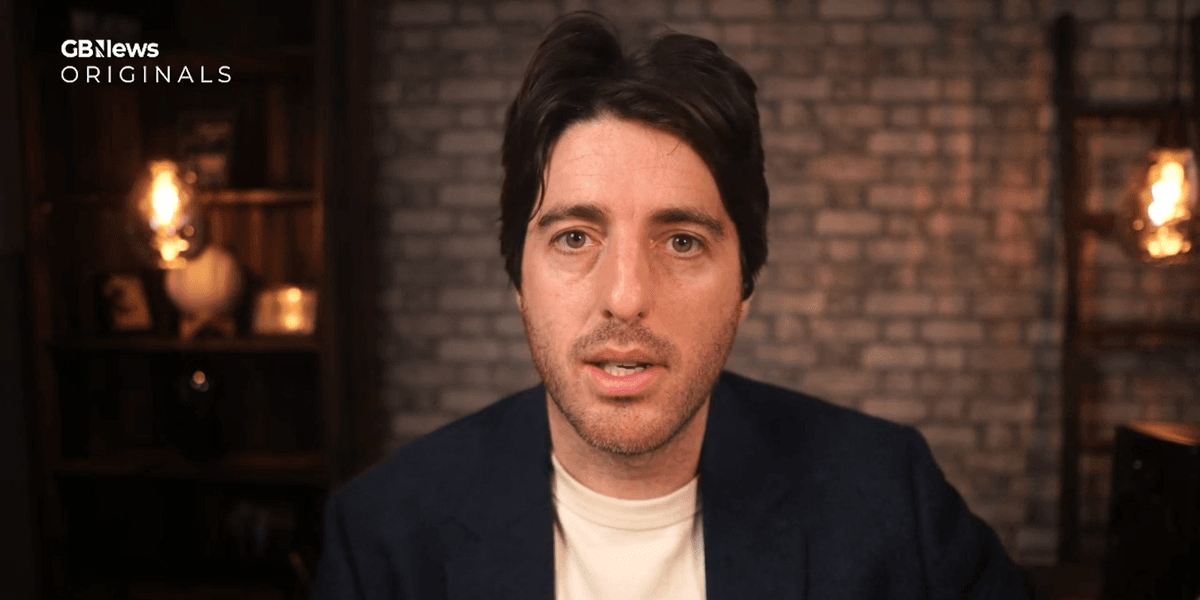
The author and host of Heretics told GB News contributor Will Kingston that the Left currently feels 'emboldened'
Andrew Gold has accused the Left of "normalising political violence" in both Britain and the United States, declaring it is "almost boring".
Speaking to GB News, the documentarian, published author and host of Heretics argued that left-wing control over key cultural institutions has created an environment in which violence and cancellation are treated as acceptable responses to opposing viewpoints.
He pointed to the BBC, newspapers and broader public discourse as being heavily shaped by left-wing influence, suggesting this dominance has made those on the left deeply entrenched in their positions and hostile towards anyone who dares to challenge them.
He said: "If all of their TV didn't have all this stuff about kids in drag and going to drag story time and all that nonsense - unfortunately, the media right now, such as the BBC - I hold responsible because they show all of this utter nonsense to these deranged people, they feel emboldened because they feel like they have the cultural sway, even if in terms of population, it's about half and half, I guess."
Mr Gold spoke with particular feeling about Ann Widdecombe, whom he described as among the most brilliant and captivating individuals Britain has ever produced. He expressed deep sadness about her death, calling it emblematic of the broader problem.
"That's the saddest part about the Ann Widdecombe thing, because this was one of the most fascinating people, most intelligent people that our country has ever produced," he told GB News.
He recalled appearing alongside Ms Widdecombe on his programme, where the pair found common ground on nearly every topic, differing only on a handful of points. What struck him most, he said, was her genuine openness to hearing from those who held different opinions.
"She was just so willing, she was just so willing to accept people who have different views to her," Mr Gold said.
Mr Gold offered a psychological theory linking institutional dominance to ideological rigidity. He suggested that whichever side holds sway over a nation's cultural apparatus becomes the most deeply entrenched in its worldview.
"If I think about it from a psychological point of view, I wonder if it's the case that whoever has the cultural institutions is the one who is the side that is the most ingrained or entrenched in their views," he said.
Mr Gold maintained that across the Western world, the Left currently commands this institutional power, despite its own claims to the contrary.
"So it happens that right now across the West, it's the Left that I know, they argue that everything is right-wing, but really the BBC, the newspapers, the dialogue, the way we're allowed to speak is massively influenced right now by the Left," he told GB News.
Mr Gold positioned himself, GB News and many on the centre-right as outsiders in this cultural landscape, yearning simply for a fair hearing.
"When you are on the outside, as the centre-right seems to be, and that counts for GB News, that counts for me personally and many of us, we're just desperate to be heard," he said.
He described those in his camp as making reasonable, nuanced arguments that he believes the other side cannot adequately answer. Yet rather than receiving engagement, they are dismissed or treated as threats.
He said: "We've got some really good nuanced points to make to you guys that I don't think you actually have answers to.
"We're desperately trying to just be heard, and I wonder if we were to sort of take hold of the cultural institutions and become the mainstream, a few years later, we might start to feel that way."
He concluded that the Left's greater openness to violence at this moment in history stems not from inherent nature but from the emboldening effect of institutional dominance.
He said: "We're all humans, we all have these brains that have developed over the last million years of evolution. Why would one be one way and one be the other way? And my only theory is they are really emboldened right now.
"If the culture swayed the other way, I would like to think that they wouldn't feel quite so emboldened, they'd start to feel like maybe I'm wrong about some of these things."